
























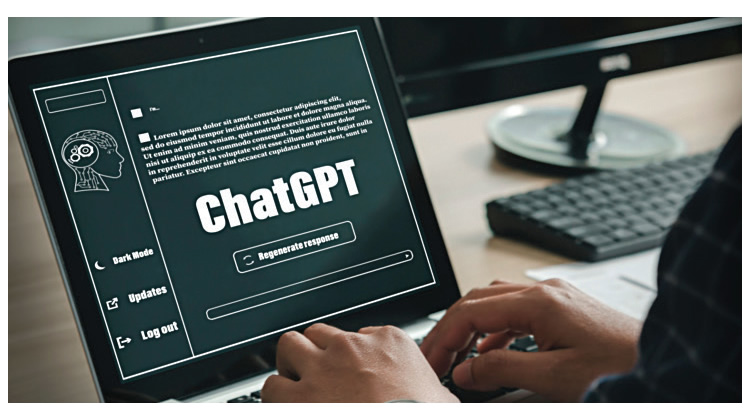


Artificial Intelligence is no longer a skill for computer scientists alone.
Whether you’re studying Law, Medicine, Engineering, Education, Accounting, Agriculture, Journalism, or the Arts, AI is changing how people learn, work, and solve problems.

In 2026, both UNESCO and the OECD have stressed that students need more than access to AI—they need AI literacy, critical thinking, ethical judgment, and the ability to use AI responsibly.
Here are 10 AI skills every student should develop.

1. PROMPT WRITING
Knowing how to ask AI the right questions is becoming a valuable skill.
A well-written prompt produces better results than a vague instruction.

Learn how to give context, define your objective, and refine your prompts.
2. AI RESEARCH SKILLS
Don’t use AI to copy answers.
Use it to understand concepts, summarise complex ideas, generate study questions, and explore different perspectives.
AI should make you a better learner—not a shortcut to learning.
3. CRITICAL THINKING
AI can make mistakes.
It can generate inaccurate information, outdated facts, or fabricated references.
Never accept AI-generated content without verifying it from credible sources. Experts increasingly identify critical evaluation as one of the most important AI-era skills.
4. AI ETHICS
Every student should understand issues such as privacy, copyright, bias, academic integrity, and responsible AI use.
Knowing when not to use AI is just as important as knowing when to use it.
5. CONTENT CREATION WITH AI
Learn how to use AI to write, edit, design presentations, create images, generate videos, and produce educational content.
The future belongs to creators who can combine human creativity with AI tools.
6. DATA LITERACY
AI relies on data.
Learn how to read charts, interpret data, identify trends, and make informed decisions based on evidence.
7. AI PRODUCTIVITY
Use AI to organise your notes, plan projects, create study schedules, prepare presentations, and improve your workflow.
The goal is not to work less.
The goal is to work smarter.
8. AI AUTOMATION
Understand how AI can automate repetitive tasks through tools and workflows.
Students who know how to automate simple processes will save time and become more productive.
9. COMMUNICATION AND COLLABORATION
AI cannot replace human communication.
Learn to explain ideas clearly, work in teams, present confidently, and solve real-world problems.
These remain highly valued human skills.
10. LIFELONG LEARNING
AI is evolving rapidly.
The tools you use today may change next year.
Stay curious.
Keep learning.
Adapt quickly.
Your ability to learn continuously may become your greatest competitive advantage.
FINAL THOUGHT
The future will not belong to students who simply know how to use AI.
It will belong to students who know how to think, question, verify, create, and solve problems with AI as a partner rather than a substitute for learning.
Your degree will open the door.
Your AI skills may determine how far you go once you’re inside.













 EduTimes Africa, a product of Education Times Africa, is a magazine publication that aims to lend its support to close the yawning gap in Africa's educational development.