























Abuja – The Federal Government has identified poor access to secondary education as one of Nigeria’s biggest education challenges, revealing that about 20 million children fail to progress from primary to junior secondary school despite high enrolment at the basic education level.



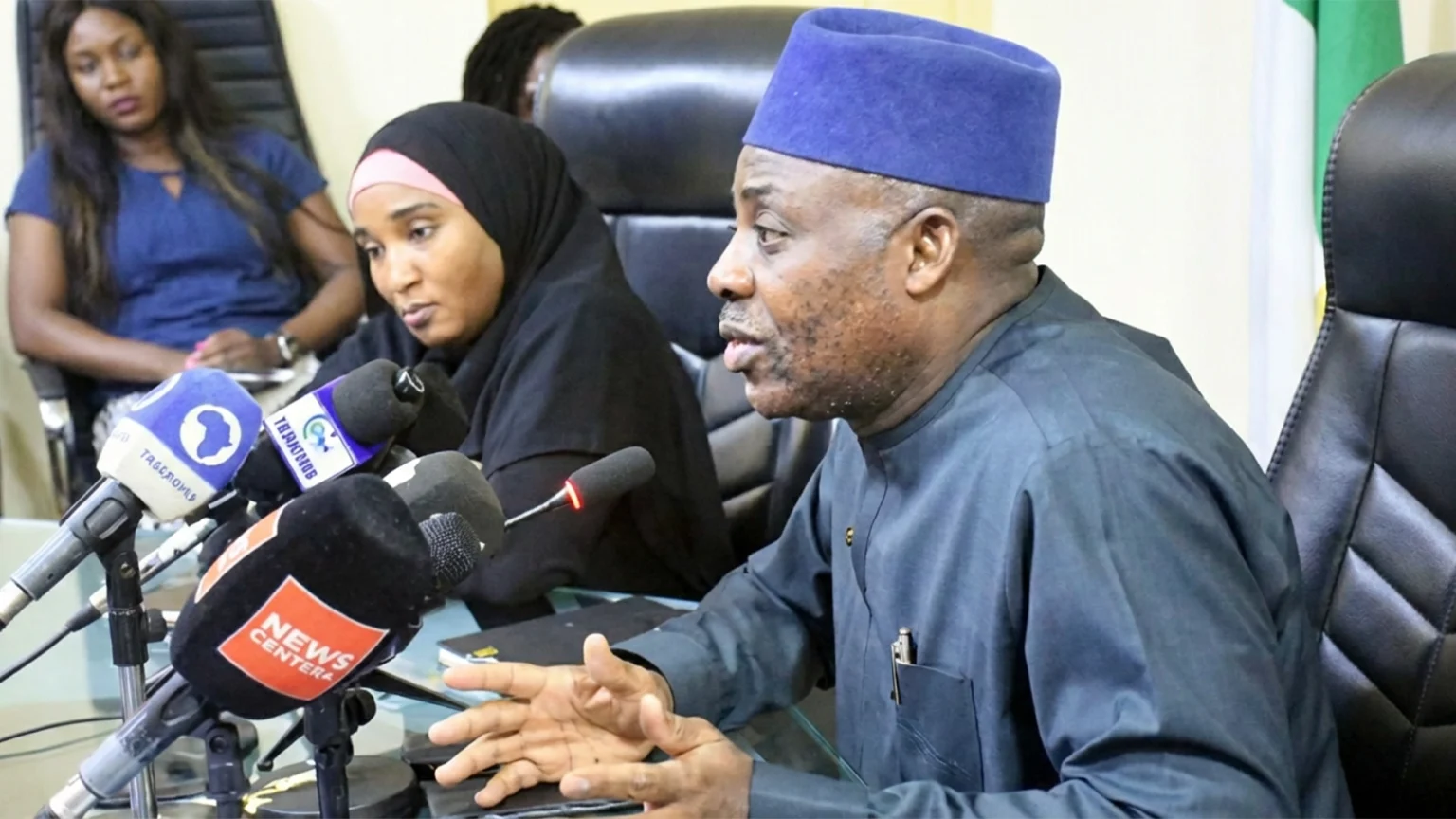
Minister of Education, Dr. Tunji Alausa, disclosed this while speaking at the 2026 Annual Education Summit organised by the Education Correspondents Association of Nigeria (ECAN) in Abuja.

According to the minister, Nigeria currently has nearly 25 million pupils in primary schools, but only about five million transition to junior secondary school, leaving an estimated 20 million children unable to continue their education.
He attributed the problem largely to inadequate education infrastructure, explaining that while the country has about 90,000 primary schools, it operates only 16,000 junior secondary schools, creating a significant access gap.

“The challenge is no longer enrolment alone but ensuring that children have access to continue their education,” Alausa said, adding that expanding access to secondary education remains a key priority under President Bola Tinubu’s Renewed Hope Agenda.

The minister urged journalists to embrace data-driven reporting by using the Nigeria Education Data Infrastructure Management System (NEDIMS) to monitor school performance and hold education authorities accountable.
According to him, the platform provides detailed information on schools, classrooms, teachers, enrolment and facilities across the country, enabling evidence-based reporting and improved public oversight.

Alausa said the Federal Government’s education reforms are built around six strategic priorities: Technical and Vocational Education and Training (TVET), Science, Technology, Engineering and Mathematics (STEM), digital transformation, reducing the number of out-of-school children, quality assurance, and improved education governance.
Highlighting achievements in tertiary education, the minister noted that Nigeria has recorded three consecutive years without disruptions to academic activities in universities, polytechnics and colleges of education. He credited the stability to sustained dialogue between the government and academic unions.
He also announced that 24 Nigerian universities are now ranked among the world’s top 1,000 institutions, an increase from 21 previously, with public universities occupying the country’s top four positions.
On the issue of out-of-school children, Alausa disclosed that government interventions have returned more than one million children to classrooms over the past two years. He added that the Ministry of Education is partnering with the National Bureau of Statistics (NBS) to conduct a nationwide household survey aimed at generating more accurate data on the number of out-of-school children for future planning.
Also speaking, Minister of State for Education, Prof. Suwaiba Ahmad, called on journalists to support ongoing reforms through balanced and responsible reporting, while UBEC Executive Secretary, Aisha Garba, reaffirmed the commission’s commitment to ensuring that every Nigerian child has access to quality basic education regardless of background or location.
The summit, themed “Three Years of the Tinubu Administration: Assessing Reforms, Progress and Challenges in Nigeria’s Education Sector,” brought together government officials, education stakeholders and media professionals to review progress and identify solutions to the country’s education challenges.












 EduTimes Africa, a product of Education Times Africa, is a magazine publication that aims to lend its support to close the yawning gap in Africa's educational development.