




















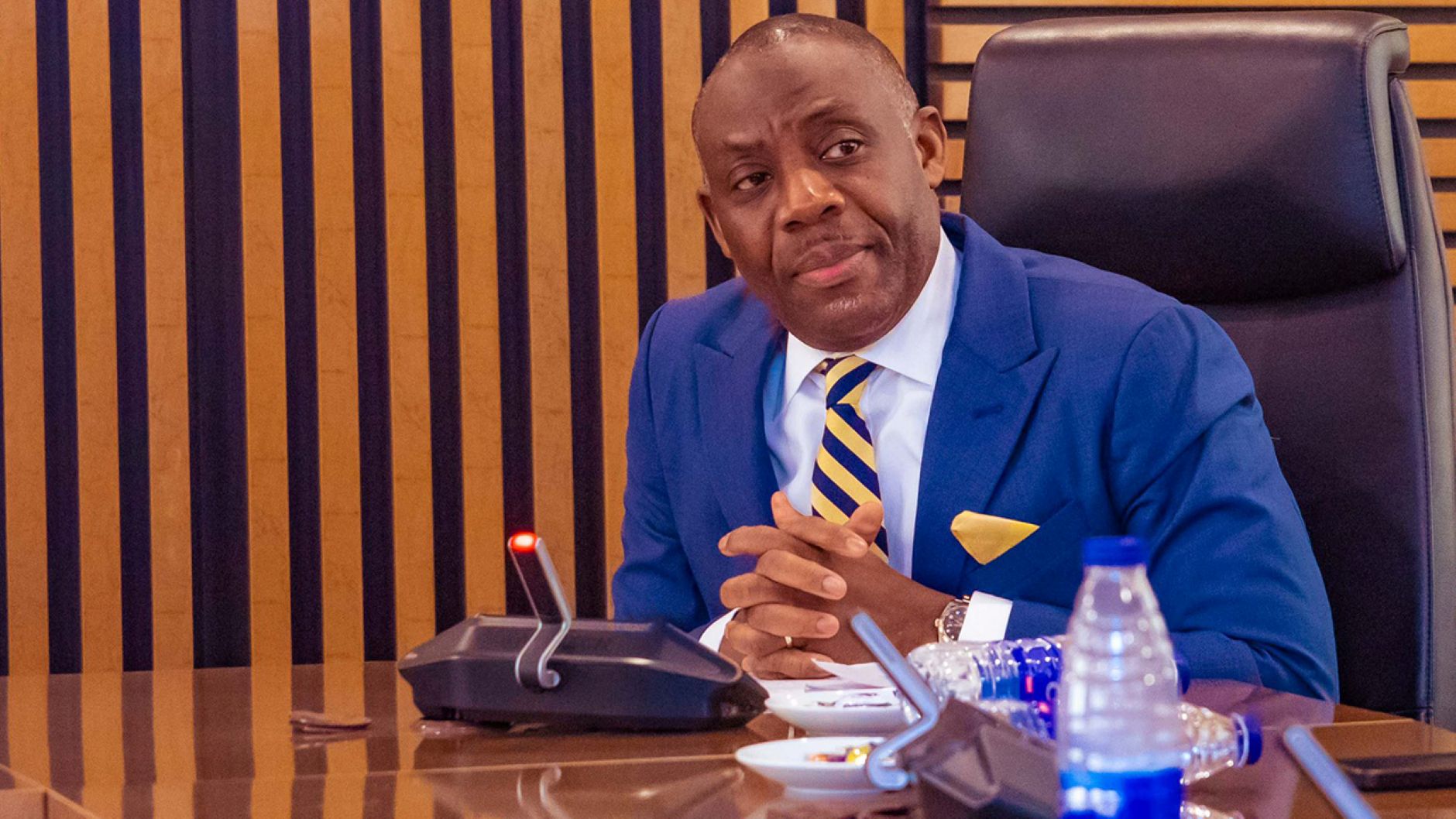


The Federal Government has significantly increased admissions into health-related programmes as part of efforts to tackle the shortage of healthcare professionals and strengthen Nigeria’s health sector.



Minister of Education, **Dr Maruf Tunji Alausa**, disclosed that annual admissions into nursing schools have risen from about **20,000** before the current administration took office to approximately **50,000**, while enrolment into medicine, pharmacy and dentistry programmes has also been substantially expanded.

Speaking with journalists in Abuja, the minister said the expansion forms part of the Federal Government’s broader strategy to build a robust healthcare workforce capable of meeting Nigeria’s growing medical needs.

According to Alausa, the increased enrolment, alongside ongoing reforms in the education sector, is expected to eliminate the country’s shortage of healthcare professionals within the next few years as thousands of newly trained graduates enter the labour market.

He attributed the progress to President Bola Tinubu’s commitment to education, describing the sector as the foundation of Nigeria’s economic transformation and a key pillar of the administration’s development agenda.
The minister said the government’s investment in education, skills development and human capital is central to achieving the President’s ambition of building a **$1 trillion economy**.
He explained that the administration is repositioning Nigeria’s education system to produce a globally competitive workforce capable of driving national development while meeting the demands of both local and international labour markets.
“Nigeria has a youthful population that represents one of our greatest assets. Our objective is to transform this population into a demographic dividend by expanding access to quality education and equipping young people with the knowledge and skills they need to compete globally,” Alausa said.
He added that Nigeria has the potential to become a leading supplier of skilled professionals to Africa and the wider global economy.
“We want to be the manpower supplier of the world. We need to produce competent, skilled and educated young Nigerians who will drive our economy, contribute to Africa’s growth and compete successfully across the world. As the President advances his vision of building a one-trillion-dollar economy, education will remain at the centre of that transformation,” he stated.
On the Nigerian Education Loan Fund (NELFUND), the minister assured Nigerians that the scheme has been designed with long-term sustainability in mind.
He explained that President Tinubu had consistently directed ministers and heads of government agencies to ensure that major policy reforms are structured to endure beyond the lifespan of the current administration.
“There is no value in introducing policies that cannot stand the test of time. Sustainability is central to this administration’s philosophy, and that principle guided the design of NELFUND,” he said.

Addressing industrial relations in the tertiary education sector, Alausa credited the prevailing industrial harmony to the administration’s commitment to dialogue, mutual respect and realistic negotiations with academic and non-academic staff unions.
He noted that the Federal Government rebuilt confidence by fulfilling the President’s commitment to pay **50 per cent** of the withheld salaries inherited from previous industrial disputes shortly after assuming office.
The minister also highlighted the approval of a salary increase of nearly **40 per cent** for workers in tertiary institutions, describing the measure as part of broader efforts to improve staff welfare while maintaining fiscal discipline.
According to him, the government’s sustained engagement with university unions has restored stability across higher education institutions, creating an environment more conducive to teaching, learning and research.











 EduTimes Africa, a product of Education Times Africa, is a magazine publication that aims to lend its support to close the yawning gap in Africa's educational development.