























The Tertiary Education Trust Fund (TETFund) has announced that public tertiary institutions with abandoned or delayed TETFund-sponsored projects will be ineligible to access new intervention projects under the 2027 funding cycle unless they complete all outstanding projects.



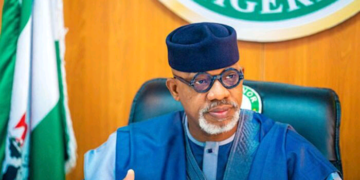
The directive was issued by the Chairman of the TETFund Board of Trustees, Aminu Bello Masari, as part of measures to address the persistent problem of abandoned infrastructure projects across beneficiary institutions.

According to a statement by TETFund’s Head of Public Relations, Abdulmumin Oniyangi, the Board has taken what it described as a “final stand” after observing that many institutions continue to fail to complete approved projects within the stipulated timelines.
Masari said institutions with delayed projects must prioritise their completion using allocations from the Annual, Zonal and High Impact Intervention schemes.


> “No new projects will be admitted from the identified beneficiary institutions for the 2027 intervention cycle,” he said.
TETFund cites leadership, administrative delays
The TETFund chairman acknowledged that fluctuations in the prices of construction materials such as cement, reinforcement bars, sanitary fittings and electrical materials had previously contributed to project delays.
To address the challenge, the Fund introduced a special intervention line in 2023 dedicated to completing stalled projects, a move Masari said had enabled many institutions to finish previously abandoned works.
Despite the intervention, he expressed concern that fresh cases of delayed projects continue to emerge.
According to him, the latest delays are largely caused by changes in institutional leadership, where new administrators abandon inherited projects in favour of initiating new ones, as well as bureaucratic delays in processing payments to contractors.
“The continued occurrence of non-adherence to stipulated timelines in completing TETFund-sponsored projects is unacceptable,” Masari stated.
Institutions directed to submit project audit
As part of the new compliance measures, TETFund has directed all beneficiary institutions to compile comprehensive lists of projects that have exceeded their completion timelines by more than six months.
The institutions are also expected to identify the causes of the delays, prioritise the affected projects, provide detailed cost estimates required for completion and strengthen project supervision through their Physical Planning and Maintenance Departments.
To verify compliance, TETFund monitoring teams comprising Board members and technical officials will conduct physical inspections of affected projects across public tertiary institutions in August and September 2026.

The inspection reports and institutional submissions will be reviewed during the Board’s statutory meeting in October 2026, where decisions will be taken on institutions eligible to benefit from the 2027 intervention guidelines.
Strengthening accountability
Established under the Tertiary Education Trust Fund Act, TETFund finances infrastructure development, research, academic staff training, library enhancement and other capital projects in public universities, polytechnics and colleges of education through education tax contributions from registered companies.
Over the years, the Fund has invested significantly in lecture theatres, laboratories, hostels, libraries, medical facilities and research infrastructure across Nigeria’s public tertiary institutions.
However, abandoned projects and delayed execution have remained recurring challenges, prompting repeated calls for improved accountability and project management.
The latest policy signals TETFund’s determination to ensure that intervention funds translate into completed infrastructure capable of improving teaching, learning and research, while preventing public resources from being tied down in unfinished projects.














 EduTimes Africa, a product of Education Times Africa, is a magazine publication that aims to lend its support to close the yawning gap in Africa's educational development.