

















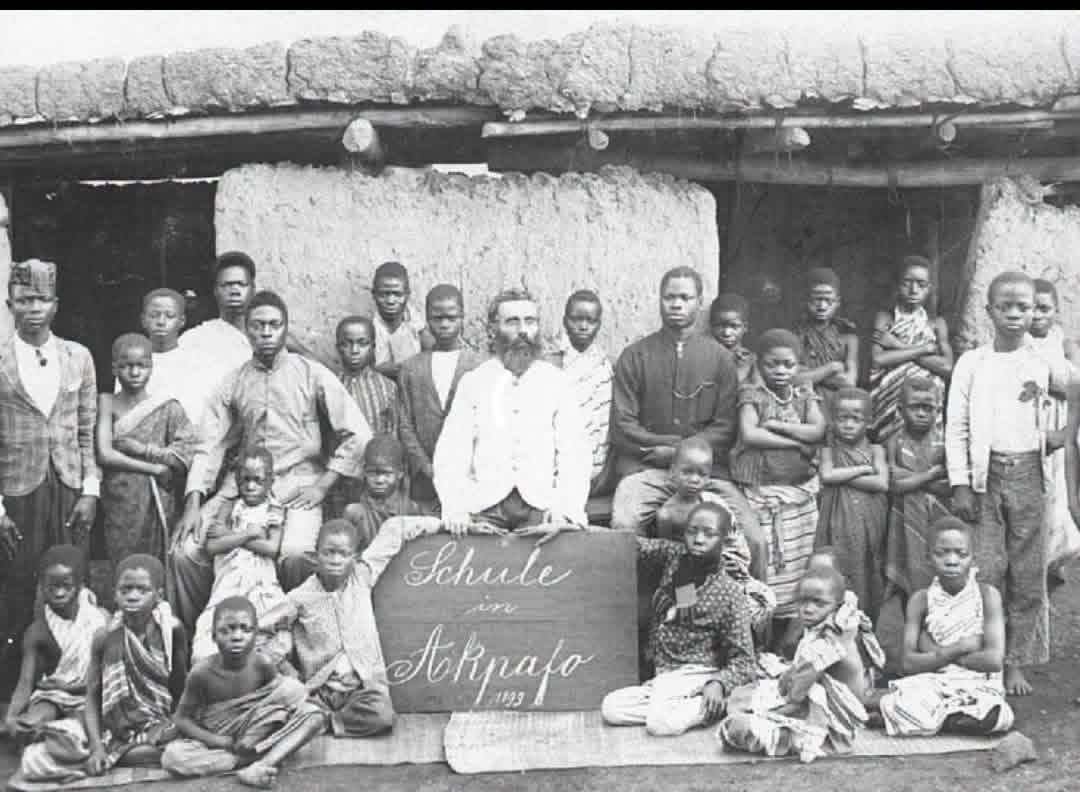


Nigeria’s modern school system, the classrooms, the exam culture, the ministry of education structure, has its roots not in colonial government policy but in Christian mission stations that arrived decades before Britain took any real interest in how Nigerians were taught.


The missionary beginning


Formal Western education in Nigeria started in 1842, with the arrival of Thomas Birch Freeman of the Methodist Missionary Society, alongside Mr. and Mrs. De Graft of the Church Missionary Society. Their objective was primarily evangelical, spreading Christianity, and schools were built largely as a tool for that purpose, teaching reading and writing specifically so converts could engage with scripture. For roughly four decades, missionary bodies ran schools with almost no coordination between them, each denomination shaping its own curriculum to fit its own needs, with no shared standard across the country.
The colonial government steps in


The government’s first real involvement came in 1877, when colonial authorities granted 200 pounds each to the three major missionary bodies operating in Lagos, a gesture recognizing their work rather than an attempt to control it. That changed with the 1882 Education Ordinance, the first formal colonial policy on education, which split schools into fully state funded government schools and privately run but partially subsidized ones. The ordinance largely failed in practice, its curriculum and teaching methods were designed for British West African colonies broadly, not shaped around Nigeria’s own needs, and it continued to favor Christian missions exclusively while leaving indigenous and Islamic educational traditions out entirely.
By 1926, the colonial government had grown openly critical of the small, denominational missionary schools, arguing they weren’t producing enough literate clerks to staff Nigeria’s expanding colonial administration and commercial enterprises, a practical concern that drove further policy changes over the following decades.
A country divided by access
One of colonial education’s most lasting effects was geographic imbalance. Missionary schools concentrated heavily in southern Nigeria, where Christianity took hold more readily, while the Islamic north largely resisted this form of Western schooling, preserving its own tradition of Quranic and Arabic literacy education instead. That early divide in access to Western schooling laid groundwork for regional disparities in literacy and administrative representation that outlasted colonial rule itself.
What the system actually produced
Colonial education wasn’t designed to educate Nigerians broadly, it was built to create a small, literate elite capable of working as clerks, interpreters, and administrators under British rule. The curriculum leaned heavily on British history, geography, and literature, often at the expense of Nigerian history and indigenous languages, and it concentrated overwhelmingly in urban centers, leaving most of rural Nigeria largely untouched by formal schooling well into the 20th century.
The legacy that outlived colonial rule
Nigeria’s education system today still carries direct fingerprints from this era, a centralized Ministry of Education model, standardized examination systems, and an academic, book centered curriculum that historically prized white collar aspiration over vocational or agricultural skill. What began in 1842 as a handful of mission stations teaching reading for religious purposes ended up, by the time Nigeria gained independence in 1960, as the entire scaffolding for the country’s modern educational institutions, regional imbalance and all.








 EduTimes Africa, a product of Education Times Africa, is a magazine publication that aims to lend its support to close the yawning gap in Africa's educational development.