




























































As Artificial Intelligence continues to reshape education, research and industry, experts are increasingly focusing on a critical question: how can the technology be used responsibly while delivering solutions to real-world problems?



That question was at the heart of discussions at the 2026 Postgraduate Biennial Conference of Redeemer’s University, Ede, Osun State, where scholars, researchers and technology experts examined the role of AI in driving sustainable development.

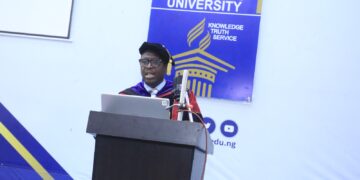
Opening the conference on Wednesday, the Vice-Chancellor of Redeemer’s University, Prof. Shadrach Akindele, said AI has become an integral part of modern research and is a reality that scholars must learn to embrace. However, he stressed that its use must remain within ethical boundaries.
Addressing postgraduate students and researchers, Akindele urged scholars to develop relevant data and AI-driven solutions capable of addressing Nigeria’s development challenges. He noted that while AI tools are becoming increasingly useful in research, they must be applied responsibly and with academic integrity.

“Artificial Intelligence is no longer a distant concept; it is here, and it is here to stay. We must learn it, adapt to it and apply it responsibly to the work before us,” he said.

The Vice-Chancellor also challenged universities to move beyond producing academic publications and focus on research that delivers practical solutions. According to him, institutions of higher learning have a responsibility to contribute to addressing pressing national issues such as insecurity, energy shortages and environmental degradation.
He emphasised that sustainable development depends on collaboration across disciplines and sectors, arguing that no single institution or field of study can independently solve today’s complex challenges.

The conference, themed “AI and Sustainable Development: Collaborative Solutions for Global Challenges,” brought together academics and professionals to explore how emerging technologies can support development efforts while remaining ethical and inclusive.
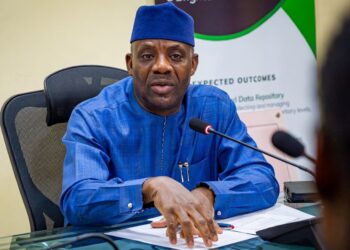
Delivering the keynote address, the Vice-Chancellor of the University of Ibadan, Prof. Kayode Adebowale, represented by Prof. Muyiwa Omobowale, highlighted the importance of developing AI systems that reflect Nigeria’s realities.
He said access to relevant local data remains essential if AI is to generate meaningful solutions for Nigerians. Omobowale also stressed the need for collaboration among universities, students, government agencies and the private sector to ensure that AI innovations contribute effectively to national development.
For many participants, the discussion underscored the growing importance of preparing the next generation of researchers to engage with AI in ways that are both innovative and responsible.
The conversation extended beyond education and research into cybersecurity, where experts warned that emerging digital threats require more advanced responses.
Nigerian-born cybersecurity professional Grace Durotolu called for the adoption of an AI-driven national cybersecurity policy to strengthen the protection of Nigeria’s critical infrastructure.
According to her, conventional security measures are increasingly ineffective against sophisticated cyberattacks, including advanced persistent threats, zero-day exploits and complex social engineering schemes.
Drawing from her research on AI and machine learning in cyber defence, Durotolu said AI-powered systems can significantly improve threat detection while reducing false alarms, making them an important tool in the fight against cybercrime.
As AI adoption accelerates across sectors, discussions at the conference reflected a growing consensus among academics and technology experts: the future of innovation will depend not only on technological advancement, but also on ethical standards, quality data and collaboration that ensure AI serves society responsibly.














 EduTimes Africa, a product of Education Times Africa, is a magazine publication that aims to lend its support to close the yawning gap in Africa's educational development.