























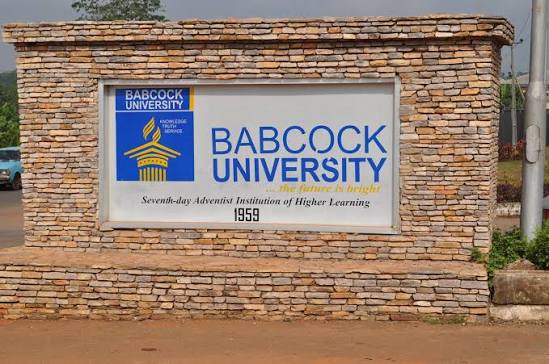


Babcock University has strengthened its commitment to promoting ethical leadership and professionalism as 158 of its graduates were inducted as Associate Members of the Institute of Fraud Examiners (IFE), while the institution’s President and Vice-Chancellor, Professor Afolarin Olutunde Ojewole, was honoured as a Fellow of the African Business School.



The induction took place during the 10th Induction Ceremony of the Institute of Fraud Examiners held at the Babcock Investment Group (BIG) Conference Centre. The African Business School serves as the training institution for the Institute of Fraud Examiners.
Professor Ojewole, who received the Fellowship and was admitted into the Academy of Fellows of the African Business School, expressed appreciation for the recognition and pledged to uphold the values and regulations of the institution.
Speaking at the event, the Vice-Chancellor described the induction as a significant milestone that extends beyond academic achievement, stressing that the professional certification equips graduates with the practical competencies required to excel in today’s competitive labour market.
“This is more than a formal ceremony. It is an opportunity that prepares you for the realities of the professional world. This certification makes you market-ready and enhances your employability,” he told the newly inducted members.
He reaffirmed Babcock University’s commitment to fully implementing the Memorandum of Understanding signed with the Institute of Fraud Examiners, noting that the partnership would continue to strengthen the University’s efforts in producing graduates with integrity and professional competence.
Professor Ojewole commended the Institute for its confidence in the University, stating that the collaboration has provided students with valuable opportunities to develop the skills required to combat fraudulent practices across different sectors.
He lamented the growing acceptance of fraudulent practices in some societies, emphasising that Babcock graduates have been deliberately trained to uphold honesty and accountability.
“Wherever they find themselves, Babcock graduates will distinguish themselves because they have been equipped with the knowledge and character to prevent fraudulent practices,” he said.
Encouraging the inductees to uphold the University’s reputation, he urged them to remain confident and committed to excellence.
“Hold your heads high because you are well prepared above many of your contemporaries. Continue to uphold the Babcock brand, join our distinguished alumni making positive impacts across the world, and embrace the opportunities that lie ahead,” he added.
President of the African Business School, Dr Goddy Idaminabo, charged the new fraud examiners to embrace discipline, continuous preparation and resilience as they begin their professional careers.
He observed that career advancement comes through perseverance and the ability to overcome challenges, urging the graduates to remain focused on personal development.
“A fraud examiner must always be prepared. Success begins with preparation and the confidence to believe in your abilities. Your parents have played their part; now it is your responsibility to build your future,” he said.
Dr Idaminabo also cautioned the inductees against making assumptions in the course of their duties and encouraged them to become agents of positive change capable of restoring integrity and accountability in society.

Welcoming them into the profession, he expressed confidence that the graduates had received the necessary academic and moral foundation to excel.


Executive Director of Babcock Business School, Professor Rufus Akintoye, commended the University’s management and members of staff for their dedication towards the successful implementation of the programme.
Similarly, the Dean of Veronica Adeleke School of Social Sciences, Professor Gift Ntiwunka, urged the newly inducted members to serve as worthy ambassadors of Babcock University and uphold the principles of trust, responsibility and ethical leadership.

She encouraged them to apply the knowledge acquired during their training to positively influence their workplaces and communities.
“Let the knowledge you have gained guide your professional journey and inspire you to live lives characterised by trust, integrity and responsibility,” she said.
This version follows a stronger news-writing style suitable for publication in newspapers, education news platforms, or online media outlets.













 EduTimes Africa, a product of Education Times Africa, is a magazine publication that aims to lend its support to close the yawning gap in Africa's educational development.