



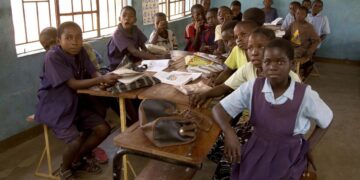



















A recently viral video of a young Urhobo schoolboy has reignited an important conversation about language and education in Nigeria. In the video, the boy passionately condemned the punishment of pupils who speak their native languages in school. He argued that forcing children to speak only English Language could make them forget their local languages and lose touch with their cultural heritage.

His concern raises an important question: Why should Nigerian children be discouraged or punished for speaking the languages they grew up with, especially in an environment meant for learning (school)?
For years, education researchers have advocated the use of mother tongue as a language of instruction, particularly at the primary school level. One of the foremost Nigerian champions of this approach was the late Professor Babatunde Fafunwa, who strongly believed that children learn better when taught in a language they understand with the Six Year Primary Project.

Nigeria needs to reconsider its language policy in education. Rather than making English the dominant language of instruction, the government should encourage schools to use indigenous languages as the primary medium of teaching, especially in the early years. English can remain an important second language and a means of communication with the wider world.
Each locality should have the opportunity to adopt its dominant indigenous language for teaching. This would make learning more meaningful because children would be taught in languages they understand and use in their everyday lives.

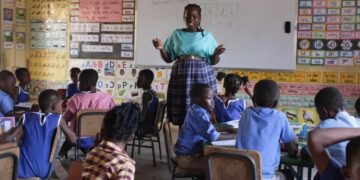
Imagine a child learning Basic Science, Social Studies or Mathematics in their mother tongue. Such a child may find it easier to understand complex concepts when they are explained in familiar words and expressions. Education should not be about memorising unfamiliar terms but about understanding, applying and relating knowledge to everyday experiences.

Adopting indigenous languages in education could also help preserve Nigeria’s rich cultural heritage. It would encourage cultural exchange programmes among schools, strengthen communication and promote mutual understanding among different ethnic groups. Children would have opportunities to learn about other Nigerian languages and cultures, fostering national unity rather than division. That which the nations what’s to achieve with the establishment of National Youth Service Corp (NYSC) will be taken care of at the grassroot learning level.
More importantly, our curriculum should reflect the realities and needs of Nigerian society. Education should prepare children to understand and solve problems within their communities while equipping them with the knowledge to compete globally.
Unfortunately, Nigeria’s continued attachment to English as the dominant language of instruction raises questions about our willingness to embrace our identity as an independent nation. While English remains useful, we should not allow its dominance to undermine our indigenous languages and cultural values.
The gradual erosion of our languages is also a loss of our history, identity and traditional knowledge. A country that neglects its languages risks losing an important part of its heritage.
I look forward to the day when I can comfortably receive formal education in Ika language, my own indigenous language, without it being considered unusual or inferior and derogatorily called “vernacular”.
The government must revisit its language policy and give mother tongue education the attention it deserves. Our children should not have to choose between receiving quality education and preserving their languages and cultural identities.
Perhaps it is time we stopped treating our indigenous languages as obstacles to education and started recognising them as powerful tools for learning.











 EduTimes Africa, a product of Education Times Africa, is a magazine publication that aims to lend its support to close the yawning gap in Africa's educational development.