
























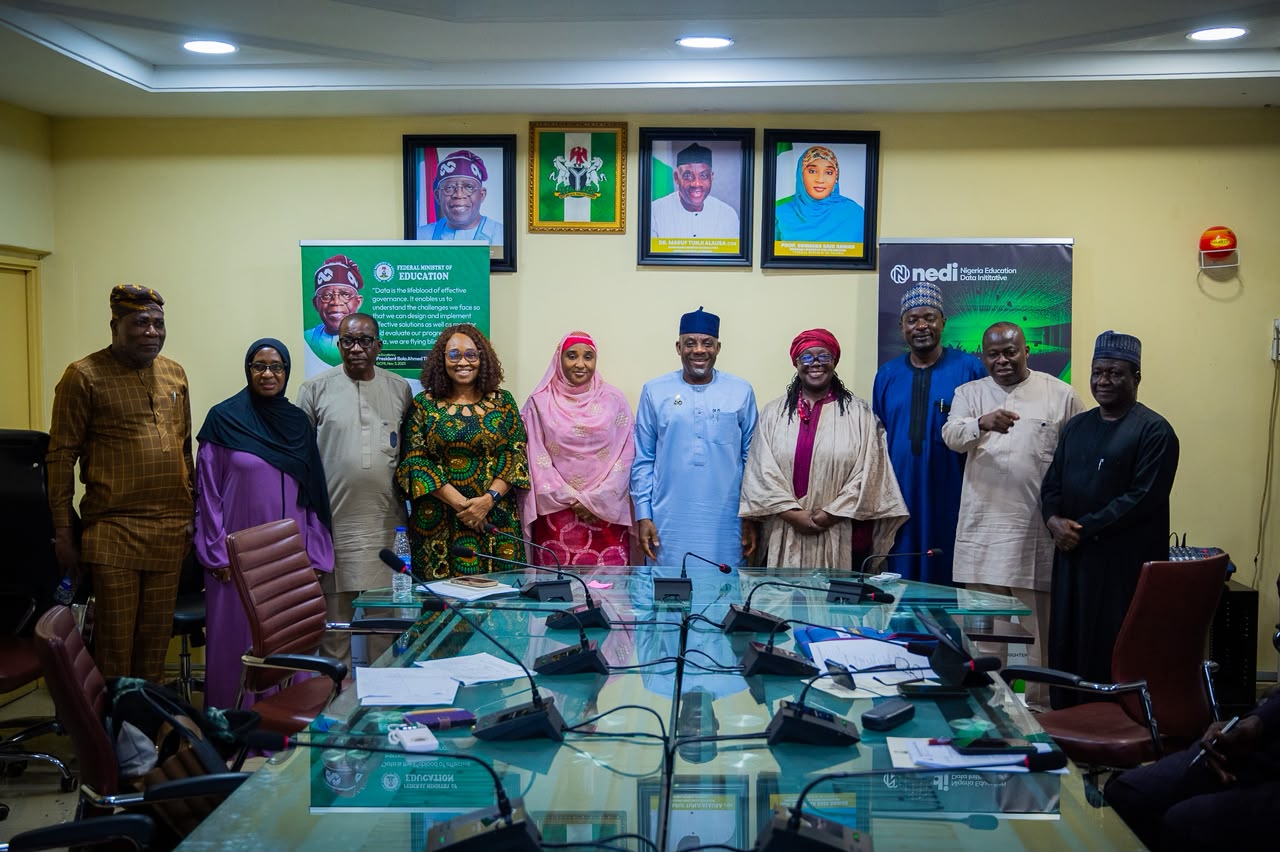


The Federal Government has unveiled plans to establish 41 University Innovation Pods (UniPods) across Nigerian tertiary institutions as part of efforts to transform research and innovation into businesses, jobs and economic growth.



The Minister of Education, Dr Maruf Tunji Alausa, disclosed this during a meeting with the United Nations Development Programme (UNDP) and vice-chancellors, describing the initiative as a key pillar of President Bola Ahmed Tinubu’s vision of building a knowledge-based economy capable of driving Nigeria towards a $1 trillion economy.

According to Alausa, eight UniPods have either been commissioned or are ready for commissioning, with three already operational at the University of Lagos, Nasarawa State University and Michael Okpara University of Agriculture, Umudike.
Other specialised innovation hubs include the Blue Economy UniPod in Akwa Ibom State, AgroTech UniPod at Benue State University, Resilience Tech in Borno State, GovTech UniPod at Ahmadu Bello University, Zaria, and Industrial Tech UniPod in Plateau State.

The Minister stressed that the success of the initiative would not be measured by infrastructure alone but by its ability to convert research into commercially viable products, attract investment and create employment opportunities.
He said Nigeria must shift from conducting research primarily for academic promotion to commercialising innovations that solve real-world problems and stimulate economic development.
As an example, Alausa cited the MineTech UniPod at Nasarawa State University, where researchers have developed geospatial maps identifying lithium, gold and bauxite deposits, including their locations and depths, creating opportunities for investment and mineral exploration.
He explained that government had already reduced the risks associated with innovation by providing infrastructure, equipment and technical support, adding that the next phase would focus on connecting researchers with investors and industry partners.
The Minister also announced that the Federal Ministry of Education, in collaboration with UNDP and Tech4Dev, would continue expanding the UniPod network nationwide while ensuring each centre operates as a financially sustainable innovation hub rather than depending solely on grants.
He said the innovation centres would function under a governance framework jointly developed by the Ministry and UNDP, allowing eligible UniPods to generate and retain revenue to support research, innovation and technological development within their host institutions.
The Minister of State for Education, Professor Suwaiba Sa’id Ahmad, urged universities to position UniPods as engines of industrialisation by exposing students and researchers to entrepreneurship, product development and commercialisation.

She added that the facilities should be accessible to students and researchers from other universities, ensuring that innovation benefits the broader higher education sector.

Speaking at the meeting, UNDP Nigeria Resident Representative, Elsie Attafuah, commended the Federal Government for placing innovation at the centre of education reforms, noting that the initiative would strengthen Nigeria’s competitiveness, promote job creation and accelerate economic transformation.
Attafuah also pledged UNDP’s continued support through governance advisory, financing mechanisms, sustainability planning and South-South cooperation to strengthen the emerging UniPod network.
Dr Alausa reaffirmed the Ministry’s commitment to working with development partners, universities and the private sector to ensure the UniPods become self-sustaining centres of innovation capable of producing commercially viable research, supporting startups and equipping young Nigerians with the skills needed to thrive in a knowledge-driven economy.















 EduTimes Africa, a product of Education Times Africa, is a magazine publication that aims to lend its support to close the yawning gap in Africa's educational development.