
















































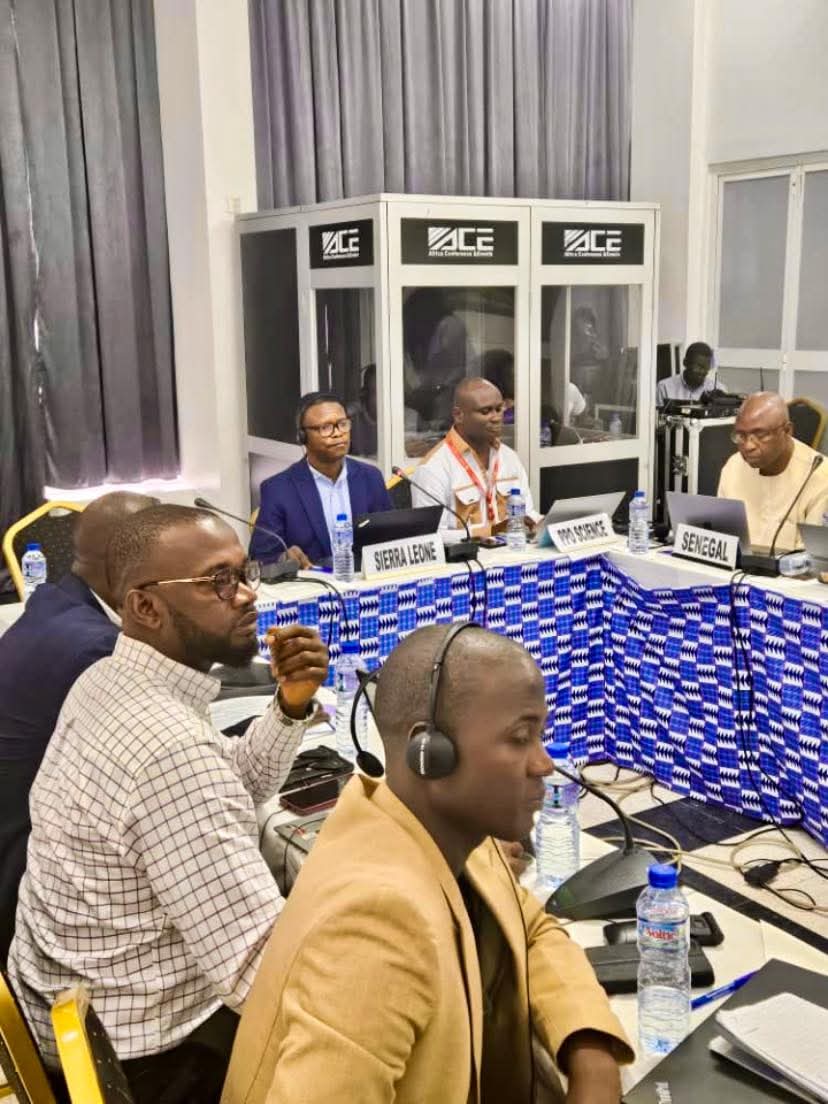


Sierra Leone’s Ministry of Technical and Higher Education (MTHE) has taken part in a regional technical meeting in Lomé, Togo, aimed at validating harmonized indicators for the Education Management Information Systems (EMIS) across member states of the Economic Community of West African States (ECOWAS).


The country was represented by Emmanuel J. Momoh Esq., MTHE’s Director of Higher Education and chair of the meeting, alongside Victor A. Sesay, the Ministry’s Director of Technology and Innovation.

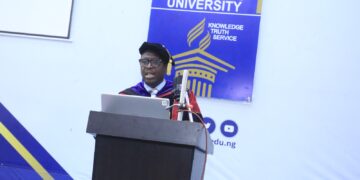
In his opening remarks, MTHE’s Director of Higher Education, Emmanuel J. Momoh Esq., thanked the ECOWAS Commission for the confidence placed in Sierra Leone to chair the session. He explained that Education Management Information Systems are integrated technological platforms used to collect, process and share data that support administrative and academic functions in schools, colleges and universities.
According to him, EMIS has become an essential tool for effective governance, planning and quality assurance in higher education systems around the world.

He noted that in Sierra Leone, the education sector continues to face significant challenges as the country rebuilds after the Sierra Leone Civil War (1991–2002) and the Ebola Virus Disease outbreak. He said rising student enrollment, increasing demands for accountability and the need to meet international standards have placed additional pressure on the system.
He pointed out that although the government has expanded access to education through the creation of more technical and vocational institutions alongside traditional universities, the implementation of EMIS across institutions remains uneven and fragmented.
Momoh Esq. added that these efforts align with the government’s constitutional responsibility to promote education as outlined in the Constitution of Sierra Leone (1991). He also referenced the introduction of the Free Quality School Education Programme in 2018, which has significantly increased enrollment at primary, secondary and tertiary levels across the country.
He further said that the technical meeting was convened to review and validate harmonized EMIS indicators for ECOWAS member states after assessing their current status, challenges and opportunities, emphasizing that the effective deployment of EMIS is critical to modernizing the education sector and improving governance, transparency and data-driven decision-making.
Also presenting at the meeting was MTHE’s Director of Technology and Innovation, Victor A. Sesay, who outlined Sierra Leone’s progress and challenges in implementing EMIS.
Sesay explained that although institutions collect education data across the country, the process remains fragmented, with many institutions operating in isolation. As a result, he said the data gathered is often unreliable and difficult to validate.

He identified several key challenges affecting the rollout of EMIS in Sierra Leone, including infrastructural limitations such as unstable electricity supply, inconsistent internet connectivity and limited server capacity. These constraints, he said, reduce system reliability and discourage widespread adoption.
Financial constraints were also highlighted as a major barrier. Sesay noted that the acquisition, customization and maintenance of EMIS platforms require substantial investment, while many institutions operate with limited budgets that prioritize teaching and basic administration.
In addition, he pointed to gaps in human resources and technical skills, explaining that the successful operation of EMIS requires specialized information technology personnel, which many universities currently lack.









 EduTimes Africa, a product of Education Times Africa, is a magazine publication that aims to lend its support to close the yawning gap in Africa's educational development.