


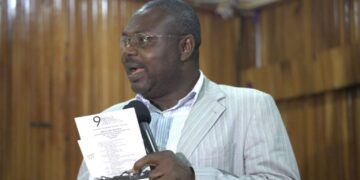


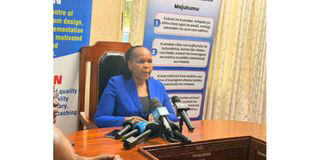


















The Ministry of Technical and Higher Education (MTHE) has held a meeting with the Transforming Teaching, Education and Learning (T-TEL) to review findings from a nationwide diagnostic assessment of teacher education, with officials calling for urgent reforms to strengthen the profession and improve learning outcomes.



The meeting was aimed at examining key challenges within teacher training institutions as well as discussing a roadmap for reform.

Welcoming participants, Deputy Chief Technical and Higher Education Officer Sia Fasululu said the assessment followed extensive nationwide consultations conducted last year at the request of the Minister. She noted that the exercise aimed to move beyond assumptions by gathering evidence on the realities of teacher education across the country.
“This is timely,” she said, stressing that improving education quality must begin with strengthening the systems that train teachers. “If we are serious about quality education, we must first look at the foundation, the teaching profession itself.”

Presenting the report, T-TEL’s Chief Technical Advisor, Akwasi Addae-Boahene, said the diagnostic covered seven teacher training institutions and examined the full teacher education value chain, including curriculum, faculty capacity, teaching practice, and student experience.
The findings revealed widespread structural weaknesses:
• Leadership and management systems exist but are under-resourced, with weak planning and poor coordination.
• Faculty capacity is critically limited, with heavy reliance on part-time lecturers and little exposure to modern teaching methods.
• Curricula are outdated and fragmented, with no national framework guiding teacher education.
• Teaching practice – identified as the weakest area – suffers from poor supervision and lack of formal partnerships with schools.
• Student teachers face welfare challenges, declining enrollment, and uncertainty about entering the profession.
• Assessment systems are inconsistent and overly focused on final exams rather than practical competence.
• Gender and inclusion measures remain minimal, with safety concerns, especially for female trainees.
The report also highlighted severe shortages of teaching resources and weak quality assurance systems across institutions.
During discussions, Permanent Secretary Mohamed Sheick Kargbo raised concerns about the effectiveness of distance learning programmes, particularly for teachers in remote areas.
T-TEL Consultant, Mohamed Salefu, acknowledged that while distance education exists, it is largely delivered through outdated correspondence methods rather than modern digital systems. This approach, he noted, is both costly and inefficient, with logistical challenges limiting its impact.
Addae-Boahene added that universities struggle to sustain such programmes due to financial constraints, often reducing their frequency and effectiveness. He emphasized the need for blended, technology-driven learning models to improve access while reducing costs.
Permanent Secretary Kargbo raised concerns about the declining quality of teacher education, noting that there are now few, if any, tertiary institutions dedicated specifically to training teachers.
“We used to have institutions focused solely on teacher education,” he said. “Now it has become just a unit within universities, and we are losing focus.”
He also stressed the importance of teacher ethics and motivation, noting that past generations of teachers demonstrated stronger professional integrity.
Chief Technical and Higher Education Officer Dr. Josephus Brimah echoed these concerns, emphasizing that no education system can rise above the quality of its teachers. He called for stronger practical training, better supervision, and the involvement of experienced educators in mentoring new teachers.
Acting Director of Research, Planning and Development Idrissa Sannoh highlighted the need for better coordination among key education bodies, including regulatory agencies, to ensure consistency in standards and implementation.
He also pointed to continuous professional development (CPD) models used in other countries, where training is tied to career progression, as a potential model for Sierra Leone.
Mohamed Barrie of Leh We Lan underscored the importance of efficient resource allocation within the education sector, arguing that funds must be better managed to support teacher development rather than being overstretched.

In her closing remarks, Minister Dr. Haja Ramatulai Wurie described the findings as candid and necessary, calling for a national conversation on teacher education reform.
“We must be honest about the challenges and take ownership of the solutions,” she said. “This is not about talking for the sake of talking; it’s about action.”
She stressed the need to rebuild systems, modernize curricula, strengthen regulatory frameworks, and restore the value of the teaching profession. The Minister also warned against politicizing education, noting that long-term reforms require consistency and commitment.
Dr. Wurie further highlighted the need for improved data systems, better teacher motivation, and structured career progression tied to performance and professional development.
On the next steps, T-TEL is expected to submit the final report in April 2026, after which it will be presented to the Local Education Group (LEG). This will be followed by a broader national consultation involving teacher training institutions and other stakeholders to shape the implementation of reforms.









 EduTimes Africa, a product of Education Times Africa, is a magazine publication that aims to lend its support to close the yawning gap in Africa's educational development.