
















































At a time when many young Nigerians are paying closer attention to the value of higher education, questions around the quality and global relevance of postgraduate programmes are becoming harder to ignore.


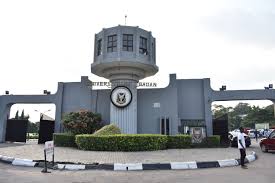
That conversation is partly behind a new accreditation exercise at the Pan African University Life and Earth Sciences Institute (PAULESI), hosted by the University of Ibadan, where the National Universities Commission (NUC) has begun assessing selected postgraduate programmes.

The commission deployed 26 professionals across eight accreditation panels to evaluate programmes at PAULESI.
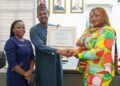
Speaking during a visit to the Vice Chancellor of the University of Ibadan, Uchenna Obidiagbo, a Deputy Director at the NUC, said the programmes scheduled for accreditation include Plant Breeding, Medicinal Plant Research and Drug Development, Petroleum Geoscience, Avian Medicine and Vaccine Production and Quality Control, Reproductive Health, Sports Management and Policy Development, Environmental Management, and Mineral Exploration.

For young Nigerians considering research, science, health, or environmental careers, accreditation often determines whether programmes meet recognised academic and professional standards.

The Vice Chancellor of the University of Ibadan, Kayode Adebowale, described the exercise as especially important because it marks the first accreditation of postgraduate programmes at PAULESI — a continental initiative of the African Union Commission hosted by the university.
“Accreditation exercises enable universities to measure themselves against global standards and best practices,” Adebowale said.
He expressed optimism that the exercise would serve as a model for improving postgraduate education across Africa and assured the accreditation teams of the university’s support.
According to him, PAULESI was created through a competitive process under the African Union Commission’s plan to strengthen science and technology education across the continent.
“PAULESI is aimed at promoting research and producing a critical mass of researchers capable of addressing Africa’s developmental challenges,” the vice-chancellor stated.

Adebowale added that similar institutes exist in Kenya, South Africa, Algeria and Cameroon, while Nigeria, through the University of Ibadan, serves the West African sub-region.
He also stressed the need for universities to maintain standards that keep them globally competitive.
“Although public universities face unique challenges, they remain central to the success of higher education development in Nigeria,” he added.
Speaking on behalf of the accreditation panels, Saleh Ado said the team was at the university to assess whether the programmes meet standards set by the NUC.
P
“The accreditation exercise is important for quality assurance and maintaining academic standards in Nigerian universities,” Ado said.
He described the accreditation team and the university as “partners in progress,” urging stakeholders to follow NUC procedures and guidelines.
Credit: ThePunch






 EduTimes Africa, a product of Education Times Africa, is a magazine publication that aims to lend its support to close the yawning gap in Africa's educational development.