


















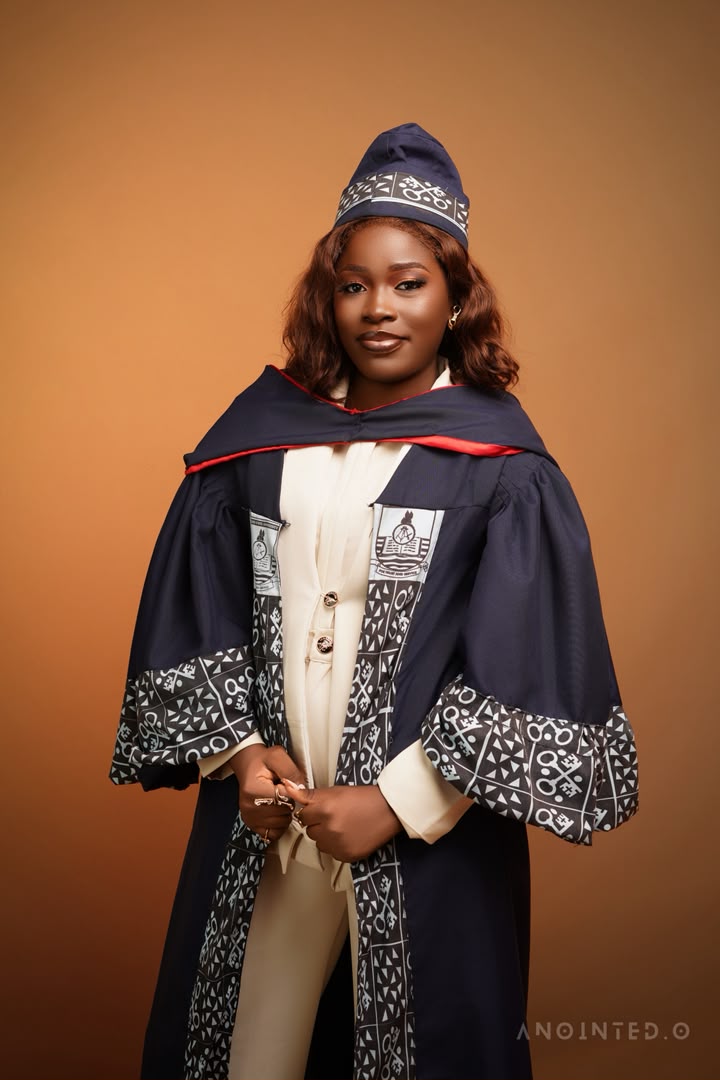


There are courses many people overlook or dismiss as having little value. However, some students are finding meaningful opportunities in these less common fields and using them to build promising futures. One of them is Maryam Busari, a first-class graduate of Lagos State University who studied peace studies.



In an interview with Lateef Adepoju, Maryam discussed her educational journey, her experience at LASU, the relevance of Peace Studies, her academic strategies, extracurricular activities, mentorship and the opportunities that shaped her university experience.

Kindly give us a brief background of your educational journey, from secondary school to your time at Lagos State University.
My academic journey began at Ransome Kuti Memorial Senior Grammar School, a public school where I learnt very early that education was about more than academics. I experienced the ups and downs of school life firsthand. From moving between first and fifth position academically at the school to dealing with bullying, taking on leadership responsibilities and eventually becoming Head Girl in senior secondary school at Kuti Memorial Senior Grammar School. My mother wanted me to move to a private school, but I believed there was something valuable in the school I was already attending, and I chose to stay.

When it was time for university, I applied twice to study Law. Life, however, had its own turns. When I was offered theatre arts, declined. Then came peace studies. I was curious enough to think, “Let’s see what this holds.” Today, that decision is defining my future.
My years at Lagos State University have been transformative. LASU gave me the space to learn beyond the classroom, engage with people and ideas, participate in leadership and pursue opportunities that expanded my understanding of the world. Studying peace studies reshaped how I think about conflict, society, religion, human relationships and the possibilities for creating change. I came into LASU with an idea of what I wanted my future to look like, but I am leaving with a much broader understanding of what that future can be.
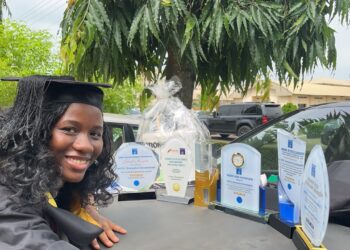
LASU did not simply pass through me; I passed through LASU. Beyond graduating with First Class Honours, I leave with experiences, relationships, ideas and a renewed sense of purpose that I know will continue to shape me long after university.
How does it feel to graduate with First Class Honours from Lagos State University?
Graduating with First Class Honours feels good. It feels like everything somehow paid off. It reminds me that when you set your mind to something and put in the work, you can achieve it. But it also taught me that achievement does not always come exactly the way you planned it.
I had always dreamed of graduating as the overall best graduating student in LASU, so getting a First Class was something I worked towards. I will share the good news moving forward. When I look back, I think more about the journey than the result, the endless nights, the times I stayed up studying, the lectures I refused to miss even when attendance was not compulsory, and even when I miss an impromptu 5-mark test, I end up having a mood swing and pleading to write my test again.
University also taught me to expect the unexpected. Life cannot always be smooth, and honestly, I think that is part of what makes it meaningful. Challenges will come, plans will change, and sometimes you will have to find another way forward. The beauty is in learning how to navigate those moments.
So, yes, the First Class feels like a reward, but it also feels like a reminder of what more I can do to keep going.

What did the moment you realised you had graduated with First Class remind you of?
When I found out I had graduated with First Class Honours, the first thing it reminded me of was the importance of knowing who you are. I am still figuring myself out, and I am still learning and trying new things, but one thing I have always known about myself is that I set very high standards.
For me, First Class was never really a surprise. I had always believed I would graduate with a first class. What I was really aiming for was overall being the best graduating student. So when people outside my immediate circle reacted with, “First Class?” I was grateful, of course, but internally I was thinking, “Yes, but this was the minimum standard I had set for myself.”
Then my first result came out, and it was 4.91.

That was when something shifted in me. I realised I might not be Amina Okedeyi, who maintained a perfect 5.00 CGPA, but I could be Mariam. I could have my own result, my own journey and my own definition of excellence.
So, when I eventually found out I had graduated with First Class, it was not just about the grade. It reminded me that knowing who you are also means knowing when to stop measuring yourself against someone else’s journey. I can admire people, learn from them and set ambitious goals, but at the end of the day, I have to become the best version of myself.
How did your family, friends, lecturers, and mentors react to your achievement?
My family, friends and lecturers were all happy about my achievement, although each of them experienced it differently.
My mum was particularly happy. She had always reminded me that I was doing well, and even before the final result, she would tell me, “Mariam, you are doing well. Just don’t let gratitude leave you.” She sometimes worried that my extracurricular activities, volunteering and constant outings might affect my academics. But looking back at my results, I can confidently say that I never played with school. No matter how many things I was involved in outside the classroom, my academics remained a priority.
My friends were not exactly surprised. They knew me well enough to know that I don’t joke with my academics, so while they were happy for me, I think some of them already expected a strong result.
My lecturers also weren’t particularly surprised. Most of them knew me through my participation in class, asking questions, contributing to discussions and especially taking the lead during group presentations. I was often part of or the person gathering the content, coordinating things behind the scenes and then standing in front of the class to present. So, in many ways, my lecturers got to know me through my active participation. My mentors were also not surprised.
One of my course mates recently asked me, “Why did you give one person the BGS and not take it?” It was a joke, but it speaks highly of my academic legacy.
Then came another piece of good news: I became the second overall best graduating student in my department and the female best graduating student in my department. For me, that is something worth celebrating because it reminds me that excellence can take different forms. I may not have graduated as the overall BGS, but I still became the best female graduating student in my department and the second overall best. Forever grateful for that.

Apart from studying, what role did mentorship and the opportunities you encountered along the way play in your academic journey?
Mentorship and opportunities shaped my academic journey by helping me understand that my education was bigger than my results, while also reminding me that my results still mattered.
Opportunities opened my eyes to how much more I could do with peace studies. They made me realise that I could never afford to think small. There is a whole world waiting to see what I can contribute through peace, conflict, security, international relations and even policy, and if I don’t, someone else will. The world doesn’t bend to your wishes but work. I may not know exactly where I will work yet, but I know the kind of spaces I want to be in. I want to contribute to conversations about conflict resolution, security and the interests of my country and the world. Conflict is part of human interaction, and we need people who are equipped to understand and resolve it.
The opportunities also taught me that I don’t have to have everything figured out before I start. I don’t have to be the best at something before I begin. I just have to start, learn and keep moving.
Mentorship also played a quiet but significant role in my journey. I was fortunate to have mentors like Oluwatimilehin Busari, Ayobami Ajayi, Folaranmi Ajayi and Hamid Akanbi, whose expertise I could turn to whenever an opportunity came up. They never simply helped out; they challenged me to think, refine my work and do my part. They supported me financially, spiritually and intellectually. I am grateful for the circle that took my growth seriously, enough to challenge me, and for the constant reminder that while opportunities were important, I was first a student. My primary responsibility was to pass, graduate and graduate well. Even while chasing opportunities, volunteering or working on other things, my degree had to remain the priority.
I have learnt that everybody has a limit. You have to know when to pause, because you can easily become overwhelmed if you’re also a versatile person.
LASU is one of Nigeria’s leading state universities, with a large and diverse student population. What was your experience like studying in such an environment?
My experience at Lagos State University was a good one, and my department played a particularly important role in shaping it. From the module level, we were trained to think critically before attempting to answer questions. Our assessments were largely written, so I was constantly practising how to develop and communicate an argument rather than simply selecting an answer.
Beyond academics, I am glad I attended LASU because the university gave me room to explore. LASU accommodates creativity, innovation, extracurricular activities and student participation in ways that allowed me to develop beyond the classroom. There were events, conferences, opportunities and platforms that students could participate in, and I took advantage of many of them. A lot of the things I became involved in such as leadership, volunteering, writing, advocacy and pursuing opportunities were possible because I had an environment that gave me room to try.
Being in Lagos also exposed me to a wider range of people, organisations, events and opportunities. I could learn within the university while also being connected to a city where so much was happening.

One thing I particularly appreciated was the pace of the academic calendar. LASU’s academic system kept us moving, and unlike the prolonged disruptions that students in some institutions experience, I did not have to spend long periods waiting for the university to resume. That matters because, ultimately, you are in school to learn, complete your programme and move into the next phase of your life.
So, looking back, I am genuinely glad I went to Lagos State University. It trained me academically, but it also gave me the space to discover what else I could do with what I was learning.
Peace studies is a field many people may not be very familiar with. What exactly does the course entail, and what inspired you to study it?
Peace Studies may still be an unfamiliar course to many people, and, interestingly, it was unfamiliar to me too when I first saw it. I was curious about the course, so when I was offered admission to study it, I decided to give it a chance. Looking back, that curiosity was one of the best decisions I made.
Peace studies is an interdisciplinary field. It draws knowledge from areas such as sociology, criminology, law, mass communication, history, politics, international relations, religion and languages. These disciplines are connected because understanding peace requires understanding people, institutions, communication, conflict, law, history and the systems that shape human behaviour.
Throughout my programme, I took courses across these areas. I studied sociology and criminology to understand human behaviour and recognise patterns that can contribute to conflict. I encountered International Humanitarian Law to understand the laws applicable during armed conflict. I studied communication, negotiation and dialogue, and explored history, politics and international relations to understand how conflicts develop, how states interact and how diplomacy can be used to manage disputes. I also studied religion and its relationship with conflict and peace.
So, I did not just study “peace” as an abstract idea. I studied the different things that make peace possible and the different factors that can disrupt it.
The course has also changed the way I see everyday life. I have come to understand peace not simply as the absence of war, but as something connected to human relationships, justice, security, communication and our everyday interactions. Conflict itself is not always negative; sometimes, when properly managed, it can lead to growth, better decisions and stronger relationships.
Ultimately, Peace Studies has taught me to look at problems from different angles and to understand that peace has to be built at different levels – from how individuals relate with one another by simply considering others’ points of view to how countries negotiate and respond to conflict.
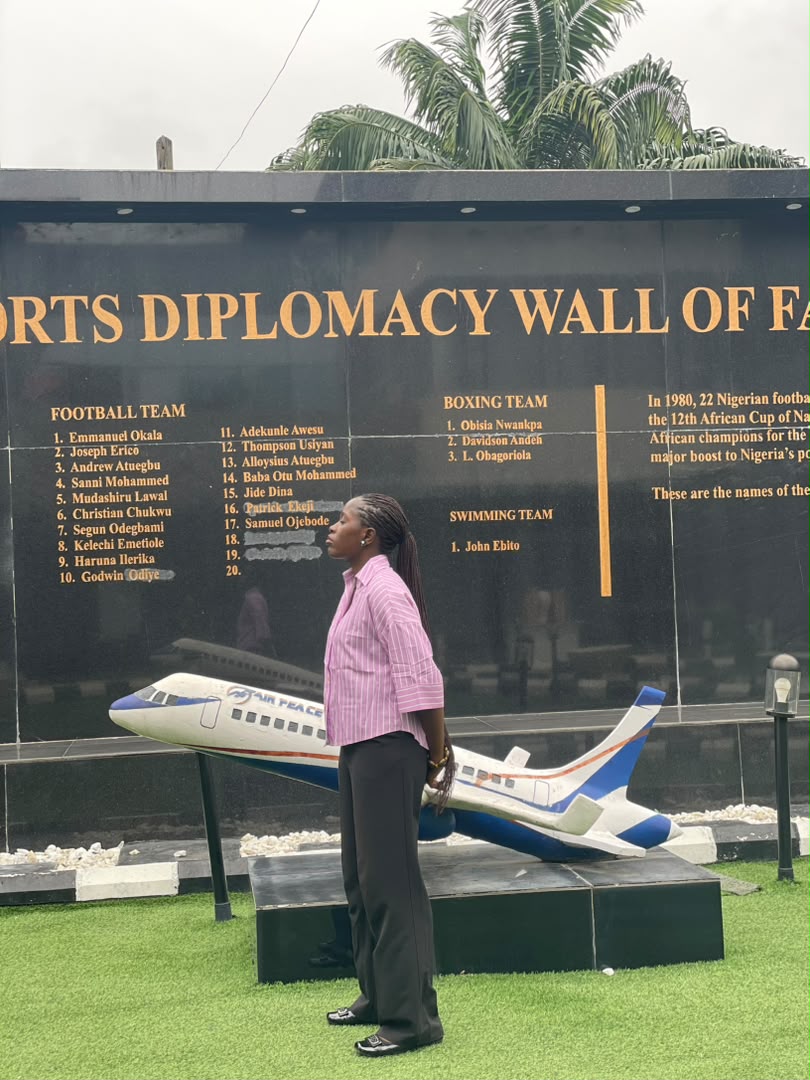
Although I entered because I was curious about it. I am leaving knowing that there is so much I can do with it. I am glad I could find childhood memories that remind me of how peace should be a human right.
Tell us about your thesis. What was it about, and what major challenges did you encounter while working on it? How did you overcome them?
My thesis examined the impact of inadequate community policing on the escalation of youth violence in Mushin. The topic was personal to me because I grew up in Mushin and had seen how violence had become part of the everyday environment. I wanted to understand the relationship between policing, community trust and youth violence in the area.
One of my biggest challenges was collecting data from the right people within a very short period. I needed responses from people who actually lived in Mushin, not simply people who knew the area. I was conscious that if I shared the questionnaire widely, some people might fill it out simply to help me complete my project, even though they did not meet the study’s criteria. That could compromise the quality and credibility of my data.
To overcome this, I deliberately reached out to people who currently live in Mushin and asked them to help circulate the questionnaire within their networks. I also clearly stated that only residents of Mushin should participate. I was more concerned with having accurate data than having responses simply for the sake of completing the required number.
Beyond academics, were you involved in extracurricular activities, leadership, volunteering, entrepreneurship, student organisations, or other activities at LASU? How did you balance these commitments with your studies?
Yes. I was very involved beyond academics. If I had to pick the first thing, it would be volunteering and service. I have always been a talkative, but I eventually realised that my voice could be useful beyond just talking. Through spoken word, I began using my voice to communicate ideas and create impact.
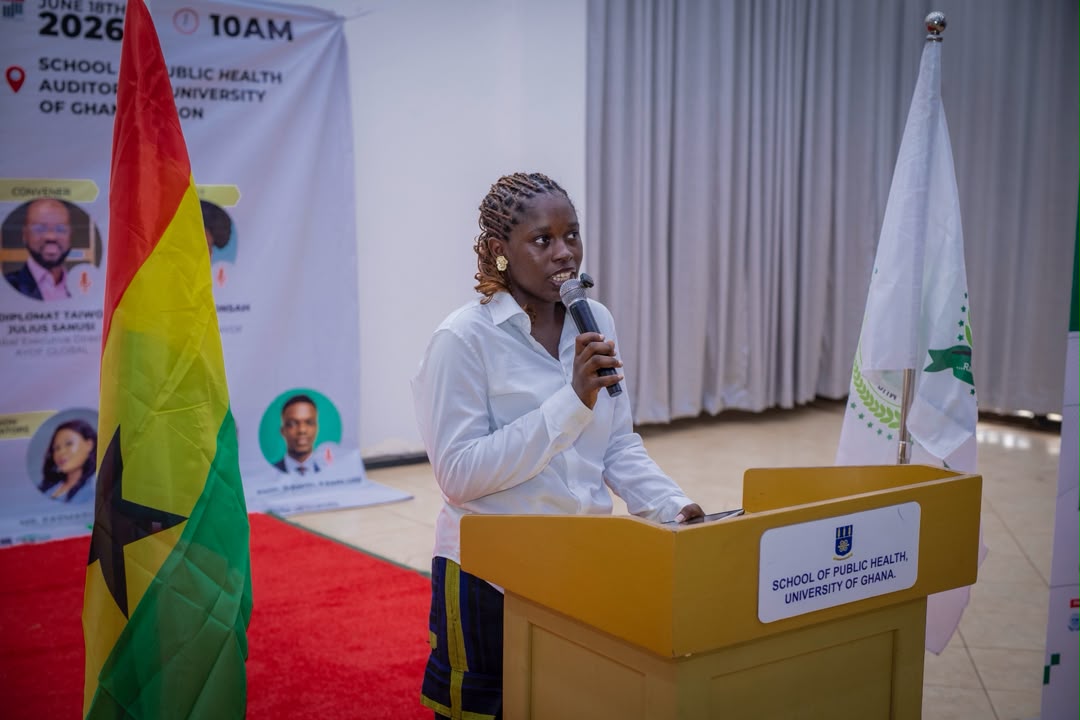
I also became involved in the SDG space. I joined the Sustainable Development Solutions Network (SDSN) Nigeria as an SDG Advocate, where I received training on the Sustainable Development Goals and participated in community outreach and virtual advocacy. I was also involved in leadership-development programmes such as the Aspire Institute and Lead Africa Youth Development Programme.
My interest in diplomacy grew alongside that. I served as a Campus Ambassador for International Model United Nations, where I organised a webinar on diplomacy, governance and youth participation. I’m also on the diplomatic team for the African Young Diplomats Forum, including its first cohort, where we received training and participated in diplomatic simulations. I currently serve as Vice Chair of the General Assembly 4 for Lagos Model United Nations.
I was also involved in student organisations, including the Lagos SDG Youth Club and the Lagos State University Debate Society, where I served as the secretary of the call-out (street debate), I also served as the assistant general secretary of the Lagos State University Alternative Dispute Resolution Society I also explored entrepreneurship, selling products online to university students alongside my other commitments. I was also a member of LASU Junior Chambers International.
One opportunity that particularly stands out to me was the Nigerian Women Association of Georgia (NWAG) Education Scholarship. Out of more than 1,000 applications, I emerged as the first-place recipient representing Oyo State. It was a significant achievement for me because it reminded me that continuously putting myself forward for opportunities eventually pays off. I had applied for many opportunities before that and faced rejections, but I kept going. When my mates were home during the holidays, I was busy resuming my campus work every morning, like it was my daily job to get recommendation letters. My family members would be wondering what was going on that they couldn’t even seem to do during the holidays. NWAG changed everything. The experience strengthened my belief that you have to keep showing up, because you never really know which application will become the one that changes something for you.
The truth is, I did a lot, but I was not a machine. In my first and second years, I was actively involved in several organisations, but by my third and fourth years, I realised I could not give everything the same level of attention. I narrowed my commitments to the spaces that I know I need to improve on.
Balancing everything came down to knowing my priorities. I did not miss lectures because of extracurricular activities unless there was a genuinely important event for which I had permission to leave early or arrive late. During examination periods, I also knew when to step back from other commitments. If I missed a class, I made sure I caught up, sometimes even asking for recordings or voice notes because I wanted to hear the material directly from the lecturer rather than relying only on someone else’s summary.
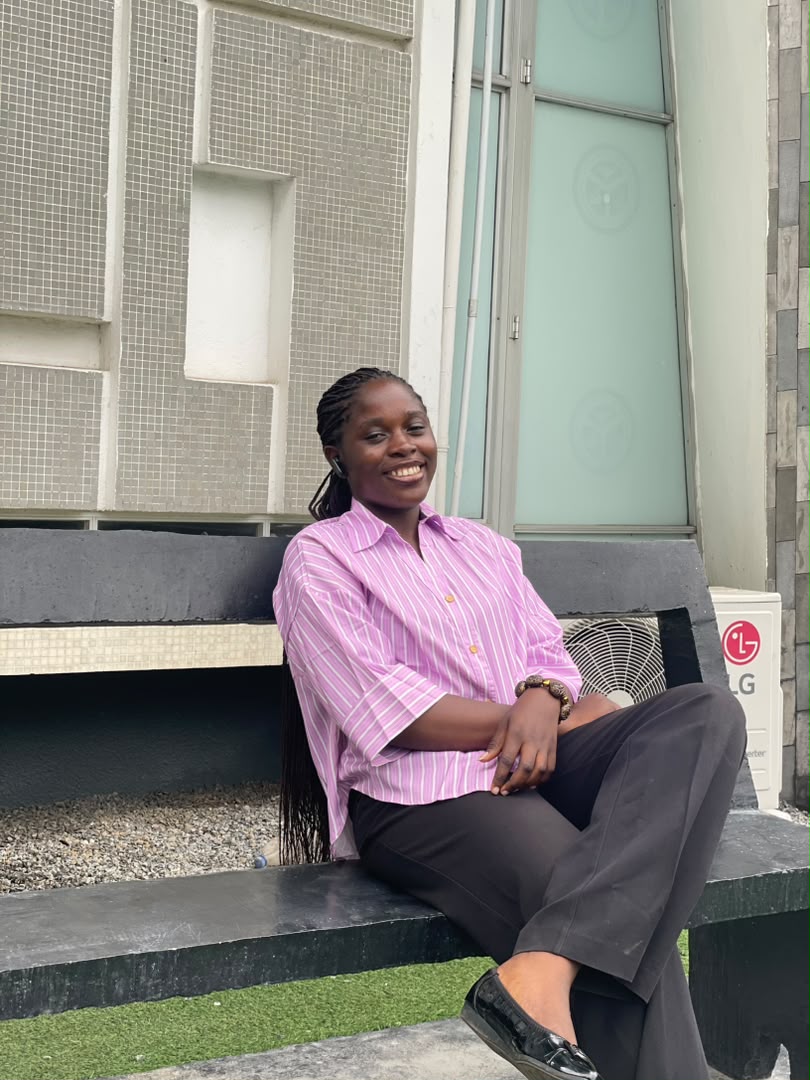
I think the biggest lesson was that involvement should not come at the expense of your primary responsibility. I wanted to make an impact outside the classroom, but I also wanted to graduate with excellent results. So I learnt to participate, but also to recognise when it was time to pause, refocus and move to the next phase.
Kindly share some of the study habits or strategies that helped you maintain your academic performance
I think my biggest study habit was knowing myself. I don’t necessarily start intensive reading from the first week of the semester, because that has never been the way I learn best. But I also know that once examinations are approaching, I become very intentional. If you know that you need to start reading from the beginning of the semester, then do that. The important thing is to understand what works for you.
One of my major study habits was learning my lecturers as much as I learnt the courses. I paid attention to their teaching patterns, their lecture notes and, especially, their past questions. I would go through about two years of past questions alongside the lecturer’s materials and look for patterns in how they set examinations. Some lecturers followed their materials very closely, while others wanted examples or particular ways of explaining things. Once I understood that, I knew how to prepare.
I also used past questions strategically. After studying the materials, I would test myself with previous questions to see whether I actually understood what I had read. By the time I entered an examination, I usually had several questions I was confident about. If the instruction was to answer three questions out of, say, six, I made sure I knew at least five well enough to give myself room to choose the three I was strongest in. I wasn’t just hoping for questions I had prepared for; I had studied the material and the lecturer’s pattern enough to make an informed decision about what I was likely to face. There was only one occasion this didn’t work out. I predicted my lecturer, but I was shocked in turn. Just play it safe.
Another thing I took seriously was continuous assessment. I saw my CA as the part of my result that was largely within my control. If I could secure a strong mark there through assignments, presentations, participation and tests, then I knew I had given myself a good foundation before the examination. I usually aimed for 23 and above in my continuous assessment, because once I knew I had secured a good CA score, I could focus on what I needed to do in the examination. My mindset was if I put in the hard work, I should be able to get at least 50 in the exam, with God’s backing. It was how I approached my goal of getting a 5.0 every semester. I focused on what I could control, did my part, and trusted God.
Nigeria has experienced different forms of insecurity, communal conflicts, political tensions, and social unrest. From the perspective of someone trained in peace studies, what do you think are some of the major factors that make peace difficult to sustain in Nigeria?
I think one of the biggest things making peace difficult to sustain in Nigeria is that we often see the warning signs but fail to respond early enough. From a peace studies perspective, early warning should lead to early response. We already know the areas that are volatile, we can identify patterns, and we can see how insecurity is moving across regions. Yet we often wait until people are kidnapped or killed before responding. The recent mass abductions in Niger State and the earlier abduction of schoolchildren in Oyo State show how serious this problem has become. Armed groups that were once largely concentrated in the North are increasingly finding routes into other parts of the country.
Another issue is the gap between security policy and actual capacity. We cannot keep creating initiatives without asking whether they are being implemented effectively. For instance, Nigeria has had a Safe Schools Initiative for years, yet students and teachers are still being abducted, including the 39 pupils and six teachers taken from Oyo State in May and held for over 50 days. This informs me that the problem is not simply knowing what to do; it is having the institutions, intelligence, resources and coordination to actually do it.
I also think citizens have a responsibility in sustaining peace. In a democracy, participation cannot stop at complaining about bad leadership. We have to vote, ask questions and hold institutions accountable. Before we say, “This is what the government should have done,” we should also ask whether we participated in choosing the people who govern us. That does not remove the government’s responsibility, but democracy works better when citizens participate beyond social media conversations.
Finally, I think Nigeria has to move beyond negative peace. At the moment, even negative peace is difficult to sustain when kidnapping, banditry and armed violence continue to affect people’s daily lives. Positive peace – which means addressing injustice, insecurity, exclusion and the conditions that allow violence to flourish and living harmony or staying calm – is therefore even harder to achieve. For me, the solution is not one thing. We need early-warning systems that actually trigger action, stronger security institutions, better intelligence and coordination, accountable leadership and citizens who participate. Peace is not something we achieve once; it is something we have to continuously build and protect.
After LASU, how do you hope to apply your knowledge of peace studies to make a meaningful impact in Nigeria or beyond?
Peace Studies has made me realise that I do not want to limit my career to one definition of security. I want to pursue a career in diplomacy and international and global security and eventually represent Nigeria in spaces where decisions that affect our country are made.
One of the biggest things the course has taught me is that problems do not respect borders. A security crisis in one country can become a regional problem, just as a conflict or disruption thousands of kilometres away can affect what happens in Nigeria. The Russia–Ukraine war, for example, disrupted global food and energy markets and contributed to rising food prices in countries far beyond Europe. Climate patterns such as El Niño can also have consequences far from where they originate, affecting food security and livelihoods in regions such as West Africa. The Lake Chad Basin is another clear example: Nigeria, Niger, Chad and Cameroon share interconnected security, environmental and humanitarian challenges, with armed groups such as Boko Haram and ISWAP operating across borders.
That is why I am interested in security analysis and diplomacy. I want to understand problems early, identify their root causes and contribute to solutions before they become bigger crises. I want to work in rooms where countries sit around a table to negotiate, prevent conflict and protect their interests. I want to become a peace advocate and, where possible, a peace spokesperson.
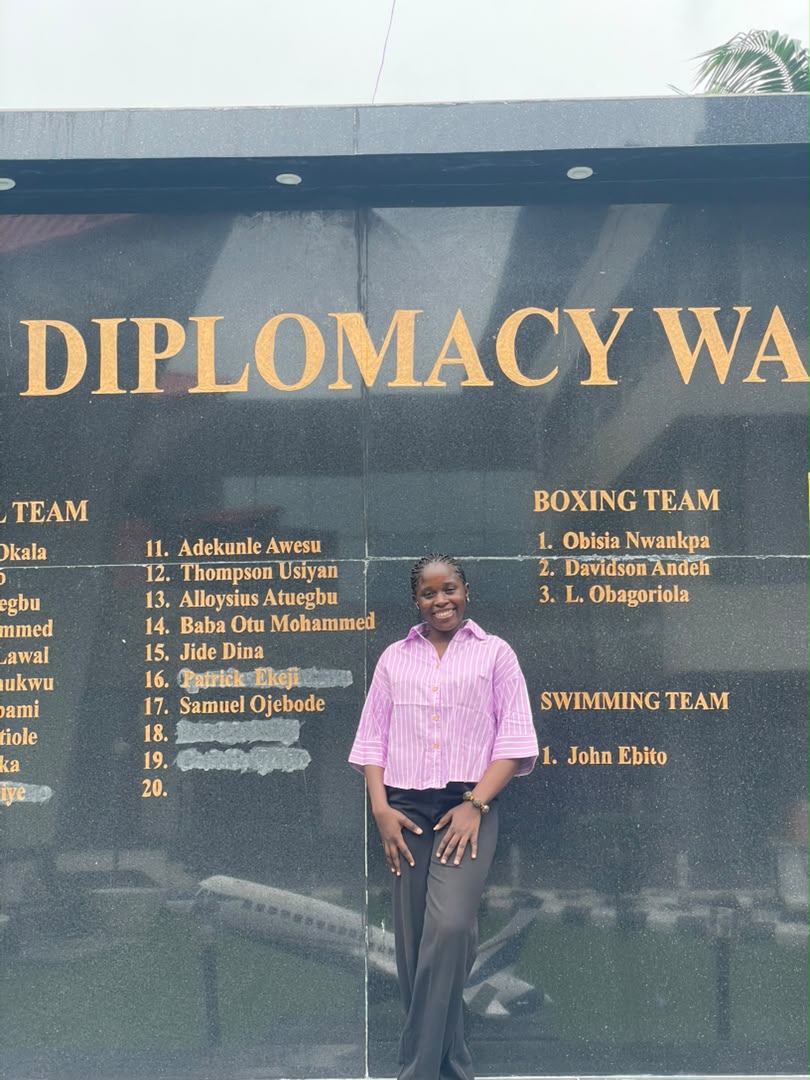
Beyond my personal career, I also want to change how people see peace studies. It is not a small course, and its graduates are not limited to one career path. We need people who understand conflict, diplomacy, security, human relations and the systems that connect them. I want my career to demonstrate that there is a lot you can do with this field.
So, yes, I want to represent my country, contribute to global security, build peace and help solve problems that cross borders. Perhaps, one day, I will come back and become President of Nigeria.
Finally, what advice would you give to students who may be interested in studying peace studies but are uncertain about its career opportunities?
Curiousity made me accept the course. So be open, be curious. You are lucky to know it exist, I never knew. Along the way, people would ask me, “What is peace studies? ” I have never heard of it.” Having to explain it to people repeatedly made me realise just how much potential the field has, and it made me want to contribute to changing that narrative.
So, if you are uncertain about the career opportunities, I would tell you not to be. Peace studies is vibrant, and the world needs people who understand peace and conflict. It is not limited to security. You can work in environmental security, food security, diplomacy, international organisations, NGOs, government, research, policy, mediation and conflict-affected communities. You can even work in human relations as an HR because wherever people interact, conflict can emerge, and understanding how to manage those interactions matters. Even governments need people who can analyse security patterns, anticipate risks, prevent escalation and advise on how to manage crises.
My own course also taught me to look at issues from different perspectives. As a peace studies major in the Department of Religions and Peace Studies, I studied African traditional religion, Christianity and Islam alongside peace studies, as well as areas such as international relations and geopolitics. That experience taught me that religion cannot simply be ignored when we are discussing conflict. People’s beliefs and values often influence how they see themselves, others and the conflicts around them. Understanding those differences has made me more conscious of how to approach negotiation, dialogue and peacebuilding without imposing my own beliefs on other people.
So my advice is simple: don’t see peace studies with small eyes. Tell people what you do. Explore opportunities. Build skills. Ask questions. Put yourself in rooms where you can learn. You do not have to know exactly where the degree will take you before you start.
I entered Peace Studies because I was curious. Honestly, if you would ask me where peace studies is needed, I would ask you back: where are people not interacting, where are conflicts not happening, and where is peace not needed? That is where you begin to understand how much room there is for us.
A TIP
One of the strongest lessons I am taking away from university is that your CGPA has very little to do with what you are. There are lessons from experiences you will carry long after the degree. Do be open, stay curious and enjoy navigating the turbulence and happy moments.
Nigeria apparently has the 3rd highest number of churches in the world but seems to be lagging in the area of godliness. Can she share her thoughts on this?
First of all, I think we need to establish what we mean by godliness. Is it attending church and praying, or is it the life we reflect on after we leave church? For me, the number of churches does not automatically determine the impact we make. What matters is what we are being taught and whether those values–integrity, accountability, compassion, love for one another and justice are becoming part of our daily lives.
I also think churches have a responsibility beyond the sermon. What happens after the sermon? Are we teaching accountability? Are we following up with members? Are we encouraging people to take those values into their workplaces, communities and even leadership?
At the same time, the responsibility is not entirely on the church. You can hear the right thing on Sunday and still choose to be dishonest on Monday. We have to practise what we are taught until it becomes part of our character. So, for me, godliness is not just about how many churches Nigeria has; it is about how much of what is taught in those churches actually follows us into our everyday lives and institutions.









 EduTimes Africa, a product of Education Times Africa, is a magazine publication that aims to lend its support to close the yawning gap in Africa's educational development.