






















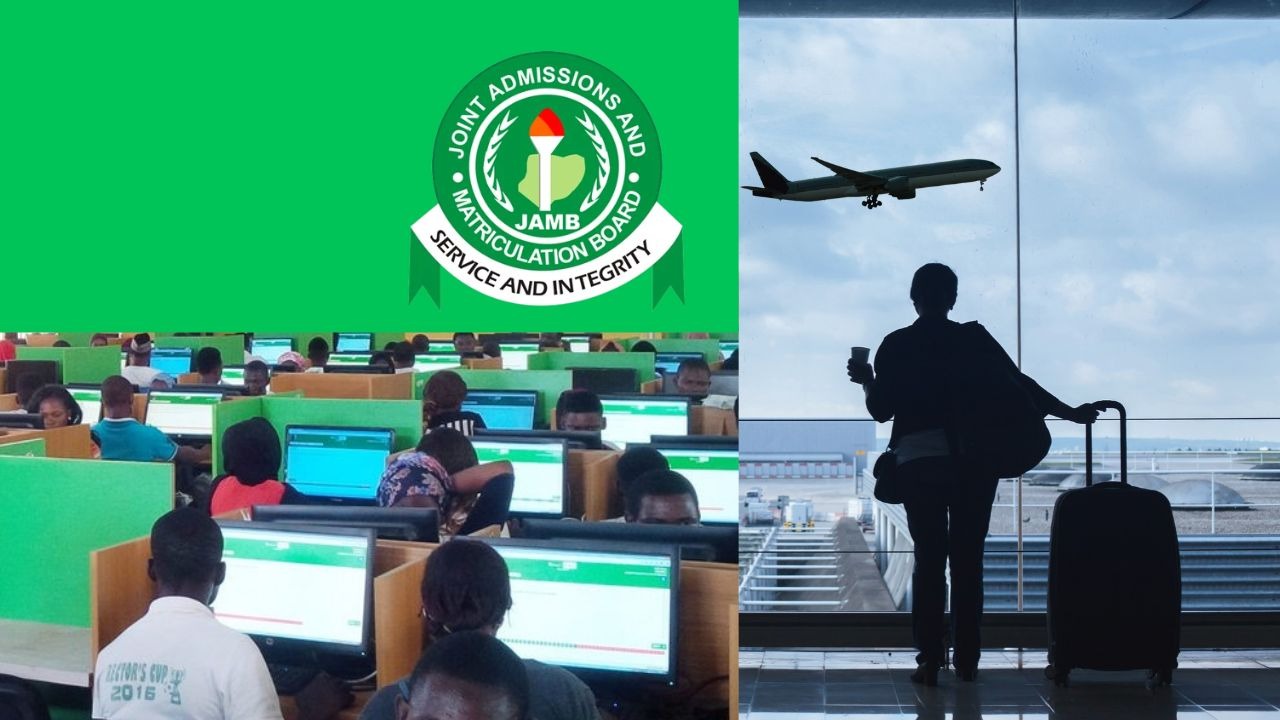


I came across a Facebook post by Stella Owala that got me thinking. She advised parents not to let their children waste time trying to navigate the complexities of JAMB but to consider sending them abroad instead. According to her, several European countries offer three-year bachelor’s degree programmes, opportunities to study and work, scholarships, and possible pathways to permanent residency and citizenship.
Read also: 5 Reasons Nigerians Are Choosing to Japada

Beyond the promotion of studying abroad lies a serious question: Why can’t we make Nigeria’s higher education system attractive enough for our children to pursue their dreams without feeling that their best opportunities lie elsewhere?
First, why can’t we consider three-year bachelor’s degree programmes in Nigeria? While some European countries operate three-year undergraduate systems, many Nigerian programmes take four years or more, depending on the course and institution. Professional programmes may take even longer. Although differences in curricula and accreditation requirements matter, shouldn’t we explore ways to shorten the duration of suitable programmes without compromising academic standards?
Imagine students graduating earlier, entering the workforce sooner, and reducing the financial burden on their parents. We do not have to copy foreign systems wholesale, but we can learn from them
Second, why can’t Nigerian university students enjoy more opportunities to study and work simultaneously? This is not about abandoning academic responsibilities. It is about creating structured, flexible work-study arrangements that allow students to gain relevant experience while earning an income.


Universities could collaborate with businesses, hospitals, technology companies, and other employers to provide internships, part-time jobs, and practical training. Such opportunities would help students develop professional skills, build networks, and graduate with more than theoretical knowledge.
Read also: 5 Reasons Why Nigerians Japa
Many Nigerian students struggle financially, depending on parents who are already battling rising living costs and educational expenses. A system that enables students to support themselves while studying would be a welcome development.
Third, what happened to making scholarships more accessible to academically deserving students? Nigeria has brilliant young people whose dreams are constrained not by a lack of intelligence but by a lack of money.
Although scholarships are available through government agencies, universities, private organisations, and individuals, we need a more coordinated, transparent, and adequately funded system. Merit should be rewarded, while financial need should also be considered. Businesses, wealthy individuals, and alumni associations could contribute more meaningfully to funding te education of deserving students.
Of course, studying abroad is not a magical solution. Tuition fees, living expenses, visa restrictions, and uncertainties surrounding permanent residency can create serious challenges. Scholarships are not guaranteed, and opportunities differ across countries. Nevertheless, the perception that foreign universities offer better prospects continues to influence Nigerian families.
That should concern us.
If we keep doing things the same way without evaluating what needs to change, more young Nigerians may look elsewhere for educational opportunities. JAMB will continue conducting examinations, but the bigger question is whether our universities are competitive and attractive enough to retain students.
The opening of a JAMB examination centre in Canada adds another dimension to this conversation. It shows that Nigerians abroad still have reasons to participate in the country’s admission process, although the existence of such a centre alone does not prove that students are abandoning Nigerian universities.
Ultimately, this is not an argument for abolishing JAMB or encouraging every Nigerian to study abroad. Entrance examinations serve a purpose. The real issue is whether we are doing enough to improve access, affordability, efficiency, and quality in our universities.
We cannot keep asking young people to believe in Nigerian education while ignoring the reasons some are looking beyond our borders.
Perhaps, if we make our universities places where students can graduate efficiently, work while studying, access scholarships, and build promising futures, fewer parents will feel the need to choose JAPA before their children even write JAMB.

Social Media Handles
LinkedIn: /henryndunkaagholor
Facebook: /Ndunka
Instagram: @henrindunca
TkTok: @henry.ndunka

YouTube: @HenryNdunkaAgholor
WhatsApp: 08139000453
Email: henryndunka@gmail.com











 EduTimes Africa, a product of Education Times Africa, is a magazine publication that aims to lend its support to close the yawning gap in Africa's educational development.
