


























Africa’s universities still have a long way to go in the global race for academic excellence, as institutions in Europe and Asia continue to strengthen their positions.
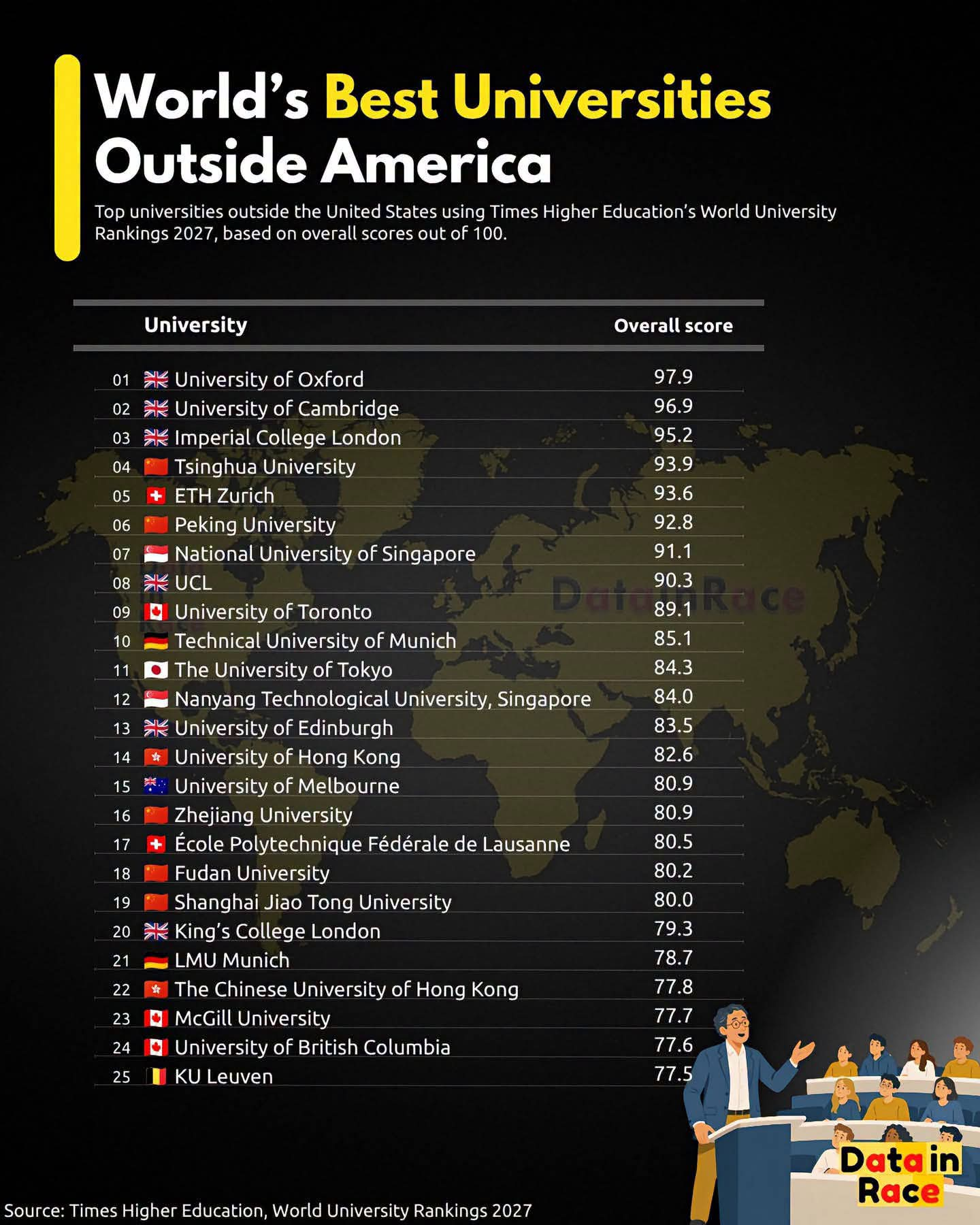
The latest rankings place no African university among the world’s top 25, highlighting the continent’s struggle to compete with leading institutions in research, innovation and academic performance.

South Africa appears to be Africa’s strongest contender for a place among the world’s elite universities. However, the continent faces growing competition as China expands its presence in the global top 200, increasing its representation from 13 universities last year to 17.

The University of Oxford leads the rankings with a score of 97.9, followed by the University of Cambridge at 96.9 and Imperial College London at 95.2. China’s Tsinghua University ranks fourth, while Switzerland’s ETH Zurich completes the top five.


For Africa, the challenge goes beyond university rankings. Limited research funding, inadequate infrastructure, brain drain and gaps in technological development remain important issues that policymakers and university leaders must address.
If African universities are to compete globally, governments must prioritise research, strengthen academic partnerships, invest in modern facilities and create conditions that attract and retain talented scholars.
The question is no longer whether Africa can produce world-class universities, but what it will take for more of them to earn recognition among the world’s best.
#










 EduTimes Africa, a product of Education Times Africa, is a magazine publication that aims to lend its support to close the yawning gap in Africa's educational development.
