




























































The federal government has announced an annual Nigerian Education Repository and Data Bank, NERD, loyalty awards of ₦5 million to ₦20 million for outstanding undergraduates, Master’s and Doctoral Thesis on data.


It says by tying institutional access to verified records which the government aims to turn into a practical deterrent against certificate forgery, it will serve as a strategic national infrastructure designed to secure, standardise, digitise, and authenticate academic records across post- secondary and tertiary institutions in Nigeria.

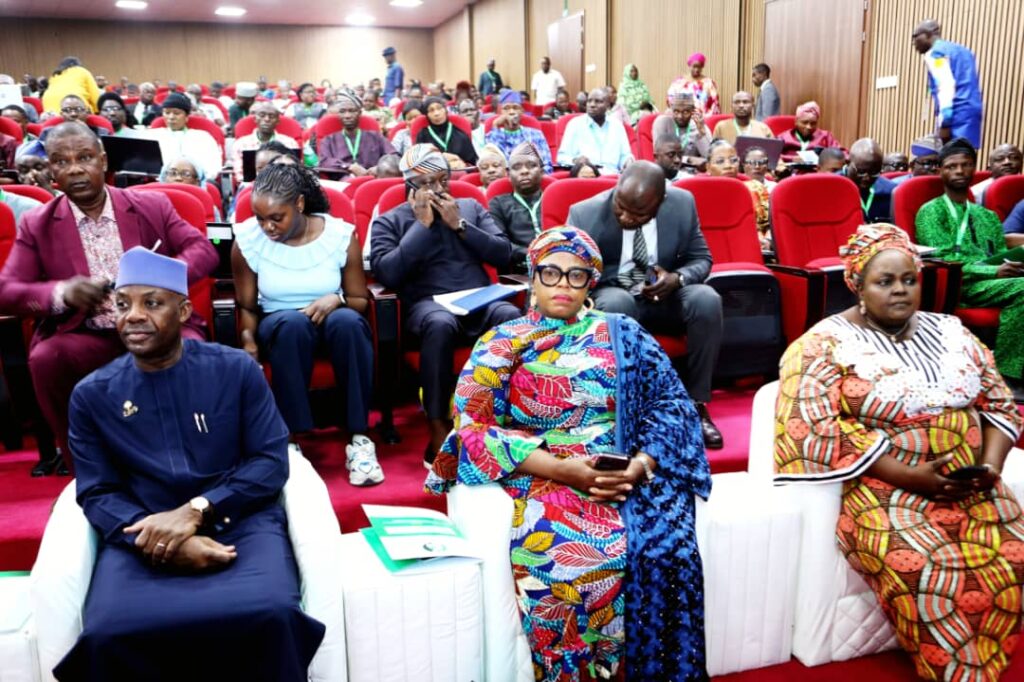
Minister of Education, Dr. Tunji Alausa who announced this in Abuja on Thursday at the 2026 national capacity building programme on the implementation and enforcement of the Nigeria Education Repository and Data Bank policy, said the November maiden event will spotlight students whose verified credentials exemplify the platform’s push for academic integrity.

Speaking on the theme, “Strengthening institutional compliance and academic records integrity”, Alausa said compliance with the repository data bank has become mandatory for participation in the National Youth Service Corps and for accessing funds from NUC, NBTE, NCCE and TETFUND.

With over 350 tertiary institutions now linked to the system which issues national credential numbers and runs real-time verification for more than 133,000 students, Alausa stated that the programme is a covenant with citizens, noting that recent investigations due to data has removed civil servants found with fraudulent degrees.
According to the minister: “To further promote academic excellence, I have approved the establishment of the NERD Annual National Laureate Prize and Awards Programme, which will reward outstanding Undergraduate, Master’s,
and Doctoral theses with prizes ranging from ₦5 million to ₦20 million. The
maiden edition will hold in November 2026.
“It is important to clarify that while NERD compliance is now a prerequisite for participation in, or exemption from, the National Youth Service Corps (NYSC), enforcement extends far beyond NYSC. Agencies such as TETFund, the National Universities Commission (NUC), the National Board for Technical Education (NBTE), the National Commission for Colleges of Education (NCCE), and the Industrial Training Fund (ITF), as well as all accredited tertiary institutions, are mandated to ensure compliance as a condition for accessing their services.
“It represents the Federal Government’s firm commitment to education data ownership, zero tolerance for academic
fraud, and the preservation of our national academic history.

“With the approval of the Federal Executive Council, NERD was established as the digitisation vehicle of Nigeria’s education sector, with a mandate that includes the administration of National Credential Numbers (NCN), the National Credential Verification Service (NCVS), the National Students Clearing House, a federated repository of academic texts and abstracts, and a National Academic Publication and Indexing Database.”
Alausa revealed that within just four months of enforcement, NERD has curated and preserved close to 100,000 digital student submissions that might otherwise have been lost to
obscurity.
He said to protect institutional autonomy, the government approved that 40% of profit-sharing from credential verification services reverts to the institution of origin, noting that even though NERD is federally owned, it is collectively beneficial and participatory in structure.
Reiterating that the future of Nigerian education is data-driven, transparent, and digitally verifiable, over 350 universities, polytechnics, monotechnics, and colleges of education have been on boarded for real-time credential verification. More than 133,000 students and over 6,800 lecturers are now enrolled on the platform, supported by over 665 focal persons nationwide.
In addition, through collaboration with Nigerian digital entrepreneurs, NERD has established 1,060 Digital Service Centres across the country, creating
over 3,000 direct jobs within four months. This is reform with measurable impact.
He added that so far, NERD has developed robust repository software and an indigenous anti-plagiarism system. It would contradict national interest to ignore what we fully own in favour of foreign alternatives.











 EduTimes Africa, a product of Education Times Africa, is a magazine publication that aims to lend its support to close the yawning gap in Africa's educational development.