
















































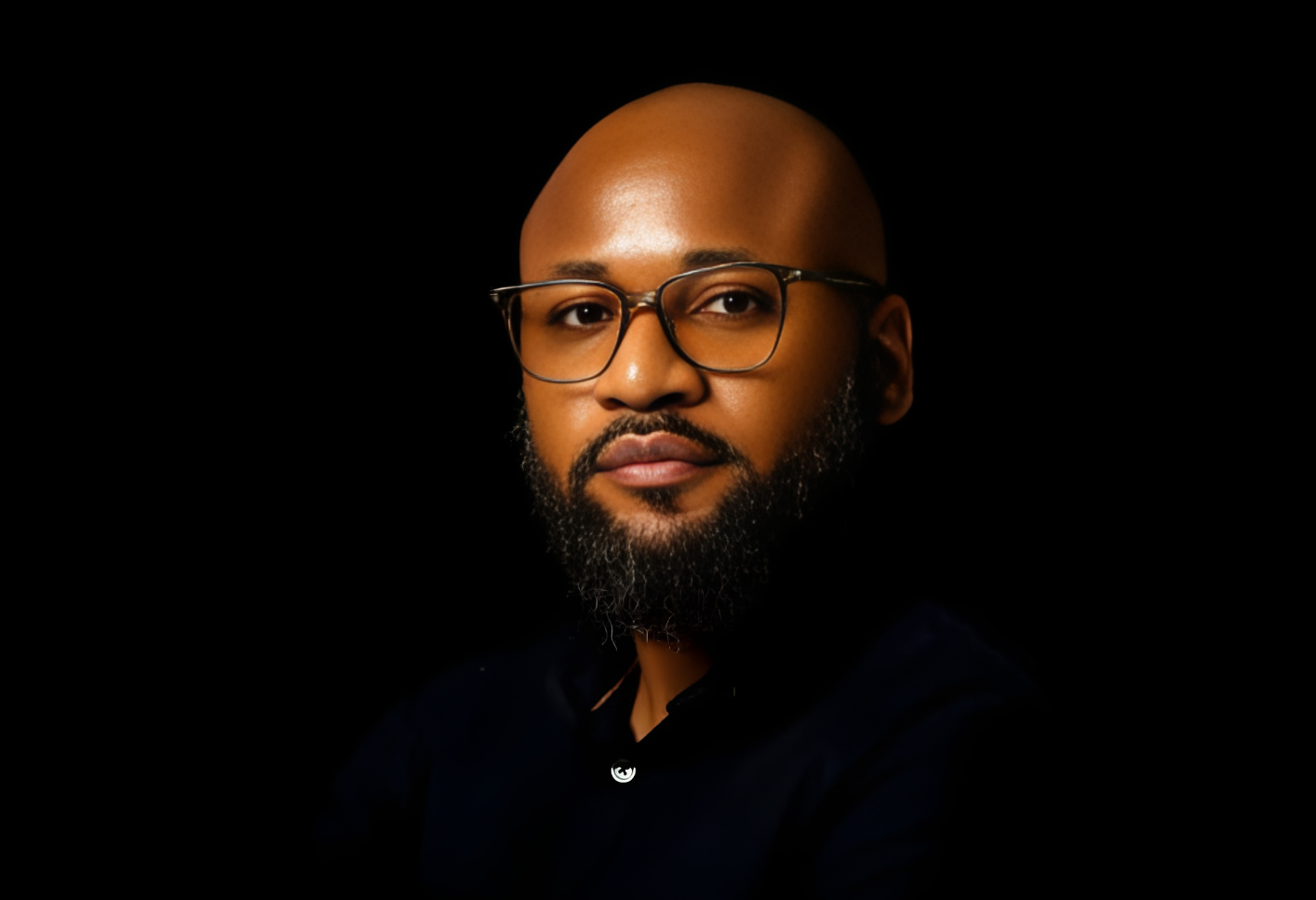


What inspired you to establish EduAid Africa, and what problems were you aiming to solve?
I saw firsthand the macro societal impact of an ill-educated society. I experienced firsthand, the times when access to quality education was possible, not because it was affordable, but because I had aspirational, resilient parents who pushed their limits – that story resonates across many African homes, where quality education is now a privilege. Our households today struggle to meet the demands that come with desiring to properly educate our children on the continent. Financing is a major problem (access, pricing, sustainability, and flexibility). As we speak, there is no structured finance access to private quality education, whether by government initiatives or in the private sector. And so, what we have built is a platform for both households and educational institutions to mutually benefit from a holistic system that enhances a thriving ecosystem.
You might also like thesePosts



From your perspective, what are the major challenges in financing education across Africa today?
Many would think the number one reason would be capital, or financing – but the major problem is the mind of the African, who does not see the value that the continent holds, and the possibilities that can liberate us. Today the spend on education tourism, as expensive as it is, remains the go-to for many African households, because the semblance of quality, of a better life, of proper education with the right infrastructure, the right curriculum, the faculty, is as with everything else, externalized. In the same way, other sectors are heavily dependent on the “developed world” for what is perceived to be the best, Africa never thinks of or believes in herself when she thinks of what is best, and so our minds need to be liberated and then only, would we begin to become. Capital is a secondary problem. Big FIs and governments have for decades not paid enough attention to the flight of human capital from the continent and its implications on our future and the generations to come. Worsening socioeconomics place a heavy toll on the basket of consumption for households, de-prioritizing or relegating education spend in favour of physiological needs.

The quality of faculty and the incentives to keep them: The world is a global market for educators and unfortunately we do not value the profession enough to give the discipline the holistic rewards that it deserves – the rewards, the remuneration, the investments and financial benefits to incentivise the educators in an ever-shining world. Clearly, infrastructure deficiencies exist in research and development and in laboratories. Quality education is expensive and rightfully so. This is only reflective of our society and the associated costs of self-providing quality in a really, really tough environment.


How does EduAid Africa go beyond traditional school fees financing to impact education outcomes?
This is critical. Allow me to list my response:
(i). EduAid cuts across the K-12 to tertiary education levels, giving households access to financing across their entire education journey.
(ii). We carry a long-term, non-restrictive approach, which means, we provide the flexibility of mobility across the continent. In fact we encourage education migration and plan to pioneer this as it would further deepen other facets of education, not found inside classrooms. We provide our partnership financing solution for households to move freely not only within countries but also across the continent, without hassle. The access you have in Nigeria, is the same you have in Kenya or Zimbabwe.
(iii). Partner institutions profiled on our platform gain stable, predictable cashflow from tuition and other fees, significantly improving their enrollment and retention numbers. Institutions can also leverage this partnership to access finances to improve their institutions – financing their projects, educator’s training, and other tailored needs.
(iv). EduAid is affordable, with a business model that underpins this. We ensure long-term affordability by first, applying the right capital that allows us to guarantee a 1% year-on-year reduction in our rate for consistent users.
(v). We leverage our dedicated tech-enabled, easy-to-use platform to provide real-time reporting to all users. This provides data insights for users, especially institutions, so to inform their decision-making. The impact of this is enormous and redefines education sector financing behaviour and history.
(vi). Our long-term vision is to become that platform across the continent that serves as the root to all educational needs for all households and private institutions across the continent.

What key financial management gaps have you observed among school leaders, and how can they be addressed? Many institutions are not governed properly therefore corporate governance takes the back seat. Financial administration, decision-making processes, record keeping and financial reporting are not at the levels that they should be. The business side of running an educational institution deserves more attention than it gets. Financial data is informative and should be prioritized. The same level of expertise that goes into running a world class classroom should also be employed in financial management.
How can private solutions like EduAid Africa complement government-led education financing initiatives?
Government initiatives like Nigeria’s NELFUND are tailored towards public tertiary school beneficiaries – a lot of work needs to go into sensitsation and ensuring that the true benefits are not designed just as projects but institutionalised. EduAid is laser-focused on the private education space across the K-12 to tertary levels across the continent. Together, these two initiatives can, if properly run, provide the much-needed basis for a much more productive, educated society. This is Nigeria’s case alone. Imagine the potential magnitude of synergy across the continent that boasts of approximately 1.6 billion people and growing at 2.6% per annum!
What strategies have you used to build trust with parents and schools in a challenging financial environment?
The very reason we exist is because of the prevalent challenging financial environment. Sadly, it will remain so for the foreseeable future unless we take drastic, intentional measures to course-correct our fate. Our trust proposition is beyond agreements and commitments to long-term partnership financing; it extends to promising that your data is safe and secure as we are NDPR compliant and we aim for the best of global practices in our evolutionary journey. We are not distracted, therefore, our product is laser focused on the education ecosystem, ensuring that all touchpoints in the value chain receive the best of our attention. We engage in joint marketing campaigns to tailor-build solutions to match individual schools’ needs, and more.
What is your vision for the future of education financing in Africa over the next decade?
My vision in the next ten years for Africa is that no desiring, eligible household should lack the much-needed access to quality education. My vision is that the neo-colonial mindset towards getting quality education would have shifted in such a way that it becomes worth it for households to invest in their children on this continent. I believe and desire very strongly, that ten years from now, we would have set such a well-founded precedence that access to quality education becomes as important to all – government and private players – so that adequate flow of capital in this direction is achieved without difficulty.
What are the eligibility requirements for African Schools and Parents to benefit from the EduAid Africa education funding programme?
Let’s separate this into two – eligibility for households and eligibility for institutions (i). Households:
1. Bonafide status – gainfully employed or self-employed
2. Good credit history (where applicable)
3. Able to provide 30% of the tuition financing
(ii). African Schools:
1. Duly registered with the country’s corporate incorporation body (e.g. the CAC in Nigeria)
2. Certified/Licensed to operate
3. Clear board governance structure
4. Privately-owned institutions
5. Certified and experienced educators and members of staff
6. Registered member of relevant membership bodies
7. Fully tax-compliant
8. Embrace technology – aspirational, in the works, or fully in place.
Does EduAid Africa fund student’s education dreams abroad and are institutions overseas able to participate in this service as well?
Our definition of abroad is across the African continent, that’s where our focus lies. Where African institutions have partnerships for initiatives like exchange programmes with parties outside of the continent, we are happy to support these partnerships. Foreign bodies that have strong partnerships with African institutions that foster education on the continent can benefit from EduAid. We do not partner with households and students who aspire to get their education directly from institutions outside of the continent.
Enrolment expansion and access equity in education are key to narrowing socio-economic partcipation gaps in Africa. Could you explain how EduAid Africa plans to influence this in Africa?
We approach this in two ways – one, we ensure that our rollout plans begin with the markets where we find the most eligible but estranged households, deprived of access to quality education. Secondly, our business model ensures that a portion of our bottom line is directed towards the out-of-school members of society, thereby providing access and fully funded programmes to these members of society. Closing the gap is a major part of our long-term goal, fully engrained in our model and aspirations for what we see on the continent.
Would EduAid Africa be considering or prioritising gender parity acceleration through its funding programmes now or in the future, thereby impacting SDG-4 and SDG-5?
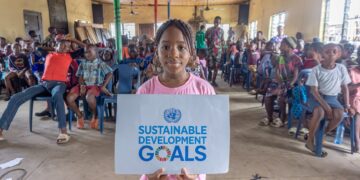
EduAid directly addresses SDG 4 (Quality Education), SDG 5 (Gender Equality) and SDG 10 (Reduced Inequalities). Let it suffice to say that we believe this will continue to make us highly attractive to the much-needed impact capital that we need to drive our initiatives and address the enormous scale of the existing challenge and opportunity.
Educaton will continue to lead to economic empowerment across the globe. How do you think EduAid Africa can help to achieve intergenerational poverty disruption across African countries?
The multigenerational impact of our story cannot be measured. The essence of community, deeply ingrained in our African culture almost guarantees that one liberated, educated and empowered African would in turn pass on that privilege forward and empower his family which then filters through to communities, countries and the continent. We see that multiplier effect seeping through and uplifting generations to come. I wrote on this quite recently, and I am happy to share it with you here.
The Impact of EduAid on the African Continent – The Compounding Power of Education Finance Done Right. The Poverty Trap
Education Can Break
Intergenerational poverty which persists primarily because families cannot afford to invest in the one asset that compounds across generations – quality education. A parent who couldn’t access private schooling raises children who are statistically likely to face the same barrier. EduAid interrupts this cycle by removing the upfront financial barrier entirely.

How EduAid Africa Can Drive This Change
1. Financing Access, Not Just Awareness: Most African families know education matters – but they simply cannot pay for it when fees are due. EduAid converts an impossible lump sum into manageable structured payments, making enrollment a financial decision rather than a financial impossibility.
2. The Multiplier Effect of One Educated Child: Research consistently shows that each additional year of quality schooling increases an individual’s lifetime earnings by 8–10% on average. In African contexts, educated children disproportionately support extended families – meaning one financed student can lift an entire household, and eventually a community.
3. Keeping Girls in School: Across Sub-Saharan Africa, girls are disproportionately withdrawn from school when fees cannot be met. A financing platform that removes cost as the deciding factor directly addresses one of the continent’s most stubborn gender and poverty intersections. Educated women reinvest up to 90% of their income into their families — compounding the generational impact further.
4. Institutional Stability Through Reliable Funding: When schools receive consistent, financed fee payments rather than irregular cash collections, they can plan, hire better teachers, invest in infrastructure, and improve outcomes. EduAid doesn’t just help students – it strengthens the institutions serving them.
5. Building a Credit Identity for the Underserved: For many families, successfully repaying an EduAid facility may represent their first formal credit relationship. This creates a financial footprint – opening doors to future credit for business, housing, and even further education. Financial inclusion and educational inclusion become mutually reinforcing.
6. Scale Creates a Data Asset: As EduAid grows across Nigeria, and goes pan Africa eventually, it accumulates rich data on education financing behaviour, repayment patterns, and outcomes. This data can inform government policy, attract development finance, and enable increasingly tailored products for underserved communities.
The Generational Thesis
The child whose school fees are financed today becomes the professional who no longer needs financing tomorrow – and who can afford to pay for his or her own children’s education outright. That is the definition of intergenerational poverty disruption; not charity, but structured access that builds self-sustaining cycles of investment and return.
EduAid Africa’s most profound contribution may not be measured in naira disbursed or institutions onboarded. It will be measured in the first generation of children from low-income families who graduate, earn, invest back, and ensure their children never face the same barrier they once did.
_________________________
Tidiku Lucas Mato Founder & CEO, AdninCap Ltd | Fintech & Education Finance Innovator | Chartered Investment Professional | Pan-African Leader
Tidiku Lucas Mato is a Lagos-based financial services executive, entrepreneur, and impact-driven capital markets leader with over a decade of experience spanning institutional banking, alternative finance, and financial technology. He is the Founder and CEO of AdninCap Ltd (AdCap) — a company at the forefront of structured credit deployment for SMEs and a pioneer in education financing across Africa. Tidiku’s career is defined by a rare combination of institutional rigor and entrepreneurial conviction. He spent over six years at GTBank — one of Africa’s most respected financial institutions — progressing from OMicer in International Banking and Group Subsidiaries Coordination to Team Lead, before transitioning into Client Relationship Management. This foundation gave him an uncommon depth of understanding of how capital flows across borders, how institutions are built to last, and how relationships underpin every sustainable financial transaction. He subsequently served as Manager at Augusta Capital Partners Ltd, where he deepened his expertise in private capital, investment structuring, and market development across nearly four years. He then took on the role of Managing Director at Simple Finance Company Limited, a Central Bank of Nigeria licensed institution, where he led full institutional operations before founding AdCap in November 2024. At AdCap, Tidiku has built two strategically distinct and independently compelling business verticals. The SME Financing arm addresses the persistent credit gap facing Nigeria’s small and medium enterprise sector. The second vertical, EduAid Africa, is his flagship and most transformative creation — a live, technology-enabled education financing platform that structures access to quality private education for families across Africa. Tidiku holds a Bachelor’s degree in Business Administration and Management from the American University of Nigeria — an institution whose values of critical thinking, cross-cultural leadership, and purposeful service have remained a compass throughout his career. He has further sharpened his global business acumen with a Certificate in Global Business from Harvard Business School Online and holds a qualification in Wealth & Investment Management from the Chartered Institute for Securities & Investment (CISI). Outside the boardroom, his interests in music and football reflect the same qualities that define his professional approach — creativity, teamwork, and the discipline to perform under pressure. What distinguishes Tidiku is not simply what he has built, but why. He operates from a deep conviction that thoughtful, structured capital deployment — deployed with integrity and long-term vision — is one of the most powerful levers for economic transformation in emerging markets. Whether financing a growing SME or enabling a child from a low-income family to access quality schooling, his work consistently sits at the intersection of finance, access, and generational impact. He is a builder, a strategist, and above all, a believer in Africa’s potential — one structured investment at a time.
Social Media Connect LinkedIn: https://www.linkedin.com/in/tidikulucasmato
Instagram: https://www.instagram.com/tidiku_mato?igsh=dzluZ3I5aTVzMWt6&utm_source=qr
EduAid Africa:
https://www.instagram.com/eduaid.africa?igsh=MWp4YnEydXVmYjNsZQ==

AdCap: https://www.instagram.com/adnincap?igsh=MW91cmdpb20wMTFwcg==
Email: tidiku@eduaidafrica.com
Website: https://eduaidafrica.com













 EduTimes Africa, a product of Education Times Africa, is a magazine publication that aims to lend its support to close the yawning gap in Africa's educational development.