














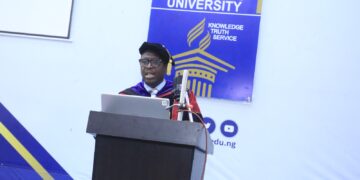






































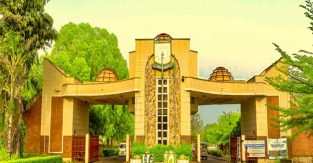


A quiet but significant shift is unfolding at Kwara State University as the institution moves to discontinue its Top-Up/HND Conversion programme, signalling a tightening regulatory environment in Nigeria’s university system.



In a public announcement signed by the Registrar, Kikelomo Sallee, the university confirmed that the programme will be scrapped from the 2025/2026 academic session, in compliance with directives from the National Universities Commission.

For years, the Top-Up/HND Conversion route has served as a bridge for Higher National Diploma holders seeking to upgrade their qualifications to university degrees. Its discontinuation, therefore, marks more than just a policy adjustment—it reflects an evolving approach to standardisation and quality assurance in higher education.

“This discontinuation is in compliance with the regulations of the National Universities Commission (NUC), the regulatory body for all universities in Nigeria,” the statement read, underscoring the university’s alignment with national policy.

While the decision clarifies the programme’s future, it leaves a critical question unresolved: the fate of students currently enrolled. The university noted that further directives from the NUC would determine their status, hinting at ongoing regulatory deliberations.

Beyond the immediate policy change, the development comes at a moment of institutional momentum for KWASU.
Just weeks earlier, the university secured full accreditation for nine undergraduate programmes during the NUC’s October/November 2025 accreditation exercise.
The accredited courses ranging from Accounting and Computer Science to Microbiology and Performing Arts—were granted a three-year validity period, reinforcing the institution’s academic standing.
Vice-Chancellor, Shaykh-Luqman Jimoh, described the accreditation as a validation of the university’s commitment to quality education, urging continued dedication across the academic community.
Taken together, the twin developments—programme discontinuation and accreditation success paint a picture of an institution navigating reform while consolidating its academic credentials.
At a broader level, KWASU’s move reflects a shifting landscape in Nigeria’s tertiary education system, where regulatory bodies are increasingly redefining programme structures, pathways and standards.
Credit: ThePunch
















 EduTimes Africa, a product of Education Times Africa, is a magazine publication that aims to lend its support to close the yawning gap in Africa's educational development.