























The quality of teachers will determine the future of Nigeria, and any continued neglect of teacher education could have grave consequences for national development, the Executive Secretary of the National Commission for Colleges of Education, Angela Ajala, has warned.



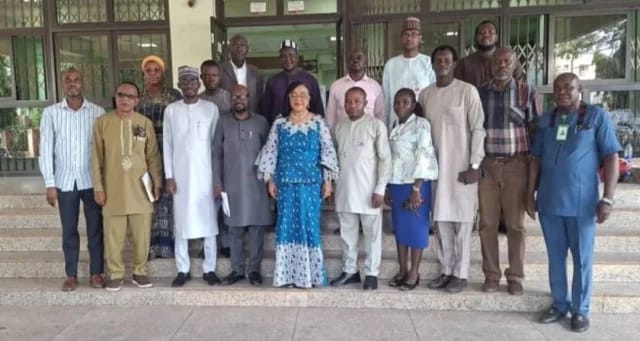
Ajala sounded the warning in Abuja during a courtesy visit by the Education
Correspondents Association of Nigeria, stressing that every profession ultimately rests on the foundation laid by teachers.
“If we get it wrong with a teacher, just know that Nigeria is finished. Every engineer, doctor, scientist, entrepreneur, politician and leader passes through the hands of a teacher. Teacher education lies at the heart of national development,” she said.

Her remarks come at a time when concerns are growing over declining enrolment in Colleges of Education, persistent teacher shortages and renewed debates about the status of the teaching profession in Nigeria.
Ajala lamented what she described as the gradual erosion of respect for teachers, recalling a time when educators occupied a highly esteemed position in society.

“Something went wrong along the way. We moved from a society where teachers were highly respected to one where people say, ‘If you have nothing else to do, go and become a teacher.’ That narrative must change,” she said.
Beyond concerns about public perception, the NCCE boss warned that Nigeria could face a serious shortage of qualified teachers if current enrolment trends in teacher training institutions continue.
“In some colleges, you find only about 30 students spread across 10 programmes. The attrition rate is alarming. If we do not act now, Nigeria may not have enough teachers in the near future,” she cautioned.

Ajala also defended recent reforms aimed at attracting more candidates into Colleges of Education, dismissing claims that changes to admission requirements would weaken academic standards.
“What is UTME? It is a two-hour examination. It is not an achievement test. Decisions like these were not taken arbitrarily; they were based on evidence, data and projections about the future of teacher education in Nigeria,” she said.
She maintained that ongoing reforms are focused on producing graduates who can compete globally while aligning teacher education with international best practices.
According to her, Colleges of Education are evolving into institutions that offer broader opportunities, enabling students to acquire multiple qualifications and skills relevant to a rapidly changing world.
Ajala further called on the media to play a more active role in reshaping public attitudes towards teaching, describing journalists as important partners in education reform.

“You are not just reporters; you are reformers. What you report shapes public opinion, influences policy conversations and changes mindsets. We need responsible reporting that reflects the true importance of teacher education,” she told the ECAN delegation.
As debates continue over the future of education in Nigeria, the NCCE chief insisted that strengthening teacher education remains one of the most critical investments the country can make, arguing that the quality of future leaders, professionals and innovators depends largely on the quality of teachers in today’s classrooms.
Credit: TheGuardian











 EduTimes Africa, a product of Education Times Africa, is a magazine publication that aims to lend its support to close the yawning gap in Africa's educational development.