

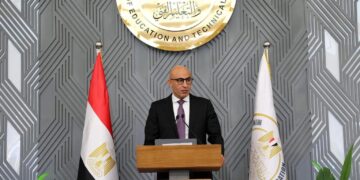

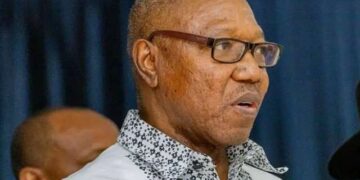





















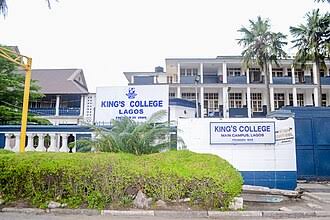


The future of Nigeria’s unity schools has come under fresh scrutiny as the Association of Senior Civil Servants of Nigeria warned that handing King’s College, Lagos, to its Old Boys’ Association could make quality education unaffordable for millions of families and threaten the jobs of thousands of workers.



The union also urged the Federal Government to halt any plan to hand over or privatise the country’s 120 Federal Government Colleges, insisting that the institutions should remain national assets established to promote unity and provide quality education for children from all parts of Nigeria.

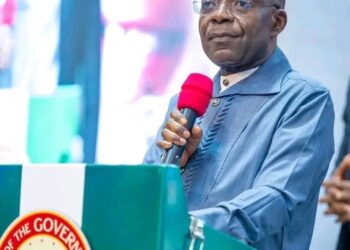
The National Vice-President of the Association of Senior Civil Servants of Nigeria, Dr Olubunmi Fajobi, made the call during a press conference held at King’s College, Lagos, on Wednesday.
The union’s reaction followed the announcement by the King’s College Old Boys’ Association that the Federal Government had approved a new governance arrangement for the 116-year-old institution.

Fajobi, however, said the reported plan raised serious concerns about the future of both students and employees of the school.
“We are informing Nigerians of current efforts to cede the 120 Federal Government Colleges to private individuals and, through that process, make the schools inaccessible to millions of Nigerian students because of the exorbitant fees that will be charged,” he said.
He added that privatisation could also lead to widespread job losses among teachers and other workers.
“Besides, once the schools are privatised, millions of employees, namely education officers teaching in the schools and other workers, will be thrown into the oversaturated labour market, the negative social consequences of which we cannot now predict,” he said.
Fajobi recalled that the union had, on July 1, urged the Federal Government not to hand over unity schools to private entrepreneurs, including alumni associations.

He said the KCOBA announcement that King’s College had been handed over made it necessary for the union to restate its position.
“If the Old Boys’ Association claims that the school has been ceded to them, what is the template they have designed to deal with the students and the employees of the college?
“This is why we maintain our position that the school should not be handed over to private entities,” he said.
The labour leader alleged that the latest move mirrored an attempt made in 2005 during the administration of former President Olusegun Obasanjo to transfer Federal Government Colleges to private operators under a Public-Private Partnership arrangement.
According to him, the union resisted the proposal through dialogue, industrial action and litigation.
“We embarked on dialogues, strikes, including one that lasted seven weeks, and even litigations to preserve the schools for Nigerian children and prevent millions of employees from losing their jobs,” he said.
Fajobi noted that normalcy returned to the unity school system in 2010 after former President Goodluck Jonathan restored the junior secondary school component of the colleges.
“It is unfortunate that 16 years after the unity school system returned to normalcy, efforts have been renewed to destabilise them.

“Millions of Nigerian children ought not to be subjected to this periodic trauma over attempts to deny them quality secondary education by adults bent on turning the unity colleges into their private estates,” he added.
He argued that the unity schools were established by Nigeria’s first Prime Minister, Sir Abubakar Tafawa Balewa, to promote national integration by bringing together children from different ethnic, religious and social backgrounds.
“That the schools have continued to wax stronger today and have grown to 120, 60 years after they were established, is eloquent testimony to Sir Balewa’s ingenuity and vision.
“The least the present generation of political leaders can do is sustain the institutions as a legacy for national integration rather than sell them to private entrepreneurs so they become accessible only to children of the privileged,” he said.
The union maintained that, beyond the possibility of higher school fees, handing over the schools could also result in significant job losses among teachers and other employees.
Earlier, the King’s College Old Boys’ Association announced that the Federal Government had approved a new governance arrangement for the school, describing the move as the beginning of a “King’s College Renaissance.”
Its President, Kashim Ibrahim-Imam, however, insisted that the arrangement was neither a sale nor privatisation of the institution but a framework through which the association would partner with the Federal Government to restore and modernise the college.
“It is not the sale of King’s College. It is not the privatisation of King’s College. It is not the abandonment of King’s College by the Federal Government.
“Rather, it is the establishment of a new governance framework through which KCOBA will partner with the government to restore, strengthen, modernise and sustain one of Nigeria’s greatest educational institutions,” he said.
Ibrahim-Imam assured Nigerians that the school’s federal character would remain intact and that admissions would continue to reflect national diversity.
He also announced a N100bn Collegium Fund to finance infrastructure renewal, digital transformation, teacher development, scholarships and other interventions, stressing that the association had no intention of transferring the financial burden of the project to parents.
“We believe that the children of ordinary Nigerians deserve extraordinary educational opportunities,” he said.











 EduTimes Africa, a product of Education Times Africa, is a magazine publication that aims to lend its support to close the yawning gap in Africa's educational development.