
























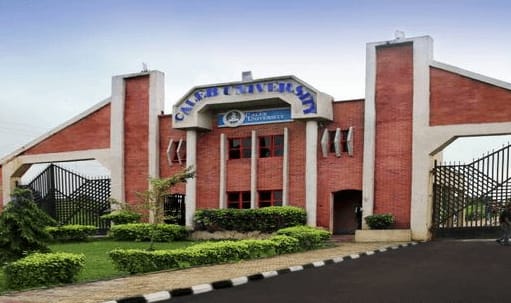


As artificial intelligence, economic uncertainty and evolving workplace demands continue to reshape the world of work, human resource professionals will gather in Lagos this month to explore practical strategies for helping Nigerian organisations remain resilient and competitive.



The conference, organised by Caleb University, is scheduled for July 21 at the Marriott Hotel, Lagos, under the theme, “Reimagining HR for Business Resilience and Growth: Leading Nigeria’s Workforce Through Disruption and Innovation.”

Speaking at a press briefing on Tuesday, the Vice-Chancellor of Caleb University, Prof. Olalekan Asikhia, said the conference would equip HR professionals with practical strategies to navigate economic uncertainty, talent shortages and the growing impact of artificial intelligence on the workplace.
“Nigeria’s workforce is navigating pressing challenges—rising inflation, widening talent gaps and the disruptive impact of artificial intelligence.

“Yet, within these challenges lie opportunities for resilience, innovation and sustainable growth. HR leaders must be at the forefront of shaping strategies that prepare our organisations and our nation for the future of work,” he said.
The conference is being organised in partnership with the Chartered Institute of Personnel Management of Nigeria, the Institute of Chartered Secretaries and Administrators of Nigeria, the University of Cambridge, United Kingdom, and the University of Greater Manchester, United Kingdom.
Asikhia said the collaboration reflects the university’s commitment to promoting global best practices in human resource management.
“These partnerships highlight our commitment to positioning Nigerian HR practices with global best standards,” he added.

He disclosed that the Minister of Labour and Employment, Muhammadu Dingyadi, will chair the conference, while Lagos State Governor Babajide Sanwo-Olu is expected as the special guest of honour.
According to the Vice-Chancellor, experts from Nigeria and abroad will examine issues including workforce reskilling and upskilling, data-driven human resource management, hybrid work models and stronger collaboration between academia and industry.

He added that Jens Jenssen, Fellow and Senior Researcher at the Centre for International Human Resource Management, University of Cambridge, and Prof. Christian Harrison of the University of Greater Manchester would deliver keynote presentations alongside leading Nigerian business executives.
Asikhia said participants would adopt the “HR Leader’s Action Agenda for 2026 and Beyond,” a resolution expected to provide practical strategies for transforming Nigerian businesses and strengthening the country’s workforce.
He described the conference as a call to action for HR professionals, policymakers and business leaders to build resilient organisations capable of thriving amid rapid technological and economic changes.
The Vice-Chancellor also announced that Caleb University will host the Journalism Outlook Conference 2026 on July 20 at its Imota campus in Lagos.
According to him, the conference, themed “Reinventing Local Newspapers in the Digital Age: Innovation, Sustainability and Global Community Impact,” will bring together media proprietors, editors, journalists, communication scholars and technology experts to explore strategies for strengthening the sustainability of Nigerian journalism in the digital era.













 EduTimes Africa, a product of Education Times Africa, is a magazine publication that aims to lend its support to close the yawning gap in Africa's educational development.