
























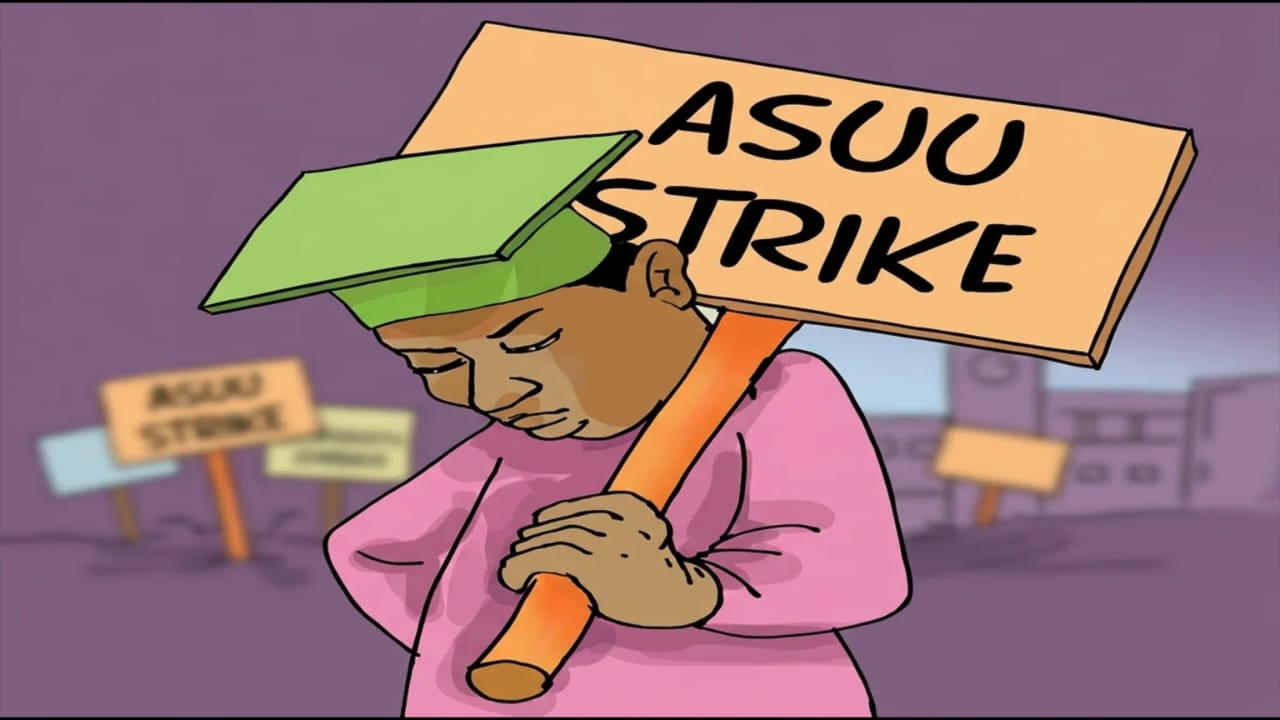


Just when many students thought the era of prolonged disruptions in public universities might be easing, fresh tensions are beginning to build.
The Academic Staff Union of Universities (ASUU) has warned that it could resume its suspended nationwide strike if longstanding issues affecting lecturers remain unresolved. The threat follows an emergency meeting of the union’s National Executive Council (NEC), where members reviewed the implementation of agreements reached with government authorities.

At the heart of the dispute is the December 2025 agreement between ASUU and the Federal Government, an agreement that came after years of negotiations, protests and industrial struggles. While the union acknowledges that some progress has been made, it argues that several key commitments are still waiting to be fulfilled.
One of the major concerns is the unpaid balance of salaries withheld during the Buhari administration. According to ASUU, four months have been paid under the current administration, but 3.5 months remain outstanding.

Beyond salaries, the union says billions of naira deducted from lecturers’ earnings as pension contributions, cooperative deductions and union dues have not been remitted as expected. ASUU believes these unresolved issues continue to affect the welfare and morale of university workers across the country.
The union also points to what it describes as uneven implementation of the December 2025 agreement among state governments. While some states have started carrying out parts of the agreement, others are yet to take meaningful action.

ASUU singled out Abia, Bauchi, Ekiti, Ogun, Benue, Yobe, Adamawa, Kebbi, Katsina and Borno for beginning implementation efforts. It also noted that Kano, Edo, Plateau, Taraba, Gombe and Bayelsa have indicated plans to commence implementation in September or October.
For students, the latest warning revives memories of previous ASUU strikes that disrupted academic calendars, delayed graduations and prolonged the time spent in school. Although no strike has been declared yet, the union insists that failure to address the outstanding issues could leave it with little choice.
ASUU maintains that the situation is not merely about salaries but about honouring agreements and ensuring sustainable working conditions for academics. The union argues that neglecting these commitments risks creating fresh instability across Nigeria’s public university system.
With lectures ongoing in campuses across the country, attention is now shifting to the Federal Government and state governments. Their next steps could determine whether universities remain on a path of stability or once again find themselves facing the uncertainty of another nationwide strike.














 EduTimes Africa, a product of Education Times Africa, is a magazine publication that aims to lend its support to close the yawning gap in Africa's educational development.