


























Nigeria’s education and research landscape is set for a significant shake-up as the Federal Government rolls out a $500 million annual funding initiative aimed at repositioning the country as a serious player in the global knowledge economy.



At the centre of this push is the newly approved National Research and Innovation Development Fund (NRIDF), a policy instrument designed to channel sustained investment into science, technology and innovation while bridging long-standing gaps between academia, industry and government.


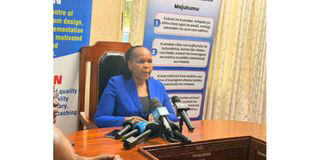
The announcement, made in Abuja following a Federal Executive Council meeting, was confirmed by the Minister of Education, Tunji Alausa, who described the initiative as a strategic intervention to overhaul Nigeria’s fragmented research ecosystem.
For years, research efforts across universities and institutes have operated in isolation, often producing outputs with limited connection to national development priorities. The NRIDF, according to the government, is intended to reverse that trend by creating a coordinated framework where ideas move beyond theory into application.


With projected annual funding of up to $500 million, the scale of the initiative positions it among the most ambitious research investments in Nigeria’s history.
Officials say the fund will support competitive grants, upgrade innovation infrastructure, and drive the commercialisation of research findings—an area widely seen as a missing link in the country’s development process.
Beyond funding, the initiative places renewed emphasis on human capital development, particularly in science and technology fields, with the aim of producing a workforce capable of driving innovation-led growth.
The fund will operate under the supervision of the Federal Ministry of Innovation, Science and Technology, while a 17-member National Council on Research and Innovation, chaired by the Vice President, will provide oversight and strategic direction.
This governance structure signals an attempt to elevate research and innovation to the highest levels of national planning, aligning them more closely with economic priorities such as diversification, job creation and industrial growth.
Government officials maintain that the NRIDF is not just another policy announcement, but part of a broader shift toward embedding research at the core of Nigeria’s development strategy.
Whether the fund delivers on its promise will depend largely on execution—how effectively resources are deployed, how transparently projects are managed, and how successfully research outputs are translated into tangible economic value.
For now, the unveiling of the NRIDF marks a clear statement of intent: that Nigeria’s future growth will increasingly depend on what it can discover, develop and innovate.











 EduTimes Africa, a product of Education Times Africa, is a magazine publication that aims to lend its support to close the yawning gap in Africa's educational development.