









































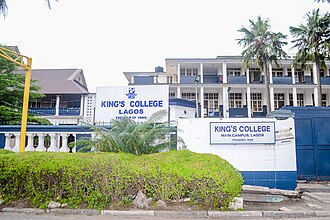


For decades, public discourse surrounding national infrastructure in Nigeria has been trapped in a tragic binary: government inadequacy or outright privatisation.



When a public asset deteriorates, Nigerians either watch it crumble under bureaucratic inertia or consider transferring it into commercial hands, often at the risk of pricing it beyond the reach of ordinary Nigerians.

It is within this false choice that much of the resistance to the Federal Government’s approved concession of King’s College, Lagos, to the King’s College Old Boys’ Association has emerged.
To anxious parents, sceptical trade unions and well-meaning commentators, the word “concession” understandably triggers a defensive reflex. It conjures images of corporate takeovers, soaring school fees and the commercialisation of the 116-year-old national institution.

Those concerns should not simply be dismissed. They are partly rooted in Nigeria’s history, where citizens have repeatedly watched public assets deteriorate, become mismanaged or pass beyond their reach.
However, the debate must also acknowledge another reality: the normalisation of decline.
When an institution deteriorates slowly and for long enough, decline itself becomes the benchmark. It becomes the new normal.
A generation that has known King’s College mainly through ageing infrastructure, deteriorating facilities and constrained resources may understandably ask why significant change is necessary when students continue to perform respectably in WAEC and NECO examinations.
But examination results alone cannot measure a great school.
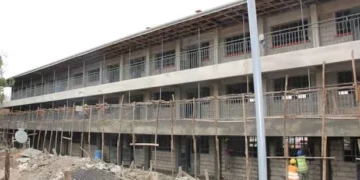
A great school is also about its laboratories, libraries, classrooms, boarding facilities, sports infrastructure, technology, teachers, traditions, culture, discipline, character formation and the physical environment in which young people are taught to imagine what they can become.
King’s College was not established merely to produce respectable examination results. It was built to produce excellence.
Before Nigerians decide whether the proposed arrangement deserves support or rejection, they should look beyond the emotionally charged word “concession” and examine what is actually being proposed.
The KCOBA intervention is not a commercial acquisition of King’s College. The Federal Government does not surrender ownership of the school or its land.
Rather, what is proposed is a management arrangement under which the college would be managed by its old boys through a legally constituted trust, with the trust assuming greater responsibility for the institution’s administrative, financial and operational restoration.
That distinction matters.
This is not an attempt by outsiders to acquire King’s College. It is an attempt by those the school has raised to rescue it.
KCOBA has announced an ambitious N100bn endowment initiative intended to support the long-term restoration and development of the college.
Private resources are therefore being mobilised not to create another exclusive private school, but to restore a public institution without changing its ownership.
The reality is that King’s College competes for finite government resources alongside more than 100 Unity Schools and numerous tertiary institutions, against the background of enormous national demands and severe fiscal constraints.
Every leaking roof, obsolete laboratory, deteriorating dormitory and outdated technology facility at King’s College must compete with other legitimate priorities for public funding.
The accumulated consequence is the erosion of quality.
The consequences of that erosion are not always cosmetic. In March 2025, a junior student died during a diphtheria outbreak at King’s College, while other students were hospitalised.
Parents had raised concerns about sanitary conditions and called for improvements to water, sanitation and hygiene facilities within the school.
That tragedy should remind Nigerians that a school’s condition is not merely about peeling paint, ageing dormitories or nostalgia for better days. At its most serious, institutional weakness can affect the health, safety and wellbeing of the children entrusted to the school.
No parent should have to accept deteriorating standards as the price of keeping King’s College public.
The critical question for those opposed to the concession is therefore: what is the alternative?
It is not enough to say that the current proposal is imperfect. Those who reject the model must present a credible alternative capable of delivering the capital, governance discipline, institutional continuity, accountability and long-term stewardship required to restore King’s College.
The KCOBA intervention should therefore be judged by what the arrangement actually preserves, changes and enables.
Does King’s College remain publicly owned?
Does it remain accessible to Nigerians across all socio-economic backgrounds?

Are admissions protected from capture?
Are fees subject to appropriate safeguards?
Is there independent financial oversight?
Are conflicts of interest controlled?
Is management accountable?
Will academic and institutional standards improve?
Will the purpose and guiding principles on which the school was founded be preserved?

Will the red-brick buildings, laboratories, libraries, dormitories and playing fields actually be restored?
These are the questions that matter.
The significance of the King’s College intervention also extends beyond one school. Nigeria needs institutional models that sit between two failed extremes: total dependence on government bureaucracy on one side and outright commercial privatisation on the other.
Public ownership and independent stewardship are not mutually exclusive.
Since 2022, the Government College Ibadan Old Boys’ Association has operated under an agreement with the Oyo State Government to manage, operate and develop Government College Ibadan, while the school remains publicly owned.
Other alumni-led arrangements also exist across the country, as former students seek to halt the decline of their alma maters.
The important question, therefore, is not whether King’s College should remain public. It should.
The real question is whether “public” must continue to mean total dependence on an overstretched government bureaucracy for survival.
Those are not the same thing.
King’s College belongs to Nigeria. Its preservation is therefore a national responsibility.
Nothing in that principle is inconsistent with allowing generations of men formed by the college to contribute their money, expertise, networks and institutional loyalty to restoring it.
The old boys are not attempting to inherit King’s College. They already have an inheritance in it. What they are attempting now is to give something back.












 EduTimes Africa, a product of Education Times Africa, is a magazine publication that aims to lend its support to close the yawning gap in Africa's educational development.