








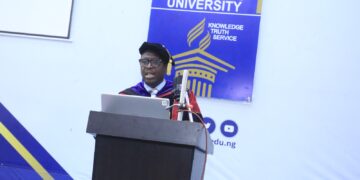







































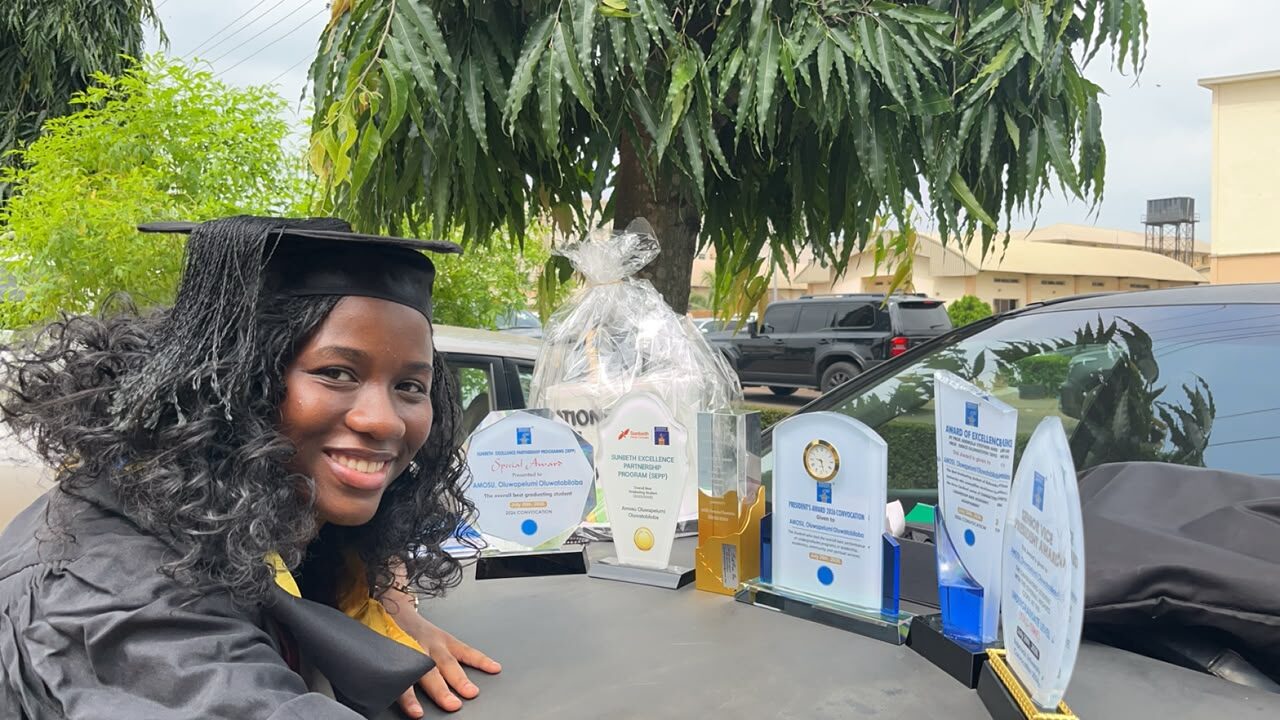


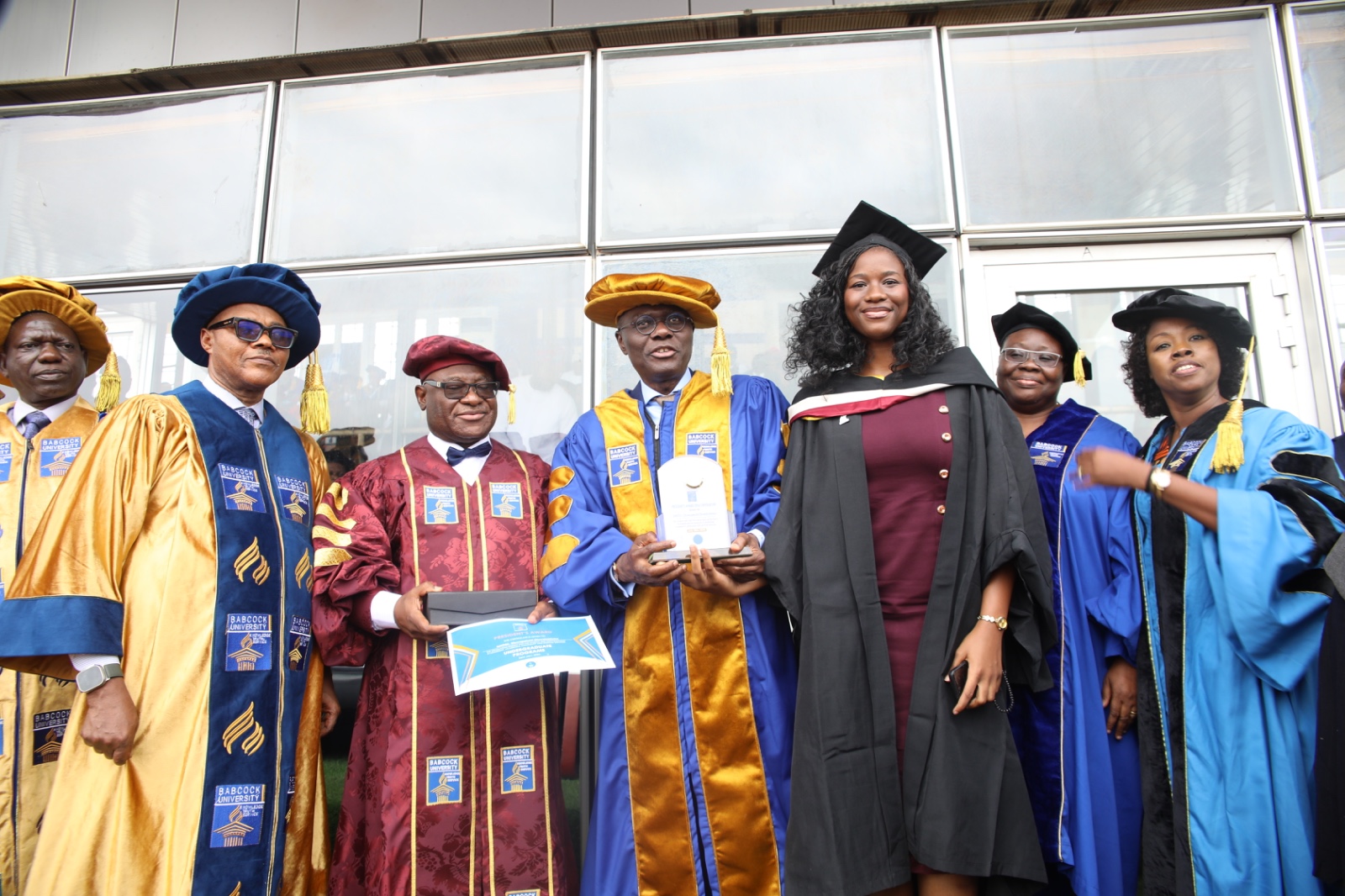
On Sunday, July 26, 2026, Babcock University conferred degrees on 3,521 graduates, with Pelumi Amosu, a graduate of economics, emerging as the overall best graduating student with a CGPA of 4.96 out of 5.00. In an interview with Lateef Adepoju, Pelumi reflected on her academic journey, sharing how intentionality, discipline, and a hunger for excellence helped her attain the remarkable feat. She also spoke about the lessons she learned along the way and offered practical advice to students aspiring to achieve academic success.

Kindly give us a brief background of your educational journey, from secondary school to this level.
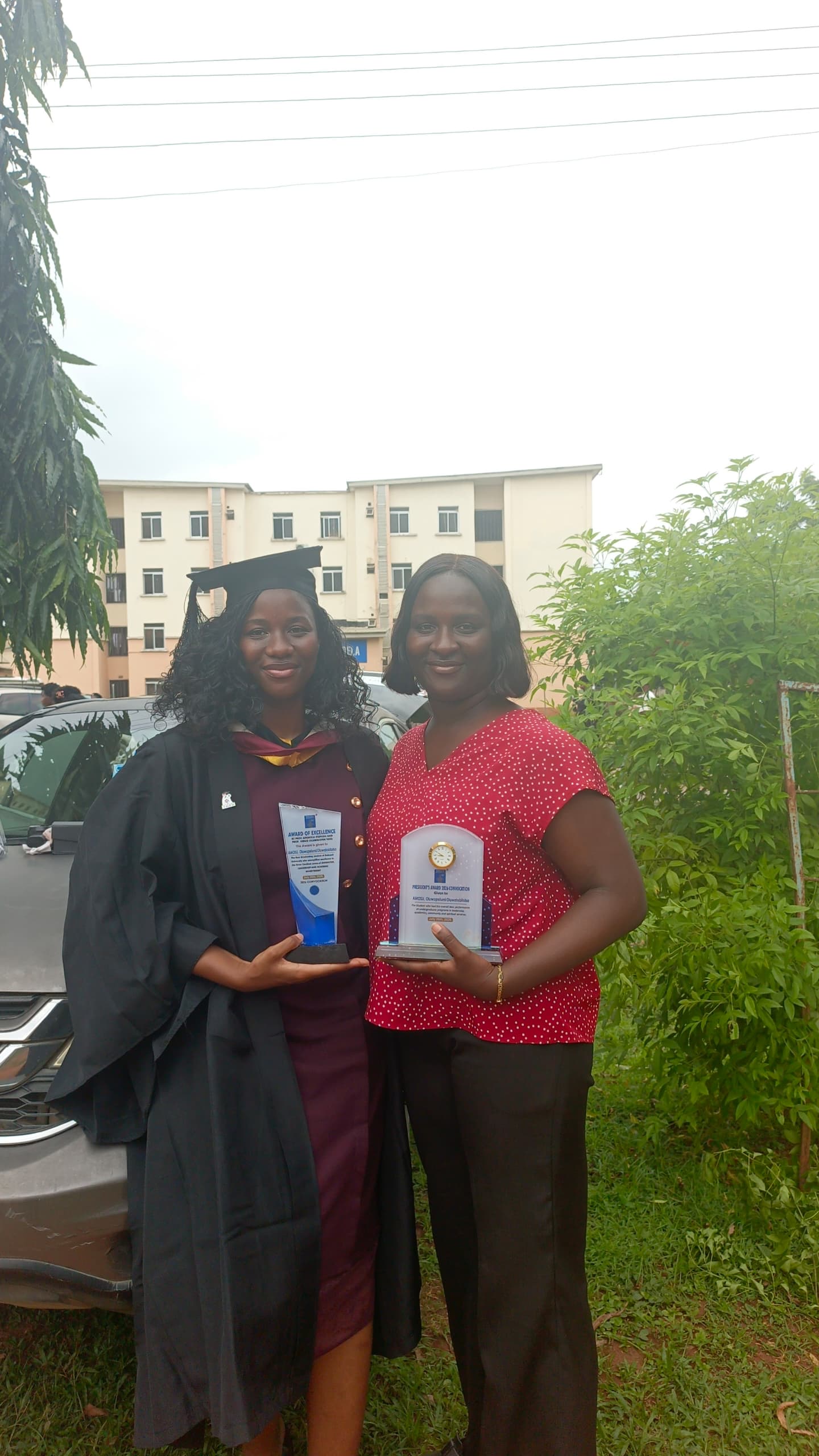
I attended S-TEE High School, Festac, where I graduated as the valedictorian and served as a member of the Student Council. I also scored 309 in the Unified Tertiary Matriculation Examination (UTME), which earned me admission to study economics at Babcock University.At Babcock, I was intentional about pursuing academic excellence from my very first semester. This led to me graduating with a First-Class degree, a CGPA of 4.96/5.00, and the distinction of Overall Best Graduating Student for the Class of 2026. I also qualified as a chartered accountant during this period.
How does it feel to emerge as the best graduating student of your set at Babcock University?

It is an incredibly fulfilling experience. I am grateful because this achievement represents years of consistent effort, sacrifice, and guidance from God, my family, mentors, lecturers, and friends. What made the moment even more special was that it coincided with me qualifying as a chartered accountant just a few weeks earlier.
On some days, it still feels surreal. I wanted to graduate with a very high first class, but I did not begin the journey with the specific goal of becoming the overall best graduating student.

How did your family, friends, and mentors react to this remarkable achievement?

The response has been incredibly heartwarming and better than I ever could have imagined. I have received countless calls, messages, and congratulatory messages from family, friends, lecturers, mentors, and even people I have never met personally.
My family was especially emotional because they were aware of my demanding schedule. Their belief in me gave me the confidence to keep pushing, even during periods that seemed overwhelming. My HOD, mentors and lecturers also shared in the celebration because many of them invested their time, guidance, and encouragement throughout my academic journey
You graduated with a CGPA of 4.96 out of 5.00. What would you say were the key contributors to such an outstanding academic feat?
I believe the first ingredient was intentionality and the hunger for it. From the moment I gained admission, I decided that I wanted to graduate with a first class. Having that clear goal shaped many of the decisions I made throughout my university years.
Aside from ambition, I would say grit, discipline, and self-regulation were the biggest contributors. Many people know what they need to do to succeed academically, but consistently doing those things every day is the real challenge. Success is rarely the result of one extraordinary effort but the product of ordinary habits repeated over and over again.
Just as importantly, I was fortunate to have an incredible support system. My family was unwavering in their encouragement, and my friends were wonderful. They encouraged me through difficult periods and were always there when I needed someone to talk to, vent to, or simply take a break with.
Babcock University is a faith-based institution. How has studying here shaped your character, values, and the person you are today?
One of Babcock University’s guiding ideals is the harmonious development of physical, mental, and spiritual aspects of an individual, and I believe my time there reflected that philosophy.

My experience at Babcock strengthened values such as integrity, discipline, responsibility, and service. It also reinforced the importance of excellence that is grounded in character. I leave not just with knowledge in economics but also passion for learning and a commitment to using my skills for the greater good.
There are speculations that economics is a broad and demanding field. How did you navigate the course to achieve this milestone?
Economics is indeed a broad and intellectually demanding discipline because it combines theory, quantitative analysis, and the study of real-world economic issues. During my undergraduate studies, I was also preparing for my professional accounting examinations, which eventually led to my qualification as a chartered accountant.
Balancing both required disciplined time management and consistency. I learnt to prioritise, make the most of every study session, and remain focused even during demanding periods. I saw the workload as an opportunity to grow intellectually and develop resilience. I believe those experiences prepared me not just for academic success but also for my professional journey ahead.
Tell us about your thesis. What was it about, what major challenges did you encounter, and how did you overcome them?
My undergraduate thesis examined human capital and inclusive economic growth in Nigeria. While many studies have explored the relationship between human capital and economic growth, I was particularly interested in the question of inclusive growth: whether investments in education and health translate into improvements in the standard of living for ordinary Nigerians.
The findings showed that secondary school enrolment and life expectancy had positive and significant effects on inclusive growth, while capital expenditure produced positive effects over time. Interestingly, recurrent expenditure showed a negative relationship, showing the importance of not just increasing spending but improving its efficiency.
One of the biggest challenges I encountered was the empirical analysis itself. Although we had been taught how to use statistical software and econometric techniques in class, applying them to a real research project initially felt overwhelming. I had to spend extra time revisiting econometric concepts, consulting my supervisor and peers, and refining my model. Even though the process was demanding, it improved my analytical skills.
I later presented my research at the 3rd Annual Conference of the African Finance and Economic Association in July 2026. It was an invaluable opportunity to discuss my findings with academics and fellow researchers.

Looking back, was there any particular semester or moment when you doubted yourself? How did you push through?
Yes. Without a doubt, my first semester of 300 Level was the most demanding period of my undergraduate journey. At the time, I had just assumed office as the Financial Secretary of the Department of Economics Students’ Association after previously serving as Assistant Academic Director.
The role came with significant responsibilities, from maintaining accurate financial records to empowering over 300 students with practical financial literacy and management skills.
Academically, the semester was equally intense. I was taking econometrics for the first time, preparing for some of the more calculation-intensive stages of my ICAN examinations, and had also joined the department’s debate team. There were moments when I genuinely wondered whether I had taken on too much. I remember joking with a friend after class one day that I felt like I might “spontaneously combust” from trying to balance everything.
What kept me going was learning to prioritise and focusing on one task at a time instead of becoming overwhelmed by everything at once. When things became difficult, I chose consistency over perfection and kept showing up every day, even when I was tired.
That semester was one of my best; I finished with a perfect GPA and also won first place in the prestigious Nigerian Economic Summit #30 Essay Competition.
Babcock University is a private institution. Do you think you have an edge over graduates from public universities? Why or why not?
I do not think it is as simple as saying one group of graduates has an advantage over another. Every institution has its unique strengths, challenges, and learning environment.
What distinguishes a graduate is not whether they attended a public or private university, but how they took advantage of the opportunities available to them. I have met brilliant and hard-working graduates from both public and private institutions.
For me, Babcock University provided an environment that encouraged academic excellence, leadership, and personal development, and I made a conscious effort to maximise those opportunities. At the same time, I recognise that many graduates from public universities develop resilience and adaptability through their own experiences.
Economics has several areas of specialization. Which area are you most interested in, and how do you hope to use it to contribute to Nigeria’s economy?

I am particularly interested in financial economics, especially how financial systems, institutions, and policies can drive sustainable economic development. I am fascinated by how access to finance, efficient capital markets, and sound financial policies can influence investment, productivity, and long-term growth.
I am also developing my skills in data analytics because I believe modern economists must be able to use data to answer complex policy questions and support evidence-based decision-making.
In the long run, I hope to contribute to Nigeria by supporting policies and institutions that promote inclusive growth, strengthen financial markets, improve resource allocation, and create opportunities for more Nigerians to participate meaningfully in the economy.
Beyond academics, were you involved in extracurricular activities, leadership, volunteering, or entrepreneurship? If so, how did you balance them with your studies?
Yes. I believe that university education extends beyond the classroom, so I intentionally participated in leadership and extracurricular activities that complemented my academic journey.
Within the Economics Students’ Association, I served as Assistant Academic Director in 200 level, where I helped organise bi-weekly tutorials, academic events, and case study presentations, while coordinating weekly economic news summaries to keep students informed about current economic developments. Then in 300 level, I went on to serve as Financial Secretary, maintaining transparent financial records and promoting financial literacy among more than 300 students by disseminating practical financial wisdom tips.
Outside departmental leadership, I was a member of the Babcock Writers’ Community. I won 2nd place in the poetry category of the annual writing competition in 2024 and was later nominated for the Writer of the Year Award. These experiences strengthened my communication and creative thinking. I also volunteered as a co-host for our departmental symposiums.
I maintained balance by setting boundaries and ensuring my academic commitments always remained my primary focus. I did not allow myself to get carried away. That way, engaging in these activities actually enhanced my academic performance by teaching me how to be highly organised and versatile.

After Babcock, what comes next? What are your immediate and long-term academic plans?
I trust that my journey after Babcock is fully in God’s hands. In the immediate future, I plan to proceed with the National Youth Service Corps programme. Thereafter, I hope to gain experience in roles related to consulting, finance, and data analytics. I am particularly interested in opportunities that allow me to solve real-world problems, work with data, and contribute to informed decision-making while continuing to strengthen my technical and analytical skills.
I also intend to continue investing in my professional development by pursuing additional globally recognised certifications, particularly the ACCA and the CFA Charter. I believe these qualifications will equip me to contribute effectively in both local and international professional environments.
Afterwards, I hope to pursue postgraduate studies in a field such as Financial Economics, Data Science, or Artificial Intelligence, areas that I believe will expand my capacity to create meaningful, evidence-based impact. I am especially interested in how data, technology, and financial systems can be leveraged to address complex economic challenges and support sustainable development.
Finally, what message would you like to leave for students who aspire to achieve what you have achieved today?
You are the one thing in life you can control. You may not be able to control every circumstance, but you can control your attitude, your effort, your habits, and the choices you make every day. Choose consistency over intensity. You do not have to study for 15 hours in a single day to succeed. What matters more is showing up day after day, even when you do not feel like it. It is the small, consistent actions you repeat over time that produce extraordinary results.
I would also encourage students to understand themselves. There is no universal formula for academic success. Learn how you study best. Once you discover what works for you, be disciplined enough to stick with it.
Finally, commit your plans to God. There will be moments when the journey feels difficult or uncertain, but I have found that God gives grace, strength, and peace to see you through.







 EduTimes Africa, a product of Education Times Africa, is a magazine publication that aims to lend its support to close the yawning gap in Africa's educational development.