

















































The Federal Government has announced plans to expand the number of Nigerian universities offering specialised therapy programmes from two to 20, in a move aimed at improving care for individuals with Autism Spectrum Disorder.


The Minister of Education, Tunji Alausa, disclosed this in Abuja during the inauguration of a committee set up to advance training in occupational therapy, audiology, and speech therapy.

According to the minister, the initiative aligns with the agenda of Bola Tinubu and is designed to reposition Nigeria’s education and healthcare systems to meet growing demand for specialised rehabilitation services.
Alausa noted that Nigeria is currently facing a shortage of trained professionals in these fields, despite increasing demand across hospitals, schools, and communities. He stressed that expanding training programmes is essential for strengthening healthcare delivery, promoting inclusive education, and improving social integration for people with developmental conditions.

At present, only Ondo State Medical University and Obafemi Awolowo University offer degree programmes in these therapy-related disciplines. However, about 20 universities have indicated interest in introducing the courses, with eight already at advanced stages of preparation.

The minister urged the National Universities Commission (NUC) to accelerate the accreditation process for the institutions, with the goal of completing approvals before the end of the year.
He explained that the newly inaugurated committee will collaborate with universities to develop curricula, guide accreditation, and establish bachelor’s degree programmes. The committee is also expected to work with the Medical Rehabilitation Therapists Board of Nigeria to ensure adherence to both national and international standards.

Additional responsibilities include setting clinical training frameworks, reviewing academic and infrastructural requirements, and engaging stakeholders to ensure the quality and sustainability of the programmes.
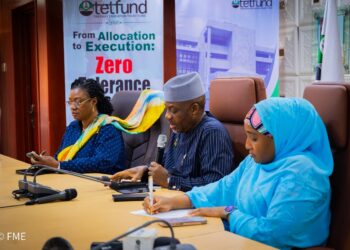
The Tertiary Education Trust Fund (TETFund) will serve as the secretariat for the initiative, providing technical and institutional support, while the NUC will oversee accreditation and standardisation.
Speaking on behalf of the committee, Chairman Victoria Amu said efforts to institutionalise these programmes have been ongoing for over two decades. She noted that the expansion would improve early detection and intervention for autism and related conditions, while reducing the need for medical tourism.
Amu added that increasing local training capacity would not only strengthen Nigeria’s healthcare system but also create employment opportunities and improve the quality of life for individuals in need of rehabilitative services.










 EduTimes Africa, a product of Education Times Africa, is a magazine publication that aims to lend its support to close the yawning gap in Africa's educational development.