






















The Federal Government has announced plans to settle a total of ₦8 billion in outstanding obligations owed to Nigerian students under the now-scrapped Bilateral Education Agreement (BEA) scholarship programme.



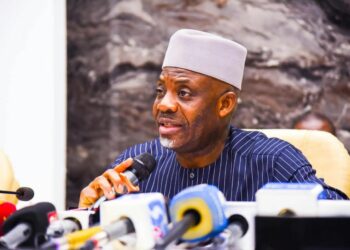
The Minister of Education, Tunji Alausa, disclosed this during an interview on Channels Television, stating that the government had already released ₦4 billion, while the remaining ₦4 billion would be approved and disbursed within the next two weeks.

According to him, the decision is part of efforts to clear backlog payments owed to affected students studying abroad under the programme.

“We’ve paid four billion of it. We’re disbursing the four billion now. This additional four billion will be approved… They will be settled,” the minister said.

Alausa explained that the Bilateral Education Agreement scheme had been riddled with irregularities and misuse over the years, prompting the government to discontinue it.
He said one of his earliest discoveries after assuming office revealed cases of questionable scholarship approvals, including funding for unrelated courses and duplicated beneficiaries.
“We had incidences of kids that got this scholarship that they’re studying in Nigerian universities, getting the money. So, we stopped it,” he stated.
The minister further noted that the scheme, originally designed for specialised training in fields such as engineering, medicine, and aeronautics, had been expanded beyond its intended purpose over time.
The BEA programme previously involved agreements with countries including China, Russia, Algeria, Hungary, Morocco, Egypt, and Serbia, through which Nigerian students were sponsored to study abroad.
Reports indicate that the programme’s budget rose significantly in recent years before being formally scrapped in April 2025, affecting over 1,200 students.

Although a budgetary allocation appeared in the 2026 Appropriation Bill, the government clarified that it was a rollover provision and not a reinstatement of the scheme.
The latest payment plan is expected to close long-standing financial gaps and settle affected students who had faced hardship due to delayed stipends and unpaid fees.









 EduTimes Africa, a product of Education Times Africa, is a magazine publication that aims to lend its support to close the yawning gap in Africa's educational development.