











































Oyo, Ogun Schools Get WARIF Programme on Girl Safety
In many schools, conversations around safety, consent, and speaking up are still missing from everyday learning—and that silence can come at a cost.

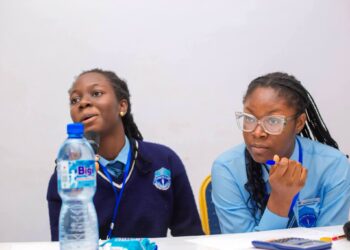
The Women at Risk International Foundation (WARIF) is working to change that.
The organisation has expanded its Educational School Programme (WESP) to four secondary schools across Ogun and Oyo States, focusing on protecting girls from sexual and gender-based violence (SGBV).

The programme, supported by the Girls Opportunity Alliance (GOA), is built around more than just awareness.
It equips girls with life skills, leadership abilities, and practical knowledge to prevent and respond to abuse.
The schools involved include Remo Secondary School and Sagamu High School in Ogun State, alongside Fiditi Grammar School and Ilora Baptist Grammar School in Oyo State.
In total, about 5,500 girls were reached—500 directly and 5,000 indirectly.
But the impact didn’t stop with students.
Around 500 parents and caregivers, as well as 20 members of school management teams, also took part in the programme.
The idea is simple: protecting girls works better when everyone around them is informed and involved.
Within the schools, the initiative also introduced peer-led support systems.
These are designed to make it easier for students to speak up, report issues, and support one another without fear.
For young people, especially in environments where speaking out can be difficult, this kind of safe space can make a real difference.
WARIF says the programme is also helping school leaders and caregivers respond better to cases of abuse, while building girls’ confidence in decision-making and problem-solving.
Over time, WESP has shown measurable results.
Students in participating schools have demonstrated better understanding of gender-based violence, healthier attitudes, and increased willingness to seek help.
There has also been a reported reduction in abuse cases in schools where the programme has been implemented across Lagos, Ogun, and Oyo States.
According to the Director of International Programmes at the Girls Opportunity Alliance, Mrs Tsehaitu Retta, investing in girls goes beyond the classroom.
When girls feel safe, supported, and informed, it impacts their families and communities as well.
LaWARIF describes WESP as a scalable, evidence-based model tackling gaps in life skills education, school safety, and mentorship.
For students, especially young girls trying to navigate school and society, programmes like this go beyond education—they shape confidence, voice, and the courage to speak up.
And in a system where silence often protects abuse, that shift could mean everything.
Credit: TheGuardian









 EduTimes Africa, a product of Education Times Africa, is a magazine publication that aims to lend its support to close the yawning gap in Africa's educational development.