




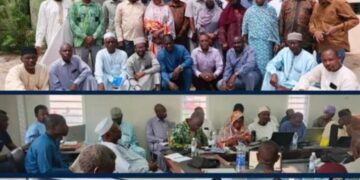
















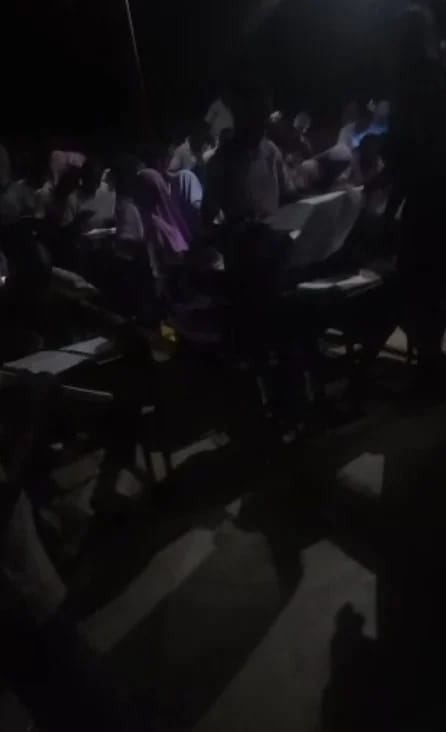


The clock had long passed the normal closing hours of school when hundreds of candidates in parts of Oyo State were still seated in examination halls, waiting for question papers that should have arrived hours earlier. Outside, anxious parents lingered around school premises and roadsides, while students struggled to maintain concentration as daylight gave way to darkness.
The experience was particularly unsettling for many of the candidates. Only weeks after school communities in parts of the state were shaken by the abduction of teachers and pupils, another ordeal unfolded—this time not from armed attackers, but from logistical failures that forced students to write crucial examination papers late into the night.

The Oyo State Government has expressed concern over the delays that disrupted the ongoing 2026 West African Senior School Certificate Examination (WASSCE), describing the situation as avoidable and stressful for candidates.
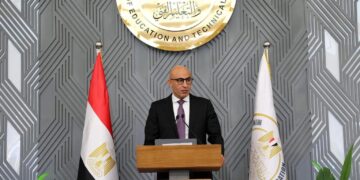
In a statement issued by the Commissioner for Information, Dotun Oyelade, the government said the Commissioner for Education, Science and Technology, Olusegun Olayiwola, had conveyed its displeasure over the hardship experienced by students due to the late arrival of examination materials.

According to Olayiwola, reports verified by the ministry indicated that Government (Objective) and Agricultural Science (Practical) question papers scheduled for Thursday, June 4, failed to reach several examination centres across the state at the stipulated time.
The materials reportedly arrived at many centres around 6:30 p.m., leaving candidates waiting for hours before examinations could commence.
The commissioner disclosed that as of 8:11 p.m., some centres in Ogbomoso and Saki were still conducting the Government (Objective) paper, while the Agricultural Science Practical examination had yet to begin.
The incident followed a similar challenge on June 3, when Mathematics (Objective) question papers were reportedly supplied in insufficient quantities to some centres, causing delays that stretched examination activities into the evening.

Beyond the academic implications, the development raised fresh concerns about the welfare and safety of candidates. Students who had arrived at their centres early in the day found themselves remaining on school premises until nightfall, while parents and guardians worried about transportation, security and the physical exhaustion of their children.
Officials of the Ministry of Education reportedly contacted the West African Examinations Council (WAEC) zonal coordinator, who attributed the delays to logistical challenges.
While acknowledging that WAEC operates as an international examination body beyond the direct control of the state government, Olayiwola urged the examination council to adopt proactive measures to prevent a recurrence.
The government specifically appealed to WAEC to consider rescheduling any examination paper that cannot be delivered to centres on or before 4:00 p.m. rather than allowing candidates to remain in examination halls until late hours.
According to the commissioner, such a step would help protect students from unnecessary stress, safeguard their wellbeing and reduce anxiety among parents and guardians.
The disruption comes at a time when concerns over school safety remain heightened in Oyo State following recent attacks on schools in Oriire Local Government Area, where teachers and pupils were abducted. Against such a backdrop, the prospect of students remaining at examination centres long after sunset has become an additional source of concern for families.
As one of the most important examinations for secondary school students seeking admission into tertiary institutions, WASSCE is expected to test academic preparedness, not the endurance of candidates. Yet for many students in Oyo State this week, the examination extended beyond the question papers, becoming an unexpected lesson in patience, uncertainty and resilience.













 EduTimes Africa, a product of Education Times Africa, is a magazine publication that aims to lend its support to close the yawning gap in Africa's educational development.