






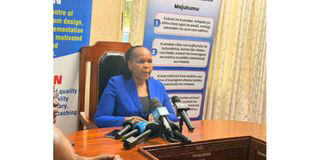




















The Minister of Education, Tunji Alausa, has dismissed concerns over a growing wave of Nigerian students seeking education abroad, insisting that the trend has significantly declined under the current administration.



Alausa made the assertion during an interview on Channels Television on Tuesday, where he attributed the development to improved academic stability and renewed investments in Nigeria’s tertiary education system.

Reacting to reports that Nigeria ranked third globally in outbound student mobility in 2023, accounting for about five per cent of global student movement behind China and India, the minister described the data as outdated and unreflective of current realities.
“That’s not Japa. And please, qualify your data. Thank God you told me it was 2023 figure,” he said.


According to the minister, the period referenced coincided with major disruptions in the country’s education sector, including unstable academic calendars and inadequate investment in tertiary institutions.
“2023 was when we came in. There was no academic continuity. They had the kind of extensive investment you’ve made in tertiary education that wasn’t there,” Alausa stated.
He revealed that the Ministry of Education had been monitoring outbound student movement through its educational support services department and had observed a sharp decline in the number of Nigerians leaving the country for studies.
“We’ve seen a precipitous drop in those number of students going out. Our tertiary institutions are better now. We have academic continuity, academic session continuity,” he added.
The minister also cited the growing popularity of the Joint Universities Preliminary Examinations Board (JUPEB) programme as evidence of increasing confidence in local education alternatives.
According to him, the programme, regarded as Nigeria’s equivalent of the British A-levels, is now oversubscribed as more students choose to pursue advanced studies locally rather than abroad.

Alausa further pointed to institutions such as the University of Lagos as examples of universities experiencing rising demand due to improvements in educational quality and stability.
“Kids are staying there. The quality of education is significantly better. If you now compare the 2023 data with 2024 and 2025, you will see the precipitous drop of Nigerians going out,” he said.
Credit: Punch Newspaper













 EduTimes Africa, a product of Education Times Africa, is a magazine publication that aims to lend its support to close the yawning gap in Africa's educational development.