


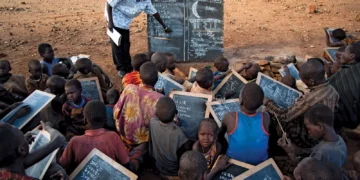





















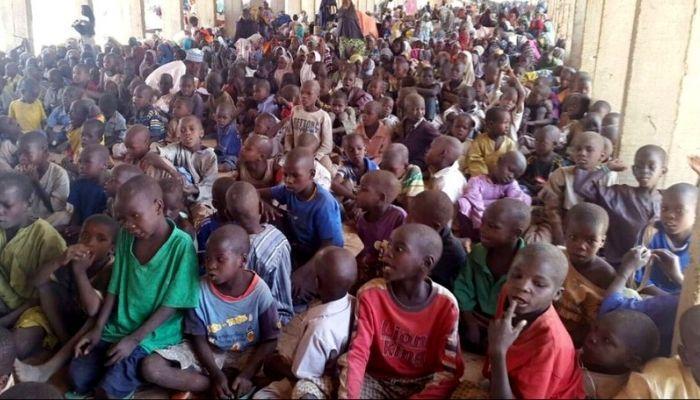


The abduction of pupils and teachers in Oriire Local Government Area of Oyo State has once again brought national attention to one of Nigeria’s most troubling security challenges—the vulnerability of schools and the children entrusted to them.



While the immediate priority remains the safe rescue of all those still in captivity, the incident raises broader questions about the state of security in the country and the protection of educational institutions, particularly in rural communities.

The attack demonstrates that despite years of public concern, policy discussions, and security interventions, many schools remain exposed to criminal activities. The fact that armed men could reportedly invade educational institutions and abduct dozens of pupils and teachers points to significant gaps in intelligence gathering, early warning systems, and rapid security response.

Perhaps most worrying is that such incidents are no longer viewed as isolated occurrences. Over the years, schools have increasingly become attractive targets for kidnappers and criminal groups because they are often perceived as soft targets. Many rural schools lack perimeter fencing, trained security personnel, surveillance systems, and emergency response mechanisms. Criminals understand the emotional impact of targeting children and the pressure such incidents place on governments and communities.

This reality should concern every Nigerian. A school should be one of the safest places in society. When parents can no longer confidently send their children to school, the implications extend beyond security and begin to threaten the country’s educational future.
The Nigeria Union of Teachers’ call for urgent government intervention is therefore both timely and necessary. Authorities at both federal and state levels must intensify intelligence-driven rescue operations while strengthening collaboration among security agencies, local authorities, community leaders, and vigilante groups. Families of the victims also deserve regular updates, psychological support, and reassurance that every effort is being made to secure the release of their loved ones.
Governor Seyi Makinde’s engagement with affected families is an important step. During periods of uncertainty and fear, visible leadership helps reassure citizens that government is actively involved in resolving the crisis. However, beyond symbolic gestures, affected families need consistent communication, counselling support, and practical assistance throughout the ordeal.
The visit of the presidential delegation led by Chief of Staff Femi Gbajabiamila equally underscores the national significance of the incident. Such interventions send a message that the matter is receiving attention at the highest levels of government. Nevertheless, Nigerians will ultimately judge these assurances by outcomes rather than promises. The successful rescue of the victims and the arrest and prosecution of those responsible remain the most meaningful indicators of government commitment.
Rescue operations themselves are often complicated by difficult terrain, intelligence limitations, and the need to avoid actions that could endanger hostages. Yet these challenges should not distract from the larger lesson. Nigeria cannot continue to respond to school attacks only after they occur.

The long-term consequences of incidents like this are severe. Parents may become reluctant to send their children to school. School attendance could decline, especially in rural communities. Confidence in public education may weaken, and educational inequalities could deepen further. In a country already grappling with learning deficits and millions of out-of-school children, insecurity poses an additional threat to educational development.
To address this challenge, school protection must become a national priority. Governments should conduct comprehensive security assessments of vulnerable schools, strengthen perimeter security, deploy trained personnel where necessary, establish emergency communication systems, and expand community-based intelligence networks. Existing safe-school initiatives must move beyond policy documents and become visible realities in communities across the country.
At the same time, it is important to recognise that kidnapping and banditry do not exist in isolation. Persistent poverty, youth unemployment, weak local intelligence structures, and governance challenges create conditions that criminal networks often exploit. Addressing these underlying factors is essential to achieving sustainable security.
The tragedy in Oriire should serve as another wake-up call. While the nation prays and hopes for the safe return of the abducted pupils and teachers, government at all levels must confront a difficult truth: securing schools is not merely an educational responsibility; it is a national security imperative.
Every Nigerian child deserves the opportunity to learn without fear. The rescue of the victims is urgent, but preventing future abductions is equally important. Ultimately, the true measure of success will not be how effectively authorities respond after an attack, but how successfully they prevent the next one.This version works as an opinion article, newspaper commentary, or television analysis transcript.














 EduTimes Africa, a product of Education Times Africa, is a magazine publication that aims to lend its support to close the yawning gap in Africa's educational development.