























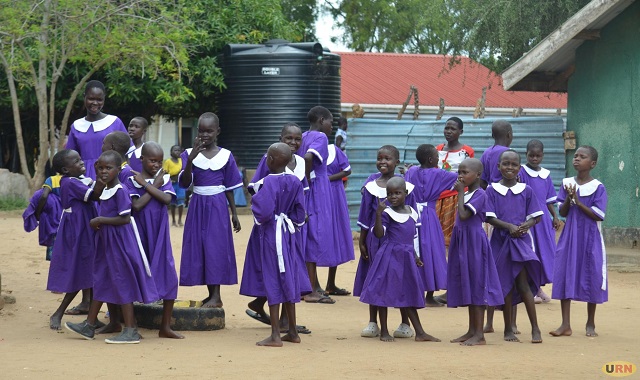


Schools across Moroto District are grappling with low learner attendance as the second term enters its third week, with head teachers blaming hunger, child labour, and domestic responsibilities for the poor turnout.



A spot check conducted by the Uganda Radio Network (URN) found several primary and secondary schools operating with significantly reduced enrolment, particularly on the outskirts of Moroto town.

School administrators said they expect attendance to improve in the coming weeks, but noted that many learners are still engaged in household duties such as farming, grazing livestock, and casual labour aimed at supporting family survival.
At Nachele Community Primary School, Deputy Headteacher John Amodoi said only 172 pupils in primary and 216 in Early Childhood Development (ECD) classes have reported out of an expected 680 learners. He noted that younger children are more likely to attend school due to school-based feeding support, while older pupils remain at home working.


In Loletekia Community Primary School, Head Teacher Robert Arou Okiror said enrolment has dropped sharply compared to the previous term, with only 178 pupils present out of 701 registered learners. He linked the decline to ongoing household labour demands and food insecurity.
Okiror also noted that while scholastic materials have been provided through partners such as Welthungerhilfe, economic hardship continues to affect attendance in upper primary classes.
The situation is mirrored in secondary schools, including Nadunget Seed Secondary School, where Deputy Headteacher James Kodet reported that only 200 students out of an average 370 have returned. He also confirmed that staff attendance remains incomplete, with several teachers yet to resume duties.

Kodet attributed the trend to seasonal hunger and financial pressure on families, especially following the withdrawal of some school feeding programmes. He added that learners are required to contribute UGX 72,000 per term for meals, further straining enrolment.
Community leaders have expressed concern over the recurring crisis, calling for stronger enforcement of education laws. Opinion leader Daniel Lokiru argued that voluntary compliance has failed in the region and urged authorities to empower local leaders to enforce compulsory schooling.
He also reiterated calls for stricter bylaws to ensure children remain in school, noting that repeated interventions have not resolved the underlying challenges.
Despite ongoing support from development partners and government initiatives, schools in the Karamoja sub-region continue to struggle with retention, particularly among upper primary and secondary learners.
END













 EduTimes Africa, a product of Education Times Africa, is a magazine publication that aims to lend its support to close the yawning gap in Africa's educational development.