











































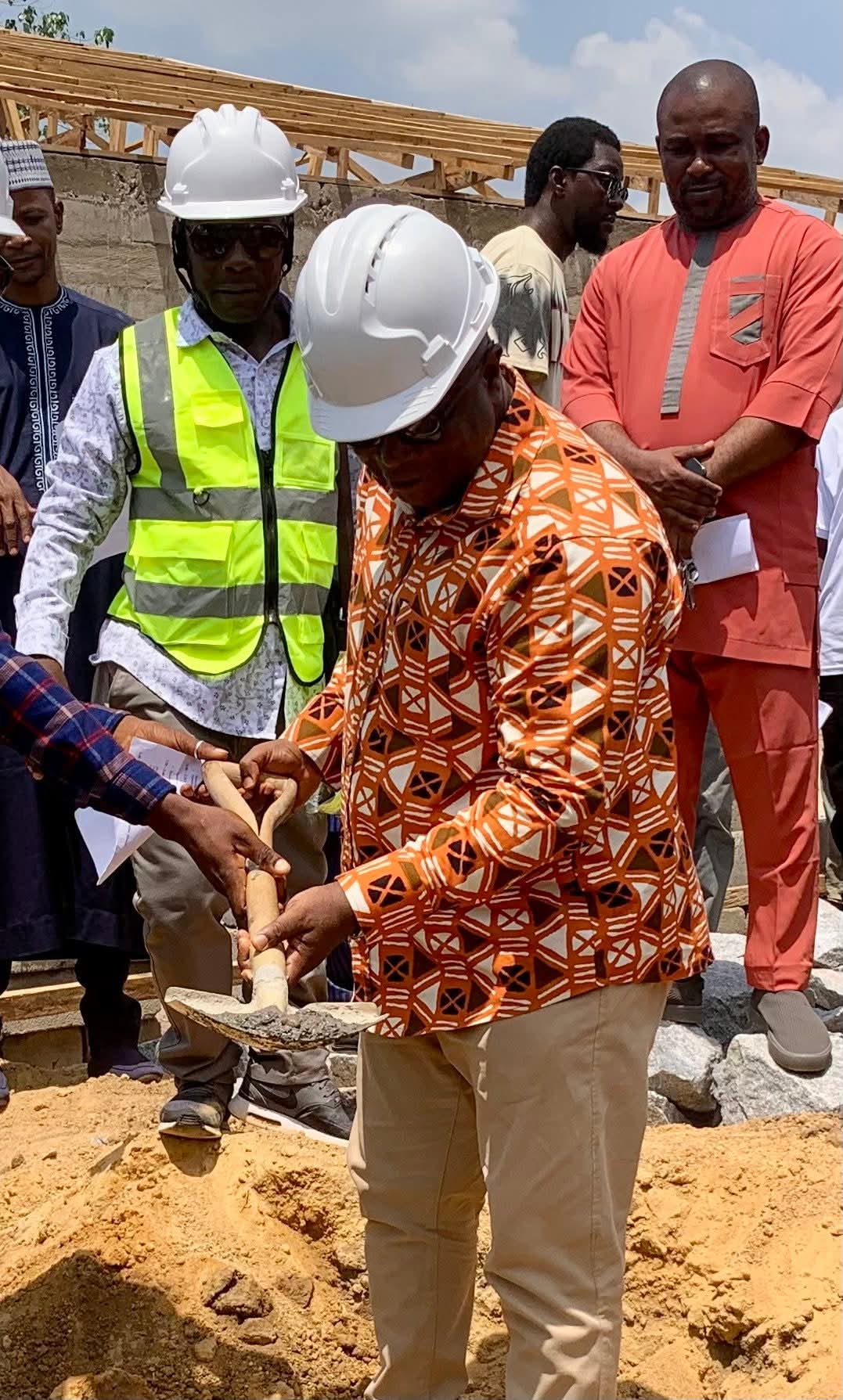


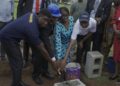
The Ministry of Technical and Higher Education (MTHE) has joined Njala University, to officially turn the sod for the construction of a six-classroom medical school building at the university’s Kowama campus in Bo, marking a major step toward expanding medical education and strengthening the country’s healthcare system.
The facility is designed to provide modern, sustainable learning spaces, with six classrooms each accommodating 200 students, for a total capacity of 1,200 at a time. It will also include two laboratories, four offices, and restroom facilities.

Speaking on behalf of the Minister of Technical and Higher Education, Permanent Secretary Mohamed Sheick Kargbo said the project aligns with government’s broader agenda to improve access to quality education and build a skilled workforce. He noted that strengthening medical training is critical to achieving universal health coverage and improving service delivery across the country.
“This is not just about infrastructure,” he said. “It is about building the next generation of competent, innovative, and responsive health professionals who can drive national development.”

Njala University’s Chancellor, Prof. Sahr Moses Gevao, revealed that the idea for a medical school had been in development for years, with groundwork already completed in areas such as curriculum design, staffing, and infrastructure.
According to him, the university is already prepared to begin training, with pre-medical students having completed foundational studies and key facilities, including administrative buildings and laboratories, ready for use.
“We are ready with the infrastructure, the human resources, and the equipment,” he said. “This building is an addition to what already exists and will support future cohorts.”
Vice-Chancellor and Principal, Prof. Bashiru Koroma, described the project as a strategic investment aimed at producing globally competitive health professionals. He emphasized that the facility will provide modern classrooms, laboratories, and simulation environments to enhance teaching and research.
Also speaking at the event, Bo District Medical Officer, Dr. Amara Steven Ngegbai, highlighted the urgent need for more doctors in Sierra Leone. He noted that the country currently produces only about 50 to 80 doctors annually, far below the number required to meet international standards.
“The establishment of additional medical training institutions like this is essential if we are to close the gap and reduce the burden on existing healthcare workers,” he said.
The Mayor of Bo City, Koba Musa, commended the Njala University’s administration and government for their role in strengthening higher education, emphasizing that Njala has consistently produced professionals who are contributing both nationally and internationally. He highlighted the university’s impact in decentralizing education, pointing out that opportunities once limited to Freetown are now increasingly available in the southern region.
The Administrator of the Tertiary Education Commission (TEC), Idrissa Sannoh, said the construction of a medical school facility at Njala University marked a significant step in expanding access to tertiary education and improving the learning environment for students. He noted that the project reflects the government’s continued commitment to higher education and would support the growth of medical training while helping to address critical human resource gaps in the health sector.
He reaffirmed the Commission’s commitment to ensuring that expansion in institutions is matched with quality, relevance, and proper accreditation.
Santigie Sesay, Director of Physical Plant Services at United Construction and Engineering Services, stated that the project involves the construction of an L-shaped, two-storey medical school building. He said that the facility is designed to provide modern and sustainable learning spaces, featuring six classrooms with a seating capacity of 200 students each, accommodating up to 1,200 students at a time. He mentioned that additional facilities will include two laboratories, four offices, and restrooms.
According to him, construction is scheduled to begin in March 2026 and be completed by August 2026, at a total cost of NLe 6,350,124.
Prof. Lina Moses, representing Tulane University, said the institution has a long-standing history in infectious disease research, clinical care, and prevention, and expressed pride in its partnership with Njala University. She reaffirmed Tulane’s strong commitment to supporting health education and services in the country.
She commended Njala University’s contributions to training allied health professionals, including community health officers, nurses, and laboratory technicians, who continue to strengthen healthcare delivery nationwide.
Prof. Moses added that Tulane is keen to expand its collaboration to include medical doctor training, particularly in infectious diseases, microbiology, and biomedical engineering. She described the partnership as one built on mutual collaboration and expressed appreciation for the opportunity to strengthen ties with the School of Medicine.
Emmanuel J. Momoh Esq., Director of Higher Education at MTHE, explained the legal framework, noting that statutory instruments, authorized under the Universities Act of 2021, enable the Minister to develop laws, orders, and regulations for universities. He confirmed that the statutory instrument for the medical school had been submitted to Parliament for the required 21-day consideration period and would proceed after the parliamentary recess. The process also includes assessment by the Tertiary Education Commission (TEC), followed by review and approval by the Ministry.
Dassay Musa Senesie, President of the Students’ Union at Njala University’s Bo Campus, expressed gratitude for the establishment of the Medical School, describing it as a long-awaited solution to a persistent need. He noted that the development reflects the leadership’s commitment to both students and national development. He emphasized that the initiative ensures the training of quality doctors and strengthens Sierra Leone’s capacity to advance its own development.





 EduTimes Africa, a product of Education Times Africa, is a magazine publication that aims to lend its support to close the yawning gap in Africa's educational development.