






















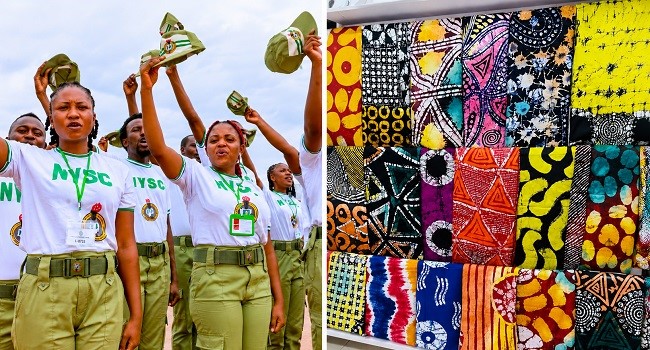


The Federal Government’s proposal to replace the National Youth Service Corps (NYSC) khaki uniform with locally produced Adire has sparked widespread debate among Nigerians. While the idea of promoting indigenous textile production deserves commendation, many believe the government’s priorities are misplaced.
For over five decades, the khaki uniform has become more than just clothing. It is a symbol of national service, unity and sacrifice. Replacing it with Adire may add cultural flair and support local manufacturers, but changing what corps members wear does little to address the real challenges confronting the scheme.

The loudest message from Nigerians is simple: reform the substance before changing the appearance.
Corps members continue to face security risks in some parts of the country. Camp facilities in several states require significant improvement, while many graduates complete their service year without gaining meaningful work experience or clear career direction. These are the issues many believe deserve urgent government attention.

That said, not every aspect of the proposed reform has been met with criticism. The plan to deploy corps members based on their academic qualifications has received considerable support. Posting education graduates to schools, health professionals to medical facilities, and other graduates to sectors aligned with their skills could make the NYSC more impactful and beneficial to both participants and host communities.

Similarly, reviewing deployments to take security realities into account is a practical step that many Nigerians welcome. Protecting corps members should remain a top priority.
The proposal to adopt Adire is not without merit. Supporting local textile industries can stimulate economic growth, create jobs and strengthen Nigeria’s manufacturing sector. However, many Nigerians argue that such a change should complement broader reforms rather than become the centrepiece of them.

Ultimately, the success of the NYSC will not be judged by the fabric corps members wear but by the value the scheme adds to their lives and to national development.
If these reforms are to leave a lasting legacy, they must focus less on changing uniforms and more on improving welfare, safety, skills development and employment opportunities. A new outfit may attract headlines, but meaningful reforms will earn lasting public confidence.














 EduTimes Africa, a product of Education Times Africa, is a magazine publication that aims to lend its support to close the yawning gap in Africa's educational development.