





















































The opening of the Dangote Petroleum Refinery’s Initial Public Offering (IPO) has placed Nigeria at the centre of Africa’s capital market, with the landmark transaction offering millions of Nigerians an opportunity to own a stake in one of the continent’s biggest industrial projects.



The public offer, which opened on September 14, involves 4.1 billion shares at ₦525 each and is expected to raise about ₦2.15 trillion, or approximately $1.6 billion. The transaction is being described as Africa’s largest IPO and is designed to attract both institutional and retail investors.

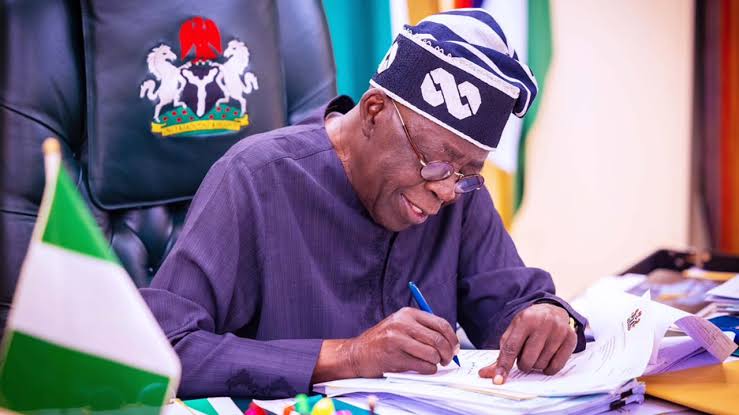
Beyond the size of the transaction, the IPO has also drawn attention to the economic policy environment under President Bola Tinubu.
Dangote Industries President, Aliko Dangote, has publicly credited the Tinubu administration with creating conditions that have supported the refinery’s operations, particularly through the removal of fuel subsidy and liberalisation of the foreign exchange market.

The connection between the government’s reforms and the refinery’s IPO, however, requires some context.
The Dangote Refinery was not built under the Tinubu administration. Construction of the approximately $20 billion facility took about a decade, and the refinery began operations in 2024. It currently has a capacity of 700,000 barrels per day and is seeking to expand to 1.4 million barrels per day.
This means the refinery represents a long-term private investment whose development predates the current administration. Tinubu’s influence is more directly connected to the policy environment in which the completed refinery is now operating and seeking to expand.
## Subsidy removal changed the market
One of Tinubu’s earliest and most consequential economic decisions was the removal of the petrol subsidy in 2023.
The policy immediately altered the economics of Nigeria’s downstream petroleum market. Petrol prices rose sharply, but the reform also reduced the direct cost of subsidising fuel imports and changed the relationship between government, fuel marketers, refiners and consumers.
For Dangote Refinery, the removal of the subsidy created a market in which refined petroleum products could increasingly compete without the previous subsidy structure.
Dangote has specifically praised the policy, alongside foreign-exchange reforms, describing the measures as bold decisions that helped create a more favourable environment for businesses.
The foreign-exchange reform was equally significant.
The refinery has substantial exposure to international commodity prices, foreign currency movements and imported inputs. A more market-driven foreign-exchange system therefore affects the way the business manages costs, revenues and investment.
However, the relationship is not without risks.
The refinery itself warned in its IPO prospectus that a return to fuel subsidies, price controls or other government interventions could affect its refining margins and make financial planning more difficult.
This highlights a central issue surrounding the IPO: investors are not simply buying into Dangote’s industrial achievement. They are also investing in a business whose performance is closely connected to Nigeria’s economic and regulatory environment.
## From private investment to public ownership
The IPO marks a significant change in the ownership structure of the refinery.
Dangote Group is offering 4.1 billion shares to the public, creating an opportunity for retail investors to participate in the ownership of the facility.
The minimum subscription is 10 shares, costing ₦5,250, making the offer accessible to smaller investors compared with many major institutional transactions.
Dangote has described the transaction as a means of democratising wealth creation rather than simply raising money.
The distinction is important because the company had already raised $2.5 billion through a private placement earlier in the year. According to Dangote, the public offer is therefore intended to give ordinary Nigerians and other investors an opportunity to participate in the future value of the refinery.

If successful, the transaction could deepen Nigeria’s capital market by bringing more retail investors into equity investment.
It could also provide a test of how willing Nigerians are to invest in large domestic businesses at a time when inflation, currency volatility and declining household purchasing power remain major concerns.
What Tinubu’s role really means
It would be inaccurate to suggest that Tinubu created the conditions for the Dangote Refinery itself.
The project was conceived, financed and constructed over many years, involving substantial private investment and infrastructure development before the current administration came into office.
But it would also be difficult to ignore the influence of the current policy environment on the refinery’s business model.
The removal of subsidy has changed the downstream market. Foreign-exchange reforms have altered the operating environment for businesses with significant dollar exposure. At the same time, the Federal Government’s broader economic reforms are attempting to move Nigeria towards a more market-driven economy.
For Dangote, these changes have created both opportunities and risks.
The refinery is now operating at a time when Nigeria is seeking to reduce dependence on imported refined petroleum products and strengthen domestic industrial capacity.
The facility has already altered Nigeria’s position in the regional fuel market, while its expansion plans could further increase the country’s refining capacity and potentially strengthen its position as a refined petroleum products exporter.
## A test for Nigeria’s capital market
The IPO is bigger than Dangote Refinery alone.
Its success could send an important signal about investor confidence in Nigerian companies, the depth of the domestic capital market and the willingness of ordinary Nigerians to participate in large-scale wealth creation through equities.
The offer is also heavily technology-enabled, with investors able to access approved subscription channels digitally. This could help bring a younger generation into the investment market.
But wider participation will depend on more than the availability of digital platforms.
Financial literacy, disposable income, trust in the capital market and confidence in regulatory institutions will all influence how many Nigerians ultimately participate.
The Securities and Exchange Commission has already warned prospective investors to use only approved subscription channels and to beware of fraudulent platforms and individuals claiming to facilitate the IPO.
## Beyond Dangote
The most significant question may therefore be what comes after the Dangote IPO.
Nigeria needs more businesses capable of attracting long-term domestic and international capital into productive sectors such as manufacturing, energy, technology, agriculture and infrastructure.
If the Dangote Refinery IPO succeeds, it could demonstrate that large Nigerian businesses can transition from private ownership to broader public participation while using the capital market to finance expansion.
For the Tinubu administration, the development could also serve as evidence that difficult economic reforms can eventually create opportunities for private investment and capital-market growth, even though the immediate effects of those reforms have imposed significant costs on households and businesses.
For Dangote, the IPO represents another stage in the evolution of a project that has taken more than a decade to build.
The refinery’s success will ultimately depend not only on government policy, but also on its ability to remain profitable, manage global oil-market risks, expand efficiently and deliver value to its new shareholders.

The Dangote IPO therefore represents two stories at once: the culmination of a long private-sector industrial investment and a test of whether Nigeria’s evolving economic policy environment can support a new era of public participation in large domestic businesses.
How that relationship develops may determine whether the IPO becomes simply a landmark transaction or a turning point for Nigeria’s capital market and industrial economy.













 EduTimes Africa, a product of Education Times Africa, is a magazine publication that aims to lend its support to close the yawning gap in Africa's educational development.