

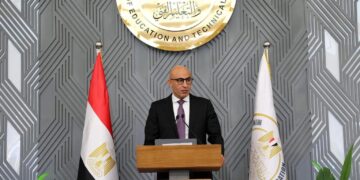























The Federal Government is set to distribute Information and Communication Technology (ICT) equipment and learning materials to 15 Federal and State Colleges of Education under a Japanese Government-supported education initiative aimed at strengthening teacher training and improving access to quality learning.
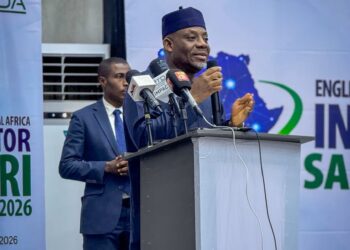
The handover ceremony, scheduled for June 2, 2026 in Abuja, forms part of “The Project for Capacity-building of Teachers to Promote Continuous and Inclusive Access to Safe and Quality Education for Girls in West Africa,” a regional intervention funded by the Government of Japan through UNESCO-IICBA.

The programme is designed to tackle key education challenges across West Africa, including low learning outcomes, out-of-school children, teacher shortages, gender inequality, and learning poverty, while promoting digital and inclusive education systems.
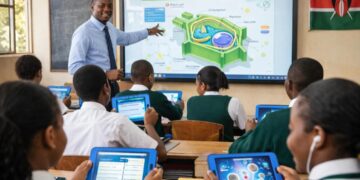
As part of the intervention, ICT equipment to be handed over includes 65 laptop computers with carrying cases, 71 tablets, four desktop computers, five interactive smart boards, 19 all-in-one desktop computers, 14 projectors, 15 printers and 15 backup hard drives.

The beneficiary institutions cut across the country and include the Federal College of Education, Kontagora; Federal College of Education, Zaria; Federal College of Education (Technical), Gombe; Federal College of Education, Yola; Federal College of Education (Technical), Asaba; Federal College of Education (Special), Oyo; Federal College of Education (Technical), Umunze; College of Education, Zuba, FCT; Isaac Jasper Boro College of Education; Enugu State College of Education (Technical); Sa’adatu Rimi College of Education, Kano; Adamu Augie College of Education, Argungu; Shehu Shagari College of Education, Sokoto; Adamawa State College of Education, Hong; and Taraba State College of Education, Zing.

The project, implemented in collaboration with UNESCO-IICBA, the African Union International Centre for the Education of Girls and Women in Africa (AU/CIEFFA), and the African Union Education, Science, Technology and Innovation (ESTI) team, also focuses on strengthening teacher professional development and promoting gender-responsive education systems.
Beneficiaries include the Federal Ministry of Education, teacher training institutions, teacher educators, school inspectors, and teachers across basic and secondary education levels.
The initiative also supports improved teaching outcomes through digital tools, capacity building, and safer, more inclusive learning environments, with a strong emphasis on girls’ education.
In addition, new related interventions have been announced, including mobile-based learning support for female teachers and school leaders in crisis-affected areas under the Pan African Virtual and Electronic University (PAVEU) initiative.
Another project focuses on reintegrating out-of-school children into formal education through accelerated learning programmes combining academic support, psychosocial care, and life skills development.
The Federal Ministry of Education commended the Government of Japan, UNESCO-IICBA, the African Union, and other partners for their continued support toward inclusive and equitable education development in Nigeria












 EduTimes Africa, a product of Education Times Africa, is a magazine publication that aims to lend its support to close the yawning gap in Africa's educational development.