

























The Federal Government has unveiled the Nigeria Genomic City, a landmark national initiative aimed at positioning the country as a leading hub for genomics, biotechnology and precision medicine while driving scientific research, healthcare innovation, food security and economic growth.



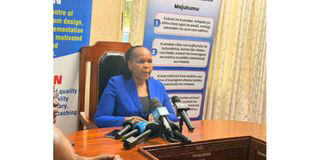
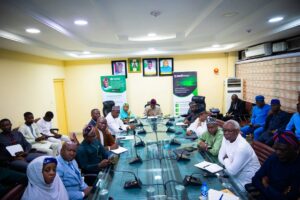
Speaking at a high-level stakeholders’ meeting in Abuja on Thursday, the Minister of Education, Dr. Maruf Tunji Alausa, warned that Nigeria’s rapidly growing population could become a national burden if the country fails to invest in research, science and innovation.

He said the Genomic City would help transform Nigeria from a resource-dependent economy into one driven by knowledge, innovation and technology.
“The biggest demographic dividend ever witnessed anywhere in the world could become a demographic calamity for us if we fail to act. We do not have a choice,” Alausa said.

The minister explained that the project, conceived over 20 months ago, was intentionally designed as a multi-agency and multi-ministerial initiative because of its strategic national importance.
According to him, the Nigeria Genomic City is a national asset that will strengthen scientific capacity, promote data sovereignty, attract global partnerships and unlock the value of Nigeria’s rich genomic resources.
Alausa also disclosed that the Federal Government is finalising the establishment of the National Research and Innovation Development Fund, expected to mobilise nearly $500 million annually to finance research and innovation across the country.

He announced that the University of Abuja will host the Nigeria Genomic City, while the National Information Technology Development Agency, the National Board for Technology Incubation and other strategic partners will provide technological and innovation support for the project.
Minister of State for Education, Prof. Suwaiba Said Ahmad, described the initiative as an opportunity for Nigeria to become a global leader in scientific innovation, citing the country’s growing research capacity and expanding pool of technical experts.
Also speaking, the Pioneer Director of the Centre for Genomic and Precision Medicine at the University of Ibadan, Prof. Mayowa Ojo Owolabi, said the project would establish a national platform for genomic, biological and health data to support breakthroughs in disease prevention, diagnosis, treatment, agriculture and biotechnology.

He noted that Nigeria’s rich genetic diversity places it in a strong position to become a global centre for genomics and precision medicine while creating jobs, attracting investments and strengthening collaboration with Nigerian scientists in the diaspora.
The Federal Government said the initiative forms part of its broader strategy to build a knowledge-based economy and enhance Nigeria’s global competitiveness through science, research and innovation.














 EduTimes Africa, a product of Education Times Africa, is a magazine publication that aims to lend its support to close the yawning gap in Africa's educational development.