















As African countries search for solutions to learning challenges, teacher shortages, and declining education outcomes, Senegal is positioning itself as a model others can learn from.
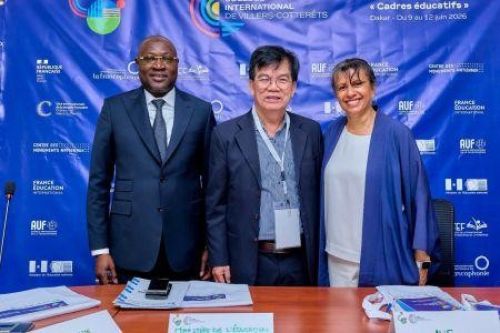
From June 9 to June 12, education officials from six African countries and France gathered in Dakar to study the reforms reshaping Senegal’s education system.

The event, organised by the International College of Villers-Cotterêts in partnership with the West Africa branch of the Agence universitaire de la Francophonie (AUF), gave participants an opportunity to observe educational practices already being implemented in Senegalese schools.
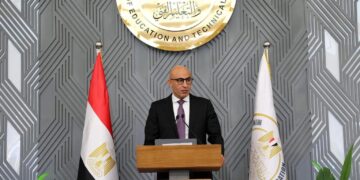
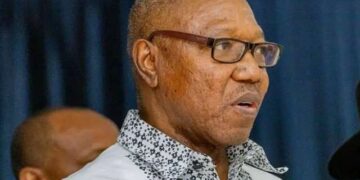
Presenting the country’s reform agenda, Papa Malik Ndao, Secretary-General of Senegal’s Ministry of National Education, said the administration of President Bassirou Diomaye Faye is prioritising three key areas.

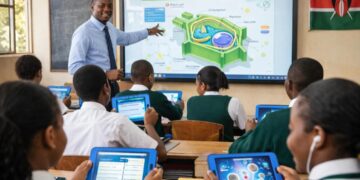
The first is the integration of technology into teaching and learning.
The second is the Harmonized Model of Bilingual Education in Senegal (MOHEBS), which combines French with national languages from the primary school level.
The third focuses on continuous training for teachers.

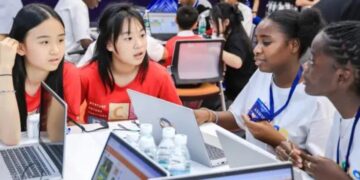
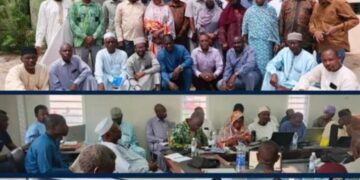
During the four-day programme, delegates visited schools in the Dakar region and held discussions with teachers, school leaders, and education experts. Each delegation is expected to produce a report comparing Senegal’s approach with the realities in their own countries.
One of the strongest arguments in favour of Senegal’s model is its impact on learning outcomes.
A recent evaluation by the Bill & Melinda Gates Foundation found that pupils enrolled in bilingual education programmes scored 29 points higher in reading and written comprehension than students outside the programme.
The results have encouraged the government to expand the initiative nationwide.
Introduced into public schools in 2011, the bilingual programme now operates in 13 of Senegal’s 16 education regions and uses six national languages. Authorities plan to add two more languages in 2026.
In 2025, the Association for Research and Education for Development, which has promoted the model since the early 2000s, received the Yidan Prize, the world’s largest education award by financial value.
Despite the progress, challenges remain.
Limited access to textbooks continues to slow the programme’s expansion, highlighting a problem that many African countries face.
The conversation extends beyond Senegal.
In 2024, Burkina Faso adopted a similar bilingual education model that combines French with seven national languages.
At the continental level, the African Union has acknowledged that the goals of its Continental Education Strategy for Africa (CESA 2016–2025) were not fully achieved.
The organisation has now launched a new framework, CESA 2026–2035, to address persistent challenges such as low school completion rates, inadequate funding, and rapid population growth.



 EduTimes Africa, a product of Education Times Africa, is a magazine publication that aims to lend its support to close the yawning gap in Africa's educational development.