


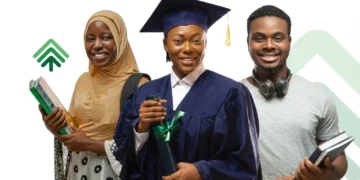















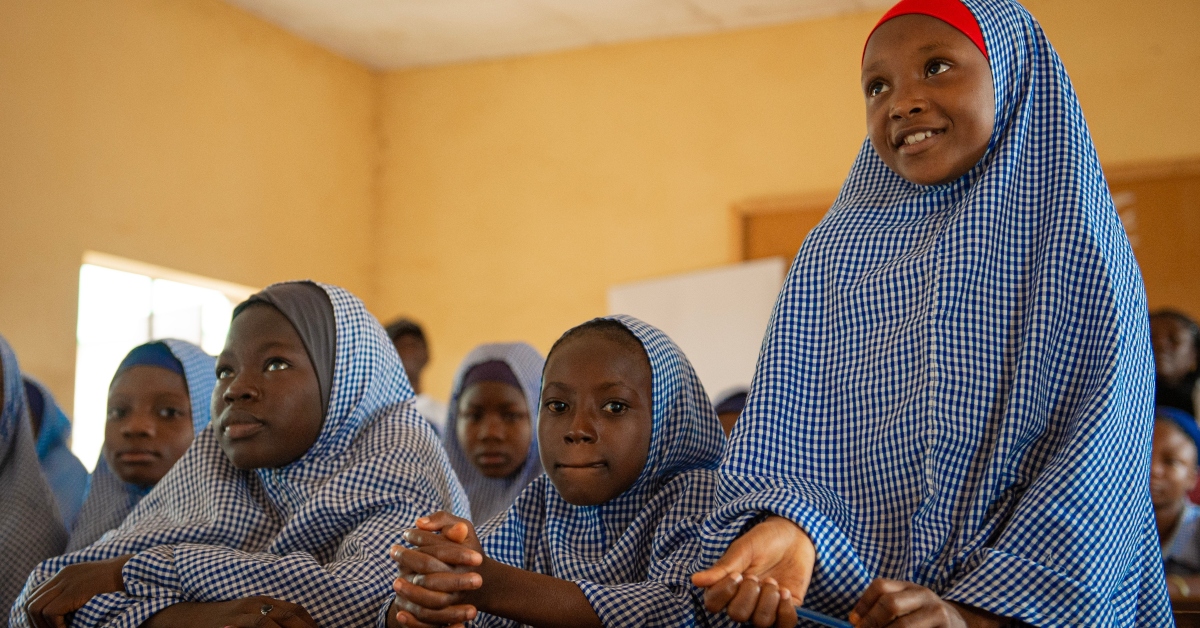


A new opinion piece highlights ongoing inequalities in global education, with a strong focus on African girls who remain disproportionately excluded from completing secondary education despite improvements in school enrolment rates.



The article draws on case studies, UNESCO data, and programme evaluations across Africa to argue that while access to education has improved, completion and transition into higher levels remain major barriers—especially for vulnerable girls.

—
Case Study: Aisha’s Education Journey in Nigeria

The piece opens with the story of “Aisha,” a girl from rural Borno State, Nigeria, whose education was disrupted when she was abducted by armed fighters.
She spent eight months out of school during what she described as “the hard times.”
After rescue, she enrolled in an accelerated learning programme run by an NGO.
She received academic support and trauma counselling from female teachers.
Within two years, she re-entered formal school, passed exams successfully, and later progressed to college.
She now works as a community health worker and aspires to become a medical doctor.
Her experience is presented as an example of how flexible education systems can help children recover lost learning and rebuild their futures.
—
Key Findings on Education Inequality

The report highlights persistent gaps in education outcomes:
Global gender gaps in school enrolment have narrowed significantly.
However, completion of upper secondary education remains highly unequal.
Fewer than 4 in 10 girls who complete primary school go on to finish upper secondary school.
In Nigeria:
Over 18 million children are out of school.
About 90% of children from wealthy urban households complete secondary school.
Fewer than 13% of girls from the poorest rural households complete secondary education.
This shows that poverty, geography, and gender intersect to deepen educational exclusion.
—
Systemic Challenges Identified
The article argues that the problem is not only poverty or cultural norms but also structural weaknesses in education systems.
A review of education policies found:
Across 60 national education plans, none had strong mechanisms for supporting transitions from non-formal or accelerated learning into formal schooling.
Girls are most vulnerable during these transition points.
These gaps lead to dropout even after initial access to education programmes.
—
Proposed Solution: STEP Framework
To address these challenges, the article introduces STEP, an open-source planning tool designed to help governments and education systems:
Identify critical dropout points in girls’ education pathways
Assign clear responsibility for supporting transitions
Plan education systems around the real-life conditions of vulnerable learners
The framework is positioned as a practical policy tool for improving retention and completion rates.
—
Evidence of Impact from African Programmes
The article cites successful interventions across Africa:
In northern Nigeria, a programme reportedly increased girls’ attendance by 680% and reduced child marriage by 76%.
In Ethiopia, “speed schools” helped 2.5 million out-of-school children catch up, with 90% transitioning into formal education.
Sierra Leone has implemented “Radical Inclusion” policies and accelerated learning frameworks that support reintegration of girls into formal schooling.
These examples demonstrate that targeted, flexible education models can produce measurable social and economic benefits.
Conclusion
The report concludes that African education systems must move beyond access alone and focus on sustained participation, transition, and completion—especially for girls facing multiple vulnerabilities such as poverty, conflict, and rural isolation.
It emphasizes that successful programmes already exist and can be scaled if governments adopt stronger coordination, accountability, and learner-focused planning.
The central message is that with deliberate system design and targeted support, millions of African girls can successfully complete their education and transform their life outcomes.
Source Credit: Africa.com, Op-Ed by Randa Grob-Zakhary, “How To Reach The African Girls Locked Out Of Global Education Progress,” June 8, 2026.







 EduTimes Africa, a product of Education Times Africa, is a magazine publication that aims to lend its support to close the yawning gap in Africa's educational development.