




















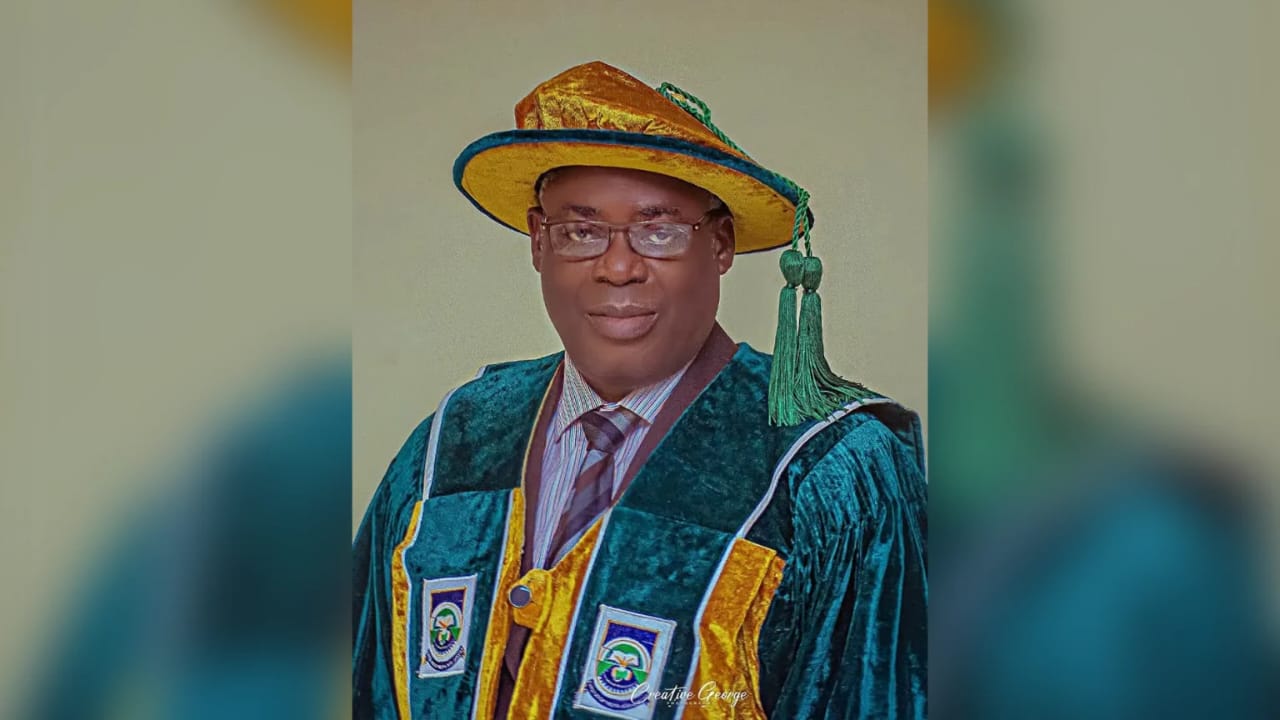


Long before economic reforms became a regular subject of national debate, the Nigerian Economic Society (NES) was already helping to shape the policies that guided the country’s development. More than six decades later, the professional body still has a critical role to play in Nigeria’s economic future, according to the Vice-Chancellor of Emmanuel Alayande University of Education, Oyo, Prof. Olanrewaju Olaniyan.
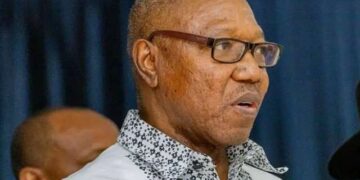
Speaking during a courtesy visit by the executive members of the Oyo State chapter of the society, Olaniyan described the NES as one of the country’s most influential professional bodies, saying generations of economists who belonged to the association had helped design Nigeria’s economic direction.

“The Nigerian Economic Society is the backbone of Nigerian economic policy. It has been like that since 1958. The first four National Development Plans in this country were prepared by core economists, most of whom belonged to the Nigerian Economic Society,” he said.
For Olaniyan, the society’s influence extends far beyond academic discussions. He noted that many of Nigeria’s most prominent economic managers passed through its ranks, pointing to personalities such as former Minister of Finance, Dr Onaolapo Soleye; former Minister of Finance and Director-General of the World Trade Organization, Dr Ngozi Okonjo-Iweala; former Central Bank Governor, Prof. Charles Soludo; Chief Olu Falae; Samsudeen Usman; and former Minister of Health, Prof. Eyitayo Lambo.

He also recalled that the President of the Nigerian Economic Society formerly served as an ex-officio member of the National Economic Council, underscoring the organisation’s long-standing contribution to national policy formulation.
Beyond government, the Vice-Chancellor argued that economists remain indispensable across virtually every sector of the economy.
“Economists are everywhere—universities, polytechnics, colleges of education, government ministries, planning agencies and the private sector. Their contributions to national development cannot be overemphasised. Economics cuts across every sector,” he said.
Olaniyan observed that the society’s annual conference has become one of the country’s biggest gatherings of economists, attracting between 2,000 and 5,000 participants each year to discuss issues affecting Nigeria’s economy.

He also advocated the revival of the Committee of Heads of Departments of Economics (COHED), describing it as an important platform for harmonising Economics curricula and maintaining academic standards across tertiary institutions.
As part of efforts to strengthen the profession, the Vice-Chancellor announced that Emmanuel Alayande University of Education would encourage its Economics lecturers, graduating students of Economics and Economics Education, as well as students in related disciplines, to become members of the Nigerian Economic Society.
“Our lecturers, graduating B.Sc. Economics and Economics of Education students will become members of the society. We believe in the Nigerian Economic Society and we will encourage our students to participate actively,” he said.
Earlier, the Acting Chairman of the Oyo State chapter of the Nigerian Economic Society, Prof. Oluwakemi Bolaji Okuwa, said the visit formed part of efforts to deepen collaboration between the society and higher institutions.
She explained that the society is expanding an initiative introduced by its immediate past National President, Prof. Adeola Adenikinju, to induct graduating Economics students into the professional body while also encouraging lecturers to participate in its annual conference and collaborative research.











 EduTimes Africa, a product of Education Times Africa, is a magazine publication that aims to lend its support to close the yawning gap in Africa's educational development.