























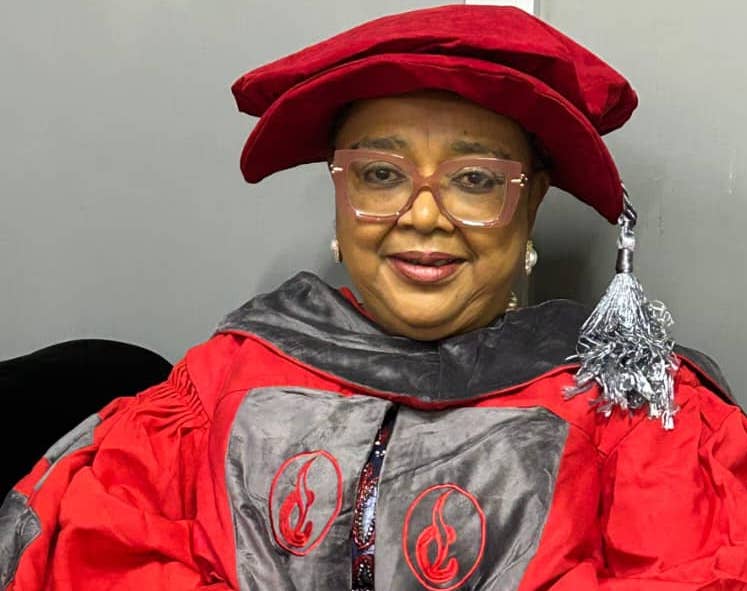


“If we get teacher education wrong, we get the future of Nigeria wrong. That is why every reform here is about outcomes, not routine compliance.” The statement captures the vision driving Dr. (Mrs.) Angela Ajala, Executive Secretary of the National Commission for Colleges of Education (NCCE).
Ab initio, the first 100 days of Dr. (Mrs.) Angela Ajala as the 7th substantive Executive Secretary of the National Commission for Colleges of Education (NCCE) have unfolded as a period of deliberate repositioning, institutional recalibration, and reform-driven leadership. Assuming office on 17 March 2026, and formally presented with her appointment letter on 24 March 2026 by the Honourable Minister of Education, Dr. Tunji Alausa, Dr. Ajala stepped into a sector often described as foundational yet historically under-energised. One hundred days later, her leadership narrative is already defined by a clear attempt to move the Commission from a compliance-driven regulator to a development-oriented institution focused on outcomes, quality, and relevance.

Tellingly, at the heart of her early tenure is a central conviction: that the future of Nigeria’s education system depends on the strength, status, and structure of its teacher education framework.
A SHIFT FROM COMPLIANCE TO TRANSFORMATION

From the outset, Dr. Ajala framed her mandate not as administrative stewardship alone, but as an opportunity to reshape the philosophy of teacher preparation in Nigeria. Under her leadership, the Commission has begun a transition from measuring institutional compliance to prioritising educational outcomes and system-wide impact. This shift is most visible in the introduction of the Dual Mandate framework, a five-year integrated pathway that enables Colleges of Education to award both the Nigeria Certificate in Education (NCE) and the Bachelor of Education degree. Anchored in the Federal Colleges of Education (Establishment) Act of 2023, the model is designed to reposition Colleges of Education as degree-awarding institutions while maintaining their foundational role in teacher training.

The first practical demonstration of this reform came with the Federal College of Education, Abeokuta, matriculating its inaugural set of 538 degree students on 5 May 2026, a symbolic milestone that signals the beginning of structural change in the subsector.
THE RENEW-TEACH AGENDA
Central to the new administration’s vision is the RENEW-TEACH Accord (2026–2030), a strategic blueprint built around five pillars: the rebirth of professionalism, excellence in pedagogy, networked digital services, equity review of the NCE Minimum Standards is integrating emerging global competencies such as artificial intelligence, digital literacy, entrepreneurship, climate and green economy education, inclusion, and child protection. A joint validation committee involving the Commission, provosts, and academic unions has been inaugurated to ensure sector-wide ownership of the reforms.
In a country grappling with evolving labour market demands and a persistent teacher shortage estimated at nearly 200,000 in basic education, the reform agenda is both timely and ambitious.
BUILDING INSTITUTIONAL DELIVERY CAPACITY
Beyond policy formulation, Dr. Ajala’s first 100 days have been marked by a focus on execution architecture. The establishment of a Reform Delivery Unit and a Technical Team signals a shift toward structured implementation discipline within the Commission. Internal restructuring has also reorganised planning functions into dedicated policy, research, and monitoring and evaluation units. The Commission’s performance system has been aligned with the Federal Ministry of Education’s Ministerial Performance Management System, reinforcing accountability and measurable results.

In addition, a national institutional readiness assessment has been initiated to evaluate Colleges of Education ahead of full Dual Mandate implementation. This diagnostic approach is intended to ensure that reforms are not only announced but effectively absorbed across diverse institutional contexts.
POLICY DECISIONS AND ACCESS REFORMS
One of the most discussed policy positions during the period has been Dr. Ajala’s support for the Federal Government’s exemption of Colleges of Education candidates from the Unified Tertiary Matriculation Examination (UTME). While reinforcing access, she has consistently emphasised that quality standards remain intact, as candidates are still processed through the Central Admissions Processing System. Her guiding principle has been consistent: reduce administrative barriers, not professional standards. This framing has positioned the Commission as an advocate for widening access to teacher education while safeguarding its academic integrity.
STAKEHOLDER ENGAGEMENT AND SYSTEM BUY-IN
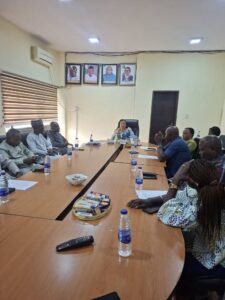
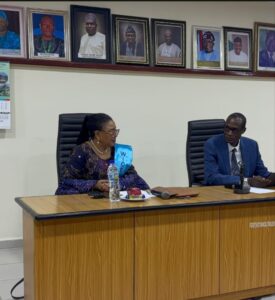
A notable feature of the first 100 days has been the breadth of stakeholder engagement. Dr. Ajala has engaged with a wide spectrum of actors across the education ecosystem, including sister agencies such as the National Universities Commission and the National Board for Technical Education, as well as legislative stakeholders, unions, provosts, and international development partners.
Early consultations with COEASU, SSUCOEN, and NASU have been particularly significant in shaping the tone of labour relations. Initial scepticism from some quarters has gradually given way to cautious endorsement, especially as reforms in curriculum review and institutional engagement have taken shape.
International collaborations have also expanded, including engagements with UNESCO-IICBA, the European Union–UNDP Nigeria Jubilee Fellows Programme, and academic institutions such as the University of Cambridge’s Early Childhood Development convening in Accra.
In the private sector and EdTech space, partnerships with platforms such as Blackboard and Anthology signal a push toward digital transformation and expanded access to learning infrastructure across Colleges of Education.
EARLY ACHIEVEMENTS AND INDICATORS OF PROGRESS
While Dr. Ajala’s tenure is still in its early stages, several measurable outcomes have emerged. These include the operationalisation of the Dual Mandate framework, the formalisation of curriculum reform structures, infrastructure upgrades at the Commission’s headquarters, and the onboarding of digital and technical partnerships aimed at strengthening e-learning capacity.
The Commission has also secured participation in the Nigeria Jubilee Fellows Programme, providing access to trained graduate fellows to support institutional capacity without additional recruitment burden.
Collectively, these developments point less to completed reform and more to the laying of institutional foundations intended to support long-term transformation.
COMMUNICATING A NEW VISION FOR TEACHING
Public communication has been another defining feature of the first 100 days. Dr. Ajala’s speeches and engagements have consistently reinforced a narrative centred on dignity, professionalism, and national importance of teaching.

Her most cited statement, “You miss it with teacher education, you miss it with Nigeria,” has become a thematic anchor for her reform messaging. Other recurring themes include the need to measure outcomes rather than inputs, and the repositioning of teaching as a first-choice profession rather than a fallback option. Through media engagements, conferences, and institutional visits, she has sought to reshape public perception of Colleges of Education as strategic national assets rather than peripheral institutions.
THE ROAD AHEAD
Looking forward, the next phase of the reform agenda is anchored on a State of the Colleges Address and a Strategic Transformation Masterplan (2026–2030). Key priorities include the nationwide rollout of the Dual Mandate, transition toward real-time accreditation systems, expansion of digital learning platforms, and deeper integration of early childhood education into teacher training structures.
Plans are also underway to launch public-facing platforms such as NCCE Live, NCCE Times, and NCCE TV, designed to enhance transparency, communication, and stakeholder engagement.
At the policy level, legislative efforts are being considered to reposition the Commission’s mandate more broadly around teacher education reform and system strengthening.
A SECTOR IN TRANSITION
Perhaps the most defining feature of Dr. Ajala’s first 100 days is not a single reform or policy decision, but the coherence of direction. Across policy, structure, partnerships, and communication, a consistent attempt is visible: to reposition teacher education as a central pillar of national development. In a sector long described as foundational yet under-reformed, the early signals suggest a Commission attempting to move from routine administration to purposeful transformation.
Whether this momentum translates into long-term structural change will depend on implementation depth, institutional resilience, and sustained stakeholder alignment. But at the 100-day mark, one thing is clear: the conversation around Colleges of Education in Nigeria is shifting.




















 EduTimes Africa, a product of Education Times Africa, is a magazine publication that aims to lend its support to close the yawning gap in Africa's educational development.