


























The classroom of the future may no longer be defined by chalkboards, crowded lecture halls or rigid timetables. Instead, it could be a space where learning happens across screens, lessons are accessed from anywhere, and teachers are equipped not only with subject knowledge but also with digital and practical skills needed for a rapidly changing world.



That vision is at the heart of a sweeping reform agenda unveiled by the Executive Secretary of the National Commission for Colleges of Education (NCCE), Dr Angela Ajala, who says Nigeria must rethink how it prepares teachers if it hopes to remain relevant in the digital age.

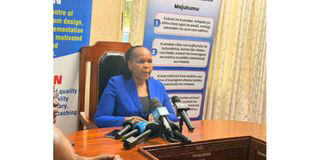
Speaking in Abuja during activities marking her first 100 days in office, Ajala outlined plans to introduce a competency-based digital curriculum across colleges of education nationwide, describing the initiative as a major step towards restoring the prestige of teacher education and producing globally competitive graduates.
According to her, the reforms are designed to address longstanding concerns about teacher preparation while ensuring that colleges of education keep pace with technological and global developments.

“Teacher education is unlike any other education. It is the foundation and bedrock of all other professions. If we get teacher preparation right, we get the future right,” she said.
Ajala explained that the Commission was collaborating with the National Universities Commission and other stakeholders to develop a new curriculum that places greater emphasis on practical competencies, digital literacy and hands-on learning rather than excessive theory.
“We are tightening our curriculum and working with stakeholders to ensure that the standards and quality meet global expectations.
“After that, we are going to digitise the curriculum in such a way that every student can access and benefit from it. Every teacher will be digitally skilled going forward,” she said.
The proposed curriculum, according to her, will support self-paced learning, remote teaching and technology-enabled instruction, allowing students to continue learning regardless of location.
“When we unveil the curriculum, you will see that whether a student is in class or at home, learning can continue seamlessly.
“A student will be able to access modules, watch self-paced videos, undertake assessments and complete projects independently. The curriculum is competency-based. It is no longer the overly theoretical model we used to have.
“A teacher can teach from anywhere in the world, and a student can learn from anywhere. That is the future we are building.”
Beyond digital transformation, the NCCE boss said the reforms would also prioritise skills acquisition, ensuring that graduates leave colleges of education with practical competencies that can support them beyond the classroom.
“Skills acquisition is an area we are very particular about. Every teacher will be equipped with practical skills that will enable them to thrive in today’s world.
“Going through a college of education will become a win-win situation because graduates will leave with a skills certificate, an NCE qualification and, in many cases, a degree,” she said.

Ajala also defended ongoing reforms affecting the Nigeria Certificate in Education, arguing that change was necessary to reposition teacher education and make it more inclusive.
“When something has been done for so long, people become accustomed to it. Naturally, any change creates some level of disruption.

“One of the key things we wanted to achieve was the removal of barriers because we are now talking about inclusive education,” she said.
She disclosed that the Commission was engaging persons with disabilities and other stakeholders to ensure that the reforms promote equal access to quality education.
“Everybody must be part of this transformation. Education should not exclude anyone,” she added.
While expressing optimism about the future of teacher education, Ajala acknowledged that inadequate funding remains a significant challenge.
“Funding remains a major challenge, but we are working with development partners, donor agencies and stakeholders. We are not relying solely on government because there is only so much government can provide,” she said.
She noted that the curriculum review process required substantial resources and commended institutional leaders and stakeholders for supporting the initiative.
Ajala also addressed the implementation of the dual-mandate policy, which allows colleges of education to award both the Nigeria Certificate in Education and bachelor’s degrees.
According to her, the policy will be implemented gradually, beginning with selected institutions.
“The implementation will begin with selected colleges of education and will be rolled out in phases because not all institutions are at the same level,” she said.
She explained that while some federal colleges had already begun the process, state-owned institutions would require legislative approval before joining the programme.
Supporting the reform agenda, the Chairman of the Committee of Provosts of Federal Colleges of Education, Dr Ademola Salami, described Ajala’s first 100 days in office as a turning point for teacher education in Nigeria.
“Teachers build nations. If you have good teachers, you will produce good citizens.
“We prepare the citizens who drive national development. That is why teacher education must receive the attention it deserves,” he said.
Salami commended the Commission’s focus on digital learning, professionalising teaching and developing a curriculum that reflects contemporary realities.
“The curriculum we are developing will go beyond conventional courses.
“It will incorporate entrepreneurship, skills acquisition, hands-on training, digital pedagogy and other innovative approaches required in contemporary education,” he said.
The Director of Information and Corporate Services Department, Arinze Ukeje, also noted that Ajala’s first 100 days had been characterised by extensive engagement with stakeholders aimed at strengthening teacher preparation across the country.
Ajala assumed office as Executive Secretary of the NCCE in March 2026 amid concerns over declining enrolment in colleges of education, teacher shortages and growing calls for reforms within the sector.
Education stakeholders believe the proposed reforms could help reposition colleges of education, improve learning outcomes and produce a new generation of teachers capable of meeting the demands of an increasingly digital and interconnected world.













 EduTimes Africa, a product of Education Times Africa, is a magazine publication that aims to lend its support to close the yawning gap in Africa's educational development.