
























































Behind every lecture delivered, laboratory maintained and degree awarded is a university struggling to keep its doors open. While students often see the classrooms, the examinations and the graduation ceremonies, university administrators say a growing financial crisis is quietly threatening the future of public higher education in Nigeria.



The Vice-Chancellor of the University of Uyo, Professor Chris Ekong, says that reality has become impossible to ignore, lamenting that dwindling government funding is leaving public universities with little room to sustain quality education.

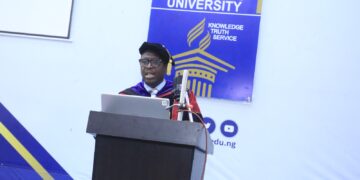
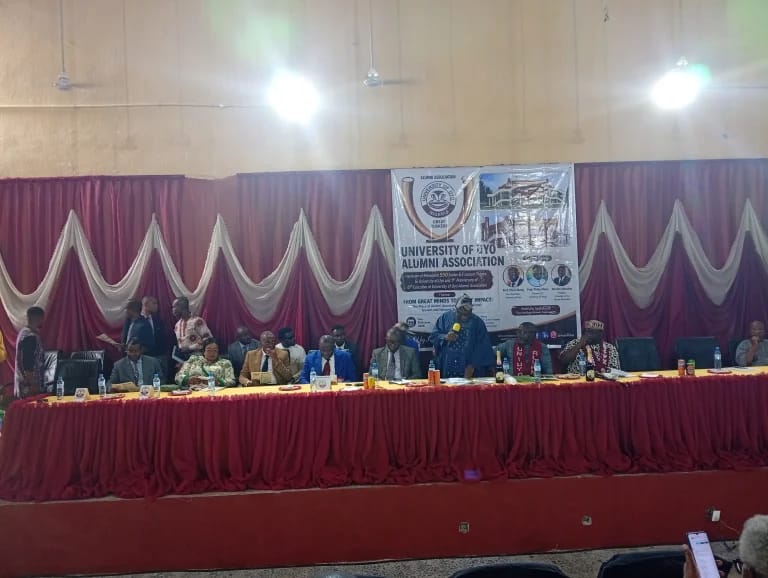
Speaking at the University Alumni Association’s one-year anniversary lecture and the official handover of the renovated 550-capacity ELF Lecture Theatre at the institution’s main campus on Nwaniba Road, Ekong described the financial situation confronting universities as alarming.
According to him, capital allocations to public universities have remained below 10 per cent over the past four years, making it increasingly difficult for institutions to maintain infrastructure and deliver quality teaching and research.

“It’s disappointing that Nigerian Universities are still not being well funded. Capital budget for the past four years given to universities is less than 10 percent. The universities have no money, but federal officials are coming every year to collect 25% of the internally generated revenue and if you don’t give they will charge from your personnel budget, the budget you should have used in paying. That is the situation that we are in. God will help us,” he said.
Ekong appealed to the university’s alumni to play a more active role in supporting the institution, announcing plans to include members of the association on his Advisory Committee to deepen transparency and collaboration.
“The universities are so poor, we want the Alumni to help us. I want to thank the Association for taking positive steps towards the provision of this recovered edifice. During the courtesy visit in the morning, I said I’m going to invite the Alumni into my Advisory Committee, so you can know what we are doing with the money we collect on your behalf, know what we are doing with intellectual property because it’s your university,” he added.
Earlier, the President of the University Alumni Association, Mr Ekerete Adiaiduo, highlighted interventions undertaken by the association over the past year, including efforts to resolve the prolonged transcript issuance delays that had frustrated graduates seeking employment and admission opportunities abroad.
He said the association also donated a generating set to the university’s Examinations and Records Unit after erratic electricity supply disrupted operations.

“One of our earliest and most consequential interventions addressed a crisis that had put students, graduates, and institutional stakeholders in a state of prolonged anxiety concerning the delayed transcript issuance debacle.

“Power supply to the Examinations and Records Unit had become so erratic that operations were near-paralysed. We acted. We provided a generating set to augment electricity supply to that unit, restoring efficiency and calming nerves that had been on edge for too long. Alumni who needed their credentials to pursue opportunities abroad could breathe again,” he said.
Adiaiduo added that the association was also strengthening engagement with UniUyo graduates in the diaspora to leverage their expertise, networks and resources for the university’s development.
Delivering the keynote lecture titled “From Great Minds to Great Impacts: The Role of Alumni Associations in Institutional Growth and National Transformation,” former Deputy Vice-Chancellor of the University of Abuja, Professor Philip Afaha, urged alumni associations to focus on institutional development rather than personal gains.
He cautioned against turning alumni bodies into platforms for seeking contracts, employment or admission opportunities.
“Though universities are mostly established by the state, like the case of UniUyo, universities require constant interventions and support of their products to survive. Universities should not rely entirely on the government in a troubled economy like ours, when the economy is on life support.
“Alumni must step in as an important source that the university can turn to in difficult situations. Alumni Association role is to attract development to the university through scholarship, grants, endowment, infrastructure, research support etc, and not an empowerment platform for former students,” he said












 EduTimes Africa, a product of Education Times Africa, is a magazine publication that aims to lend its support to close the yawning gap in Africa's educational development.