

























Every time Nigerian universities are shut down by industrial action, a familiar drama unfolds. Students accuse lecturers of holding their future hostage. Lecturers insist they are fighting for the survival of public education. Government officials promise resolutions. Social media erupts with outrage. Eventually, campuses reopen, lectures resume, and the nation moves on, until the next dispute. Yet beneath this recurring cycle lies a more uncomfortable reality: the greatest tragedy of Nigeria’s higher education crisis is not the strike itself, but how effectively it distracts attention from the systemic decay that made the strike inevitable.



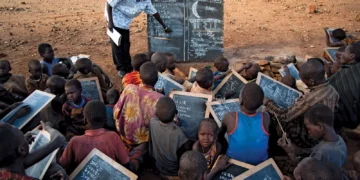
For decades, discussions about university education have focused on moments of disruption rather than the conditions that produce them. Strikes dominate headlines because they are visible. What receives less attention are lecture halls overflowing beyond capacity, laboratories operating below modern standards, hostels stretched beyond their limits, and institutions attempting to serve a rapidly growing student population without a corresponding expansion in resources. The crisis, therefore, is not periodic; it is permanent. Strikes merely expose it.

The paradox at the heart of Nigerian higher education is that access has expanded while capacity has stagnated. Successive governments have celebrated increasing enrolment and the establishment of new institutions, yet the infrastructure required to sustain this growth has lagged behind. The result is a system that welcomes more students than it can effectively educate. In many universities, students do not compete merely for academic excellence; they compete for seats in classrooms, spaces in hostels, and access to facilities that should have been expanded years ago.
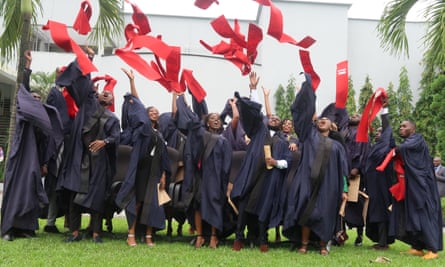
Unsurprisingly, students bear the immediate consequences. Delayed graduations, unstable academic calendars, overcrowded learning environments, and declining confidence in the value of their degrees have become defining features of the university experience. Yet to view students as the sole victims would be to misunderstand the nature of the crisis. The deterioration of educational quality is not occurring because lecturers have become less committed to teaching; it is occurring because the system increasingly demands more from them while providing less.

The Nigerian lecturer occupies a peculiar position within this reality. Society expects academics to produce research, mentor students, contribute to national development, and compete globally with their counterparts elsewhere. Yet many are expected to achieve these outcomes within institutions facing chronic funding shortages, inadequate facilities, and persistent welfare challenges. When a lecturer is responsible for hundreds of students, limited research support, and mounting administrative obligations, educational quality inevitably becomes a casualty of structural limitations rather than individual shortcomings.

This reality has produced another consequence that receives far less attention than strikes: the gradual erosion of academic capacity through migration. As talented scholars leave for environments that offer better conditions for teaching and research, universities lose not only personnel but also institutional memory, mentorship, and intellectual capital. The departure of a lecturer is rarely an isolated event; it often represents the loss of years of experience that may take decades to replace.

Perhaps the most damaging consequence of this crisis is how it has normalized dysfunction. Students now regard prolonged academic delays as an ordinary part of university life. Lecturers have become accustomed to negotiating for conditions that should be foundational to any functioning educational system. Society has adjusted its expectations downward, treating recurring failures as inevitable rather than unacceptable. What should provoke national urgency has gradually become routine.
This normalization obscures a fundamental truth: the crisis of higher education is ultimately a crisis of national development. Universities are not merely institutions that award degrees; they are centres for knowledge production, innovation, and human capital development. A country that consistently underinvests in its universities is not simply neglecting students and lecturers, it is weakening its own future capacity for economic growth, scientific advancement, and social progress.
The conversation about Nigerian higher education must therefore move beyond strikes. Industrial actions may disrupt academic calendars, but they are not the root problem. The deeper crisis is a system that has asked students to learn under increasingly difficult conditions and lecturers to teach within increasingly constrained environments. Until the structural foundations of that system are addressed, both groups will remain victims of a failure that extends far beyond the university gates.
————-

Raphael Kolawole is a Nigerian writer whose work focuses on communication, education, leadership, public policy, and contemporary social issues. His articles have appeared in national newspapers and reputable media platforms. A Mass Communication student, he is passionate about advancing meaningful conversations on development, governance, diplomacy, and public affairs while contributing to leadership and community-building initiatives that drive positive social change.













 EduTimes Africa, a product of Education Times Africa, is a magazine publication that aims to lend its support to close the yawning gap in Africa's educational development.