























The journey from primary school to senior secondary education in the lives of many Nigerian children never happens. Lot of them leave the classroom long before reaching that stage, and the Federal Government believes one education policy may be part of the problem.
To reverse the trend, the government says it will phase out the policy that separates Junior Secondary Schools (JSS) from Senior Secondary Schools (SSS), describing it as ineffective and partly responsible for poor transition rates among learners.

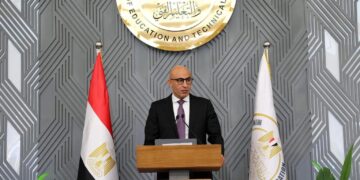
Minister of Education, Dr Tunji Alausa, made this known in Abuja during the inauguration of the Universal Basic Education Commission (UBEC) Ministerial Implementation and Monitoring Committee.
According to him, government data shows that more than 20 million pupils drop out before reaching the junior secondary level.

“We have 20 million dropouts from primary school to JSS. Where are those students? We also found we have 80,000 public primary schools and only about 15,000 junior secondary schools. That’s a one-to-eight ratio,” Alausa said.
He explained that the current arrangement, known as the “disarticulation policy,” requires junior and senior secondary schools to operate separately with different principals and facilities.
While the policy was introduced to improve school administration, the minister said it has instead created overcrowded junior secondary schools and left many senior secondary schools underused, particularly in parts of northern Nigeria.
«”This disarticulation policy has failed. We will phase it out. We can’t be creating positions because we want to create a director level for people while we harm our education system. It’s about doing what is best for every Nigerian child,” he said.»
The proposal to abolish the policy will be presented at the next meeting of the National Council on Education for consideration.

Beyond the policy change, the minister also raised concerns over the state of several UBEC-funded Smart Schools, Bilingual Schools and Alternative Schools across the country.
Although hundreds of the projects have received government funding, Alausa said many remain incomplete or have not admitted students.
To address the problem, he inaugurated a committee chaired by Prof. Rashid Aderinoye to monitor the projects, ensure they are completed and handed over to state governments for use.













 EduTimes Africa, a product of Education Times Africa, is a magazine publication that aims to lend its support to close the yawning gap in Africa's educational development.