
























As Alausa Showcases Digital Education Reforms at Global DHIS2 Conference in Norway



Nigeria has reinforced its position as a continental leader in education data management and digital transformation following the presentation of its Digital National Education Management Information System (DNEMIS) at the 2026 DHIS2 Annual Conference in Oslo, Norway.

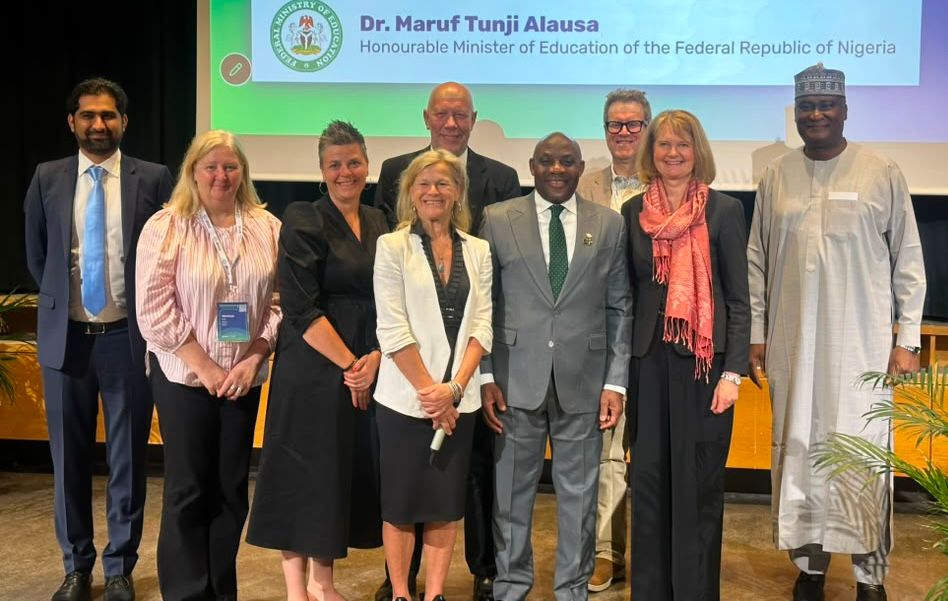
The Minister of Education, Dr. Maruf Tunji Alausa, showcased Nigeria’s progress in deploying technology-driven solutions to improve education planning, governance, monitoring, and service delivery, earning international recognition for the country’s achievements in education sector reforms.
Nigeria’s participation came at the invitation of UNICEF and the University of Oslo, reflecting growing global interest in the country’s efforts to strengthen education management through digital innovation and data-driven decision-making.

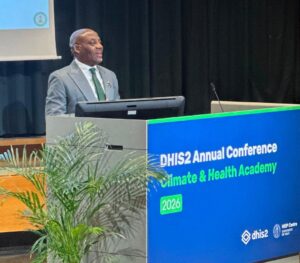
Speaking at the conference, Alausa highlighted the Federal Government’s commitment to transforming the education sector under the Nigeria Education Sector Renewal Initiative (NESRI), emphasizing the role of digital tools in enhancing efficiency, accountability, and measurable outcomes.
A key moment of the event was the global unveiling of the Digital National Education Management Information System (DNEMIS), a national platform designed to modernise education data collection, management, and reporting across Nigeria.
The minister explained that DNEMIS is powered by the globally recognised District Health Information Software 2 (DHIS2) platform, an open-source system widely used in health information management and increasingly adopted for education data systems worldwide.
According to him, Nigeria currently leads education deployment on the DHIS2 platform, hosting the highest number of education users globally. Of the platform’s 45 million education records worldwide, Nigeria accounts for approximately 32 million records, making it a major driver of digital education data innovation.
Alausa noted that Nigeria’s success with DNEMIS has attracted attention from several African countries seeking practical models for strengthening their education data systems and accelerating digital transformation.
He said the country has developed a scalable and replicable framework that demonstrates how reliable, near real-time education data can improve policy planning, resource allocation, intervention monitoring, and learning outcomes.
DNEMIS was developed through collaboration between the Federal Ministry of Education, UNICEF, HISP, the National Education Data Infrastructure (NEDI), and the University of Oslo. The platform is designed to provide timely and credible education data to support evidence-based policymaking and improved service delivery across the sector.

The system represents a major shift from fragmented and manual data processes to an integrated digital ecosystem capable of generating actionable intelligence for national development.
The DHIS2 Annual Conference brought together ministers, policymakers, researchers, development partners, and technology experts from more than 100 countries to discuss innovative approaches to digital transformation across education, health, and other strategic sectors.
Beyond the conference, Nigeria leveraged the platform to strengthen international partnerships and expand collaboration in education innovation, institutional capacity building, research, and knowledge exchange.
Reaffirming the Federal Government’s commitment to education reform, Alausa said Nigeria would continue to drive transparency, strengthen evidence-based decision-making, and promote inclusive, responsive, and future-ready education systems across Africa through DNEMIS and other ongoing initiatives.















 EduTimes Africa, a product of Education Times Africa, is a magazine publication that aims to lend its support to close the yawning gap in Africa's educational development.