

























Accurate data may not be the first thing that comes to mind when people talk about improving education, but education experts in Kogi State say it could determine everything from school funding to student support programmes.



That is why stakeholders across the state have pledged support for the 2025/2026 Annual School Census as the Kogi State Ministry of Education begins a shift from manual record-keeping to a digital system.

The commitment was made on Monday during a stakeholders’ sensitisation meeting held at the Government House in Lokoja ahead of the official commencement of the census on June 24.
The exercise will be conducted through the Federal Government’s Digital Nigeria Education Management Information System (DNEMIS) portal.

The meeting brought together education agencies, former commissioners, non-governmental organisations, media practitioners, religious leaders, and the Nigeria Security and Civil Defence Corps.
At the centre of discussions was the need for accurate data collection and the migration from paper-based reporting to a fully digital system.
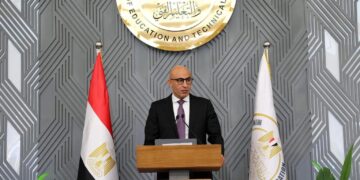
Commissioner for Education, Wemi Jones, said the annual census provides critical information needed for education planning, policymaking, and resource allocation.
According to him, every school captured under DNEMIS will receive a unique 10-digit identification number, while each learner will be assigned a Learner Identification Number (LIN).
“Under DNEMIS, every school will receive a 10-digit ID, while each learner will be assigned a Learner Identification Number, linked to WAEC and NECO records,” Jones said.
He added that every child would need a LIN to access government education incentives.
For students and parents, this means education records could become easier to track, while government interventions may be distributed more efficiently.
Jones also praised Governor Ahmed Ododo for allocating 30 per cent of the state’s annual budget to education.
He noted that the state invests heavily in school renovation, examination fees, infrastructure projects, and teachers’ salaries.
“That is why we are taking this annual school census programme very seriously,” he said.
The commissioner warned that schools that fail to upload accurate data could contribute to under-reporting, potentially affecting the state’s access to education resources.
Former Commissioner for Education, Rosemary Osikoya, stressed that quality data remains the foundation of effective planning.
“If we really want money allocated to education, it has to be substantiated by data. When education data is accurate, planning becomes effective,” she said.
Osikoya noted that some private schools withhold information due to concerns about taxation, while several non-formal and skills acquisition centres do not maintain proper records.
She urged schools to verify and update their records on the Kogi Education EMIS platform.
Ambassador Idris Muraina of the Kogi NGO Network described data as “the lifeline of any development,” while DCC Ekigwe Raymond of the NSCDC called for stronger collaboration between school administrators, community leaders, and security agencies.
Representatives of the National Association of Proprietors of Private Schools and the All Nigeria Confederation of Principals of Secondary Schools commended the ministry for involving private schools in policy discussions.

Permanent Secretary of the ministry, Albert Alabi, also emphasised the importance of collecting qualitative and accurate data.
Director of Educational Planning, Research and Statistics, Animoku Elizabeth, acknowledged that the Annual School Census still faces challenges, including incomplete data, low participation, and fears that the exercise could be used for taxation.
She clarified that the census is designed strictly for planning, research, and policy development.

According to her, the ministry will begin training school data officers in Lokoja Local Government Area before moving to zonal advocacy meetings.
The meetings are scheduled for June 19 in Kabba for the Western Zone, June 22 in Okene for Kogi Central, and June 23 in Anyigba for Kogi East.
The 2025/2026 Annual School Census will officially begin on June 24.
As schools become more connected through digital platforms, stakeholders say accurate data will play an increasingly important role in shaping education policies and ensuring that resources reach the students who need them most.










 EduTimes Africa, a product of Education Times Africa, is a magazine publication that aims to lend its support to close the yawning gap in Africa's educational development.