

























Researchers from the University of Lagos (UNILAG) have unveiled findings from a landmark multi-country study examining the challenges faced by young women in Africa’s creative industries, highlighting persistent gender-based inequities and proposing policy reforms to address them.



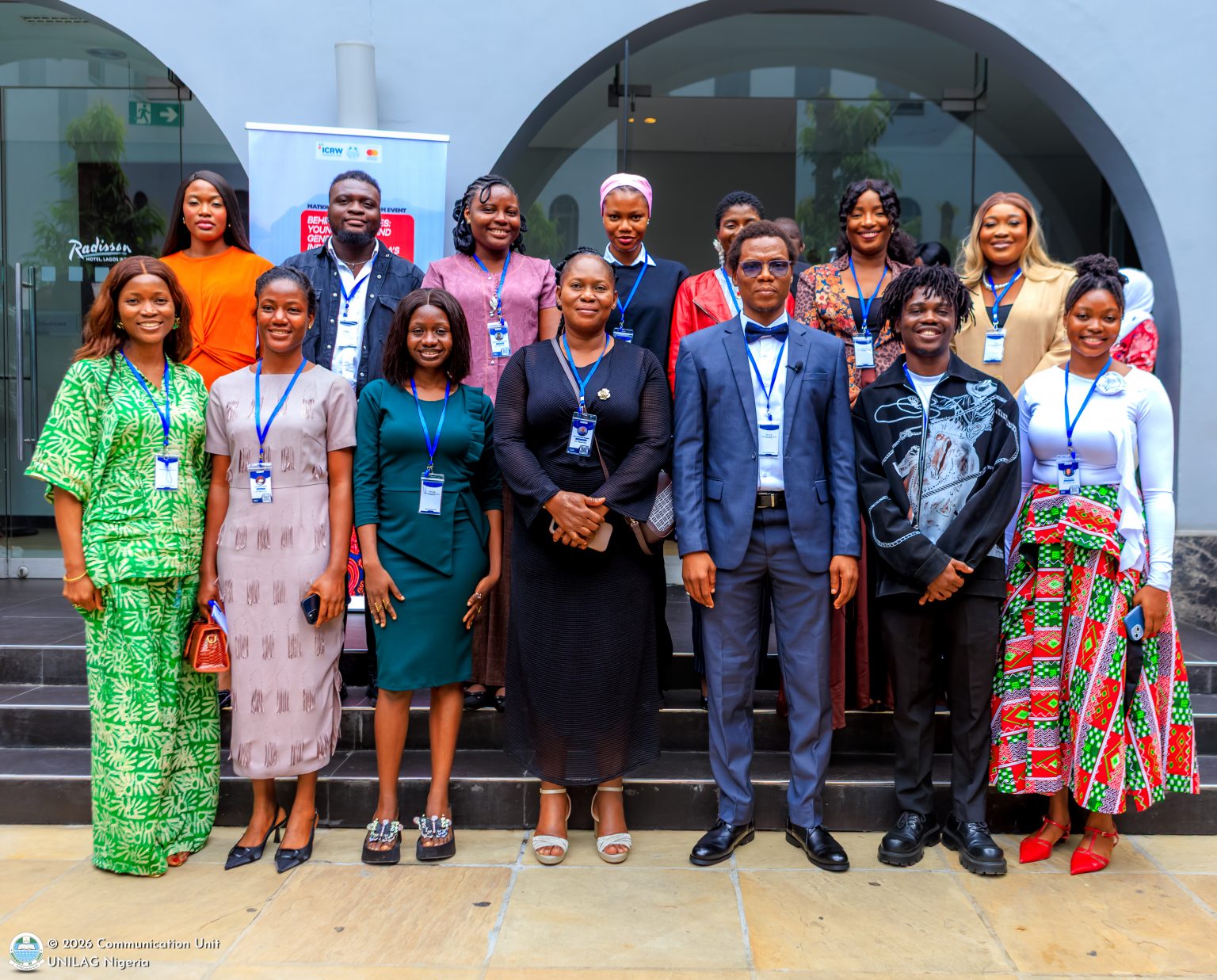
The findings were presented during a national dissemination event for the “Behind the Scenes (BTS) Project,” held at the Radisson Hotel, Ikeja, Lagos. The project, themed “Behind the Scenes: Young Women and Gender-Based Inequities in Africa’s Creative Sector,” was led in Nigeria by Professor Michael Kunnuji of the Department of Sociology and Dr Florence Nweke of the Department of Music.

The BTS Project, conducted in partnership with the International Center for Research on Women (ICRW) and the Mastercard Foundation, covered seven African countries—Nigeria, Ethiopia, Ghana, Kenya, Rwanda, Senegal, and Uganda. The study explored the experiences of young women working in creative fields and investigated barriers limiting their participation and advancement.

Speaking at the event, Prof. Kunnuji said the project was designed to move beyond surface narratives and uncover structural challenges confronting women in the creative economy. He noted that the initiative combined rigorous research, international collaboration, and industry engagement to generate evidence-based recommendations.

“The findings are not merely academic exercises; they are reflections of current realities and a roadmap for meaningful change,” he said.
Representing the Permanent Secretary of the Lagos State Ministry of Tourism, Arts and Culture, Princess Adebopo Oyekan-Ismaila, Director of the Ministry, Mr Idowu Olulowo Johnson, described the creative sector as a major driver of economic growth, cultural identity, and youth empowerment. He commended the research team for producing data capable of informing policy and strengthening the industry’s development.
Presenting key findings, the researchers revealed that many women in the creative sector experience workplace discrimination, unequal pay, sexual harassment, and limited career advancement opportunities. Participants also reported being questioned about marriage and motherhood and, in some cases, undermined by male colleagues despite holding senior positions.
The study further uncovered instances of internalised gender bias, with some women perceiving men as more competent in certain creative roles and feeling compelled to adopt masculine traits or behaviours to gain professional acceptance.
Despite these challenges, researchers noted that many women demonstrated remarkable resilience by adapting to workplace realities and creating pathways for success.

The study identified five major barriers facing women in the creative sector: harassment and safety concerns, gender pay disparities, restricted access to capital, limiting social norms, and policy gaps that fail to adequately protect women.
To address these issues, the researchers recommended stronger anti-harassment policies, enforcement of equal-pay regulations, increased funding opportunities for women-led creative enterprises, caregiver-friendly workplace policies, and enhanced support systems for victims of gender-based violence.
Dr Nweke stressed that sustainable change would require collaboration among government agencies, academia, development partners, industry leaders, and creative professionals.
The event also featured performances by Urban Peace Voices, whose musical renditions provided entertainment while reinforcing the gathering’s message of inclusion and empowerment.
According to the researchers, the BTS Project has not only documented the realities faced by young women in Africa’s creative industries but has also provided a framework for building a more equitable and inclusive creative economy across the continent.











 EduTimes Africa, a product of Education Times Africa, is a magazine publication that aims to lend its support to close the yawning gap in Africa's educational development.