




















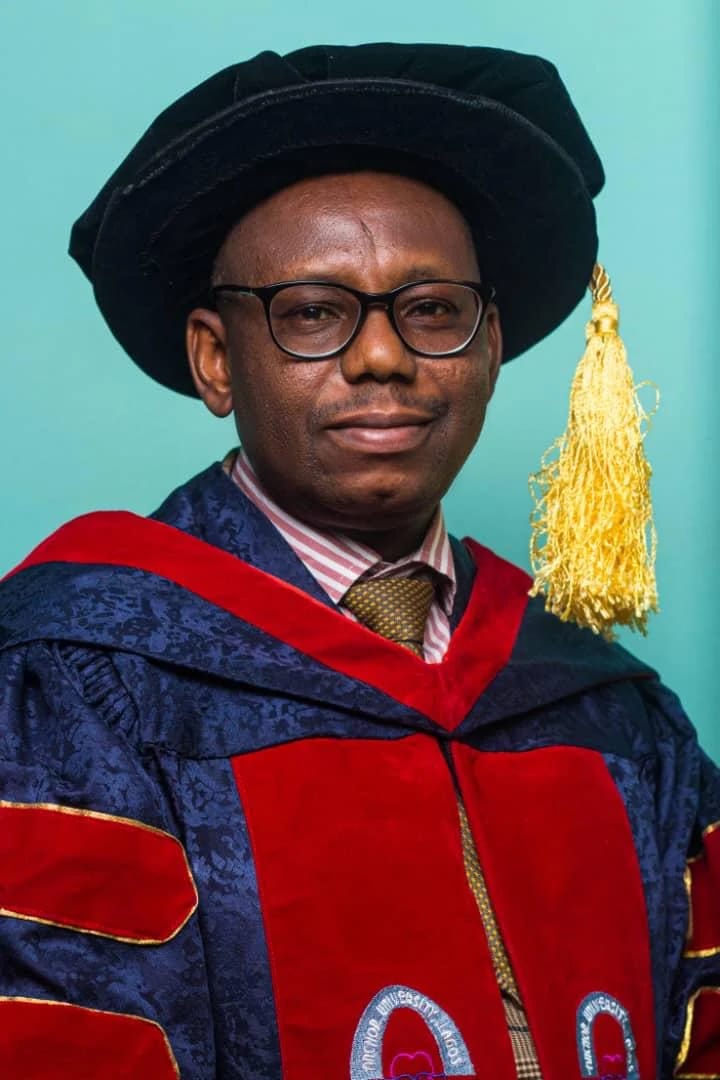


Children today are growing up in a world where the media shapes almost everything they see, hear and believe. But according to a communication scholar, that influence is doing more harm than good.
The Deputy Vice-Chancellor of Anchor University, Lagos, Prof. Olusola Oyero, has warned that modern media is failing Nigerian children by exposing them to harmful content, exploiting their vulnerability and neglecting their developmental needs.

Oyero made the remarks on Thursday while delivering the university’s first-ever professorial inaugural lecture since its establishment.
Speaking on the theme, “God’s Arrow and the Gongman: Reclaiming the Child in the Age of Media Spectacle,” he examined how today’s communication environment is shaping childhood and why stronger media protection for children has become urgent.

Using the metaphor of an arrow, Oyero said children require careful guidance and protection before being exposed to the wider world.
“An arrow is not an accident. No responsible archer releases an arrow prematurely. It must first be shaped, sharpened, guided, and directed. In the same way, childhood is a period of formation. The moral health of any society can be measured by the manner in which it nurtures, protects, and prepares its children,” he said.
He contrasted the traditional African “gongman”—a trusted community messenger who operated within moral boundaries—with today’s digital media environment, where children are increasingly treated as commodities.
“The greatest challenge facing childhood today is not merely what children consume through the media. It is the fact that children themselves are increasingly consumed by media systems,” he said.

Oyero argued that modern media has failed to adequately protect children by focusing on them only during tragic events, allowing adults to speak on their behalf, exposing vulnerable minors through sensational reporting and targeting them with aggressive advertising.
He also lamented the decline of educational and culturally grounded Nigerian children’s programmes, saying they have largely been replaced by commercially driven content and foreign entertainment.
To address the problem, the media scholar proposed the introduction of Children’s Journalism and Media Studies as a specialised course in journalism departments across Nigerian universities.
According to him, the programme would equip journalists with the skills needed for child-rights reporting, media ethics and educational broadcasting while promoting more responsible coverage of issues affecting children.
He also called on the National Broadcasting Commission to enforce quality local programming and urged parents, schools and faith-based organisations to help protect children from digital spaces that prioritise visibility over safety.
Speaking at the event, the Vice-Chancellor of Anchor University, Prof. Samuel Bandele, described the inaugural lecture as a historic milestone for the institution.
“I’m proud to say that Anchor University is making history today. As a university, we are not going to gloss over this essential aspect of academic glory. I’m happy Professor Olusola Samuel Oyero is giving the maiden inaugural lecture,” he said.
The event attracted academics, media professionals and public officials, including renowned mass communication scholar Prof. Ralph Akinfeleye and several deans and heads of departments from institutions across Nigeria.
As children spend more time online than ever before, Oyero believes protecting them can no longer be left to parents alone. He argues that the media, schools, regulators and universities all have a role to play in ensuring the digital world becomes a safer place for the next generation.













 EduTimes Africa, a product of Education Times Africa, is a magazine publication that aims to lend its support to close the yawning gap in Africa's educational development.