
























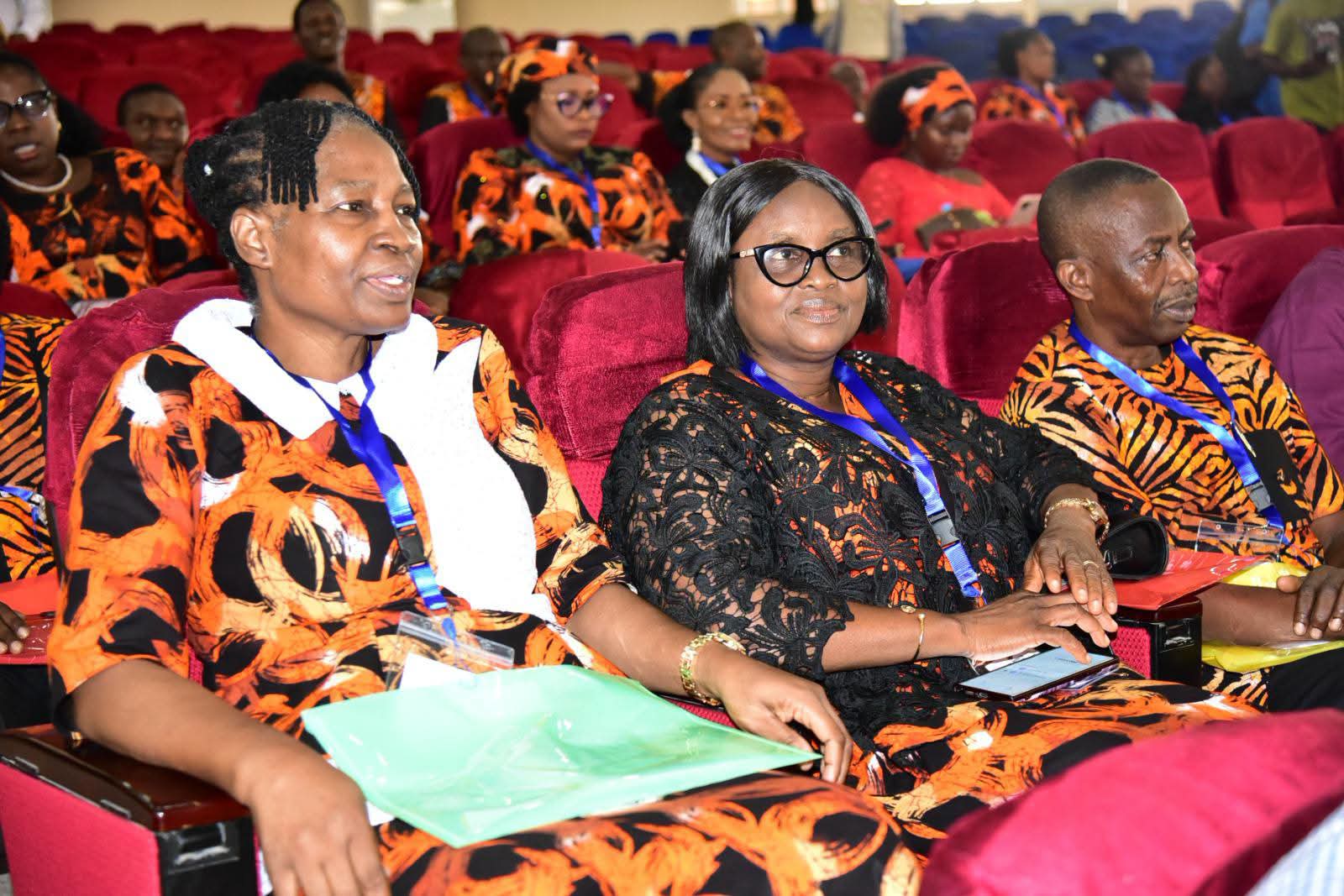


African universities have been challenged to move beyond being consumers of Artificial Intelligence and become creators and innovators of AI solutions. Dr. Toyosi Akerele-Ogunsiji, Founder of Rise Networks and Rise Interactive Studios threw the challenge at the Federal University of Technology Akure FUTA’s School of Computing FUTA Maiden International Conference on Emerging, Computing Applications and Technologies alongside the 2nd Annual Lecture of the School on July 15 and 16 ,2026.



Speaking on a lecture titled, “From Artificial Intelligence Consumer to Creators: Preparing African Universities for the Global Intelligence Economy through Computing Education, Research and Industry Collaboration”_ Akerele-Ogunsiji noted that the future of work and national development will be determined by those who can design and deploy AI to solve local problems and not those who just consume its configuration. She disclosed that she has personally taken courses on AI and used AI tools to design programs, emphasizing that the technology is already transforming education and training.

Akerele-Ogunsiji added that governments globally are the biggest users of AI for service delivery and governance, and urged Nigerians to rise to the challenge and take ownership of AI development.
Addressing concerns about job losses due to AI prevalence, she stated that it will not be AI that takes jobs, but people who know how to use AI who will take the jobs of those who do not. She further explained that human intelligence remains superior, and it is people using AI who are solving complex problems faster.

Akerele-Ogunsiji observed that AI will impact every sector including education, research, business, government, and national security, and called on lecturers to equip students with globally competitive skills.
In a personal reflection, she appreciated her English teacher who taught her free of charge and encouraged students to be aggressive in pursuing success, learn continuously, and use AI to build solutions that benefit both themselves and the nation.
Also speaking on the prospects of AI , Dr. Opeyemi Dele Ajayi, Associate Professor of AI and Informatics at Northumbria University, United Kingdom, examined how Artificial Intelligence and Big Data can be deployed to strengthen critical national infrastructure in energy, transportation, health, and security.
Speaking on “AI and Big Data for Resilient National Infrastructure: Smart Solutions for 21st Century Challenges,” Dr. Ajayi explained that the 21st century requires a shift from reactive to proactive systems, where AI can anticipate problems and Big Data can provide insights for better planning.

He called for collaboration among universities, industry, and government to build local capacity for developing and deploying these technologies. According to him, investing in research, talent development, and partnerships will enable African countries to create homegrown solutions that ensure sustainable and resilient infrastructure for future generations.
In his own address Mr. Joel Ogunsola, Chief Executive Officer of Prunedge and an alumnus of FUTA, urged participants to maximize the knowledge gained from the conference and translate it into tangible impact. He emphasized that the value of the deliberations would only be realized when attendees take deliberate steps to apply the insights, skills, and collaborations formed during the 2-day engagement to real-world challenges.

Mr. Ogunsola noted that as products of institutions like FUTA, participants have a responsibility to drive innovation and contribute meaningfully to national development. He encouraged them to leverage artificial intelligence, research, and industry partnerships discussed at the conference to build solutions that address local problems and position Nigeria competitively in the global intelligence economy.
Speaking at the event, Professor Boniface Alese, Dean School of Computing, FUTA, stated that the theme of the conference reflects the evolving role of technology in shaping economies, governance, and society. According to him, technology and computing are now the bedrock of national development, and no nation can thrive without leveraging them effectively. He emphasized that computing goes beyond technical skills to include critical thinking, entrepreneurship, and the ability to solve real-world problems.
Professor Alese noted that the School of Computing was established to provide world-class education, drive impactful research, and foster innovation. He stressed that universities must build strong partnerships with industry and government to ensure that research outcomes translate into solutions that benefit society. He further expressed optimism that the conference would create a platform for collaboration, knowledge sharing, and the development of ideas that will position African universities as contributors, not just consumers, in the global intelligence economy.
In her remarks, the Vice Chancellor of FUTA, Prof. Adenike Oladiji, described the School of Computing as one of the fastest growing and most subscribed schools in the university, and commended its leadership for driving impact. She noted that Artificial Intelligence is playing significant roles across virtually every sector, from sports to entertainment, and is shaping everything around us.
She expressed hope that the conference would be successful in fostering networking, collaboration, and knowledge sharing among participants. Prof. Oladiji said she was pleased to see participants from as far as Benue and Katsina States, as well as colleagues from neighboring institutions.
She urged everyone to use the opportunity to build long-lasting friendships and relationships that will advance humanity and strengthen the university community. While acknowledging that talking alone is not enough, she called for concrete actions that will lead to the advancement of humanity. She further emphasized that the goal is for the outcomes of the conference to benefit the university, the current generation, and generations to come.
The conference’s expectation is that the deliberations will translate into actionable collaborations between academia and industry. Participants were encouraged to leverage the gathering to share knowledge, develop partnerships, and contribute ideas that will prepare African universities to thrive in the global intelligence economy.










 EduTimes Africa, a product of Education Times Africa, is a magazine publication that aims to lend its support to close the yawning gap in Africa's educational development.